
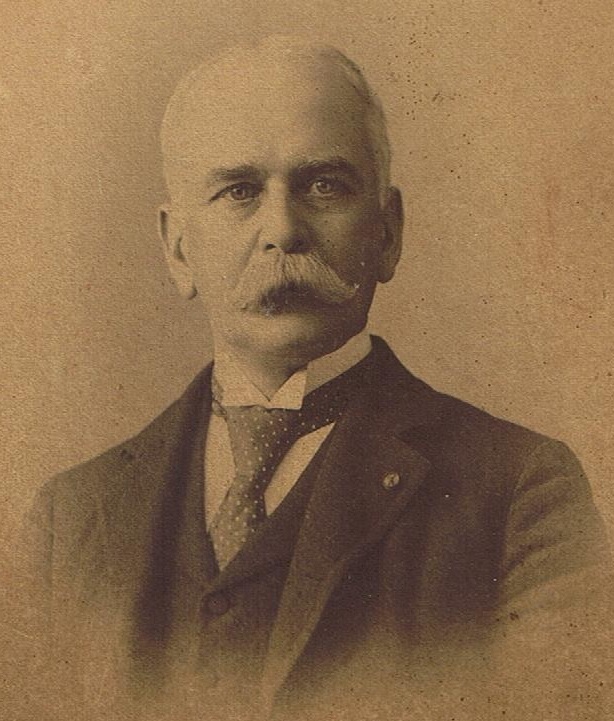
Historical · U.S. House · Rhode Island · District 1
Henry Spooner
Former U.S. Representative · Rhode Island District 1 · 1881–1891 · Republican
Henry Spooner represented Rhode Island's District 1 in the United States House of Representatives (1881–1891) for the Republican party. The page below collects sourced biographical facts, term history, committee roles, and provenance for Spooner.
Bioguide ID: S000740
Key facts
- Full name
- Henry Spooner
- State
- Rhode Island
- District
- District 1
- Party
- Republican
- House service
- 1881–1891
- First House term
- 1881
- Status
- Left office
- Current term ends
- —
- Born
- 1839
- Bioguide ID
- S000740
- Committee assignments
- —
- Dataset version
- 1.20260606
Biographical narrative
841 words · sourced from the Wikipedia REST extract
Henry Spooner was a prominent political figure in the late 19th century, serving as a United States Representative from Rhode Island. A member of the Republican Party, Spooner held office for five consecutive terms in the U.S. House of Representatives, where he was involved in various legislative activities and served in leadership roles. His career in public service was preceded by a significant military and legal background, which shaped his contributions to both state and national politics.
Early life and career
Henry Spooner was born on August 6, 1839, in Providence, Rhode Island. He received his early education in the local common schools, which laid the foundation for his later academic pursuits. Spooner went on to attend Brown University, where he graduated in 1860. During his time at the university, he became a member of the Theta Delta Chi fraternity, which is known for fostering leadership and camaraderie among its members. Following his graduation, Spooner turned his attention to the study of law, preparing himself for a career in the legal profession.
In 1862, amidst the backdrop of the Civil War, Spooner enlisted in the Union Army, serving as a second lieutenant in the Fourth Regiment of the Rhode Island Volunteer Infantry. His military service saw him engaged with the Army of the Potomac and the Army of the James, where he was primarily assigned to the XVIII Corps. Spooner's experiences during the war likely influenced his later political views and commitment to public service.
After the conclusion of the Civil War, Spooner was admitted to the bar in 1865, marking the beginning of his legal career in Providence. He established a law practice and formed a partnership with Augustus S. Miller, who would later become the mayor of Providence. This partnership eventually expanded to include Arthur J. Brown, further solidifying Spooner's presence in the legal community.
Spooner's involvement in politics began at the state level. He served in the Rhode Island House of Representatives from 1875 to 1881, where he quickly rose through the ranks to become the speaker of the House from 1879 to 1881. His leadership in the state legislature demonstrated his capability and commitment to public service, laying the groundwork for his future endeavors in Congress.
House tenure
In 1881, Spooner was elected as a Republican to the 47th United States Congress, filling a vacancy created by the resignation of Nelson W. Aldrich. His election marked the beginning of a significant congressional career, as he was subsequently reelected to the Forty-eighth Congress and the three succeeding Congresses, serving from December 5, 1881, until March 3, 1891. Throughout his time in the House, Spooner participated in various legislative discussions and decisions that shaped the policies of the era.
During the 51st United States Congress, Spooner held the position of chairman of the United States House Committee on Accounts. This role placed him in a pivotal position regarding the financial oversight of congressional operations, allowing him to influence how government funds were managed and allocated. His tenure in Congress was characterized by active engagement in the legislative process, although specific details regarding the bills he supported or opposed are not documented in the available records.
Despite his successful run in Congress, Spooner's political career faced challenges. In 1890, he sought reelection but was unsuccessful in his bid to return to the House. This defeat marked the end of his direct involvement in national politics for a significant period.
Legislative focus and committees
Throughout his congressional career, Henry Spooner was known for his commitment to the principles of the Republican Party, which at the time emphasized economic growth, infrastructure development, and support for veterans. His military background likely influenced his perspectives on issues related to national defense and veterans' affairs, as he had firsthand experience of the challenges faced by soldiers during and after the Civil War.
As chairman of the House Committee on Accounts, Spooner was responsible for overseeing the financial operations of the House of Representatives. This committee played a crucial role in ensuring transparency and accountability in government spending, which was particularly important during a time when the nation was experiencing significant economic changes and challenges. Spooner's leadership in this capacity would have required a keen understanding of fiscal policy and the intricacies of government budgeting.
After leaving Congress in 1891, Spooner took a hiatus from national politics but remained active in public service. In 1902, he returned to the Rhode Island House of Representatives, demonstrating his continued commitment to serving his community and state. Alongside his political activities, he resumed his law practice in Providence, contributing to the legal landscape of the area.
Henry Spooner passed away on February 9, 1918, in Providence, Rhode Island. His contributions to both state and national politics, as well as his legal career, left a lasting impact on the communities he served. He was interred at Swan Point Cemetery, a testament to his lifelong connection to Rhode Island. Spooner's legacy is one of dedicated public service, reflecting the values and challenges of his time in American history.
Notable legislation
Sponsored and co-sponsored legislation for Henry Spooner is pending operator curation. The biographical narrative above carries the same provenance trail until per-bill rows are written.
Sources
- [1]https://en.wikipedia.org/wiki/Henry_J._SpoonerWikipedia · retrieved 2026-06-06
Notable quotes
Sourced quotes for Henry Spooner are pending operator curation. Narrative-scope provenance remains attached below.
Sources
- [1]https://en.wikipedia.org/wiki/Henry_J._SpoonerWikipedia · retrieved 2026-06-06
Key positions
Curated policy positions for Henry Spooner are pending operator review. The biographical narrative above carries the same provenance trail until per-topic positions are written.
Sources
- [1]https://en.wikipedia.org/wiki/Henry_J._SpoonerWikipedia · retrieved 2026-06-06
Terms served
- 1881–1883U.S. House · Term 1 · Republican
- 1883–1885U.S. House · Term 2 · Republican
- 1885–1887U.S. House · Term 3 · Republican
- 1887–1889U.S. House · Term 4 · Republican
- 1889–1891U.S. House · Term 5 · Republican
Sources & provenance
Every attributable claim above carries a per-section [N] marker that resolves to the corresponding URL below. Each entry records the upstream provider, the canonical URL, and the timestamp at which the source was retrieved by the ingest pipeline.
Key facts
- https://bioguide.congress.gov/search/bio/S000740bioguide · retrieved 2026-06-06
- https://www.govtrack.us/congress/members/410209govtrack · retrieved 2026-06-06
Biographical narrative
- https://en.wikipedia.org/wiki/Henry_J._Spoonerwikipedia · retrieved 2026-06-06
Find your representative
Every U.S. state elects representatives by district. Browse Rhode Island’s delegation, the full former-representative roster, or explore the role and term length.
Related on The Candidate
- Preceded by Benjamin EamesEarlier holder of the Rhode Island District 1 House seat · Republican.Open
- Succeeded by Oscar LaphamLater holder of the Rhode Island District 1 House seat · Democratic.Open
- Aime ForandFormer U.S. Representative · Rhode Island District 1 · DemocraticOpen
- Charles RiskFormer U.S. Representative · Rhode Island District 1 · RepublicanOpen
- Christopher RobinsonFormer U.S. Representative · Rhode Island District 1 · RepublicanOpen
- Republican PartyFederal candidates and office holders on the Republican line.Open