
Historical · U.S. House · Rhode Island · District 2
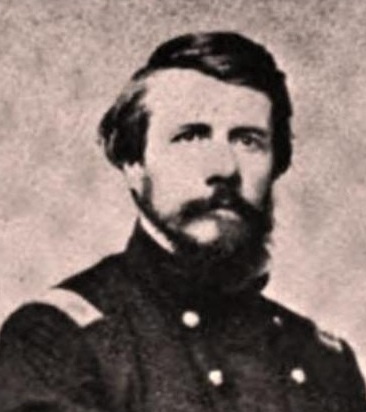
George Browne
Former U.S. Representative · Rhode Island District 2 · 1861–1863 · Unionist
George Browne represented Rhode Island's District 2 in the United States House of Representatives (1861–1863) for the Unionist party. The page below collects sourced biographical facts, term history, committee roles, and provenance for Browne.
Bioguide ID: B000956
Key facts
- Full name
- George Browne
- State
- Rhode Island
- District
- District 2
- Party
- Unionist
- House service
- 1861–1863
- First House term
- 1861
- Status
- Left office
- Current term ends
- —
- Born
- 1811
- Bioguide ID
- B000956
- Committee assignments
- —
- Dataset version
- 1.20260606
Biographical narrative
903 words · sourced from the Wikipedia REST extract
George Browne was a notable figure in Rhode Island's political history, serving as a U.S. Representative during a tumultuous period in American history. A member of the Unionist Party, Browne's congressional career was marked by his involvement in significant national events, including the Civil War. His legal background and political activities prior to his congressional tenure reflect a commitment to public service and a deep engagement with the political landscape of his time.
Early life and career
George Browne was born on January 6, 1811, in Glocester, Rhode Island. He received his early education in the local public schools, which laid the foundation for his future academic and professional pursuits. Demonstrating a strong aptitude for learning, Browne went on to attend Brown University, where he graduated in 1840. His time at the university was pivotal, as it was there that he studied law, a field in which he would later establish his career.
After completing his education, Browne was admitted to the bar in 1843, allowing him to begin his legal practice in Providence, Rhode Island. His legal career coincided with a period of significant political upheaval in the state, particularly during the Dorr Rebellion of 1842. This conflict arose over issues related to suffrage and the reform of the state constitution. Browne was actively involved in this political struggle, being elected to both the Charter and Suffrage legislatures during the rebellion. He chose to accept a seat in the Suffrage legislature, aligning himself with the supporters of the People's Constitution, which sought to expand voting rights.
Following the resolution of the Dorr Rebellion, Browne continued his public service by serving in the Rhode Island General Assembly from 1849 to 1852 under the new constitution established in 1842. His legislative experience during this time helped to shape his understanding of governance and the legal framework of the state. In 1852, he was appointed as the U.S. district attorney, a position he held until 1861. This role further solidified his reputation as a legal expert and public servant.
Browne's political involvement extended beyond state matters. He was a delegate to the 1860 Democratic National Convention, a gathering that highlighted the deep divisions within the Democratic Party, particularly between the factions supporting Stephen Douglas and John C. Breckinridge. This division was reflective of the broader national tensions leading up to the Civil War. In an effort to address these tensions, Browne participated in the Peace Conference of 1861, held in Washington, D.C., which aimed to find a resolution to the growing conflict between the North and South.
House tenure
Browne's congressional career began when he was elected to the 37th United States Congress as a candidate of the Constitutional Union Party, a political group formed in response to the sectional conflicts threatening the nation. He served as a U.S. Representative for Rhode Island's 2nd congressional district from 1861 until 1863. His time in Congress coincided with the early years of the Civil War, a period that demanded strong leadership and decisive action from elected officials.
During his tenure, Browne was involved in legislative discussions and decisions that were critical to the nation as it faced the challenges of war. However, his time in Congress was relatively brief, as he was not successful in securing reelection in 1863. The political landscape was shifting rapidly during this time, and many representatives faced challenges in maintaining their positions amid the ongoing conflict and changing public sentiment.
In addition to his congressional responsibilities, Browne's commitment to the Union was evident through his military service. On October 13, 1862, he entered the Union Army, taking on the role of colonel of the 12th Rhode Island Infantry Regiment. His military service during the Civil War further demonstrated his dedication to the Union cause and his willingness to serve his country in multiple capacities.
Legislative focus and committees
While specific details regarding Browne's legislative focus and committee assignments during his time in Congress are not extensively documented, it can be inferred that his background as a lawyer and his experiences in state politics likely influenced his approach to legislative matters. Given the context of the Civil War, it is reasonable to assume that issues related to national security, civil rights, and the preservation of the Union were at the forefront of his legislative agenda.
Browne's involvement in the Peace Conference of 1861 suggests that he was concerned with finding peaceful resolutions to the conflicts facing the nation. His participation in this conference indicates a desire to engage in dialogue and seek compromise, reflecting the broader challenges faced by lawmakers during a time of national crisis.
After his congressional term ended in 1863, Browne continued to be active in public service. He returned to Rhode Island, where he served in the Rhode Island Senate in 1872 and 1873. His legal expertise and experience in governance led to his election as chief justice of the Rhode Island Supreme Court in 1874, although he declined the position. This decision reflects his complex relationship with public office and the various roles he played throughout his career.
George Browne passed away on September 26, 1885, in Providence, Rhode Island. He was interred in Swan Point Cemetery, leaving behind a legacy of public service that spanned law, politics, and military service. His contributions to Rhode Island and the nation during a critical period in American history remain a part of the state's rich political heritage.
Notable legislation
Sponsored and co-sponsored legislation for George Browne is pending operator curation. The biographical narrative above carries the same provenance trail until per-bill rows are written.
Sources
- [1]https://en.wikipedia.org/wiki/George_H._BrowneWikipedia · retrieved 2026-06-06
Notable quotes
Sourced quotes for George Browne are pending operator curation. Narrative-scope provenance remains attached below.
Sources
- [1]https://en.wikipedia.org/wiki/George_H._BrowneWikipedia · retrieved 2026-06-06
Key positions
Curated policy positions for George Browne are pending operator review. The biographical narrative above carries the same provenance trail until per-topic positions are written.
Sources
- [1]https://en.wikipedia.org/wiki/George_H._BrowneWikipedia · retrieved 2026-06-06
Terms served
- 1861–1863U.S. House · Term 1 · Unionist
Sources & provenance
Every attributable claim above carries a per-section [N] marker that resolves to the corresponding URL below. Each entry records the upstream provider, the canonical URL, and the timestamp at which the source was retrieved by the ingest pipeline.
Key facts
- https://bioguide.congress.gov/search/bio/B000956bioguide · retrieved 2026-06-06
- https://www.govtrack.us/congress/members/401908govtrack · retrieved 2026-06-06
Biographical narrative
- https://en.wikipedia.org/wiki/George_H._Brownewikipedia · retrieved 2026-06-06
Find your representative
Every U.S. state elects representatives by district. Browse Rhode Island’s delegation, the full former-representative roster, or explore the role and term length.
Related on The Candidate
- Preceded by William BraytonEarlier holder of the Rhode Island District 2 House seat · Republican.Open
- Succeeded by James PendletonLater holder of the Rhode Island District 2 House seat · Republican.Open
- Aime ForandFormer U.S. Representative · Rhode Island District 1 · DemocraticOpen
- Benjamin EamesFormer U.S. Representative · Rhode Island District 1 · RepublicanOpen
- Charles RiskFormer U.S. Representative · Rhode Island District 1 · RepublicanOpen
- Christopher RobinsonFormer U.S. Representative · Rhode Island District 1 · RepublicanOpen