
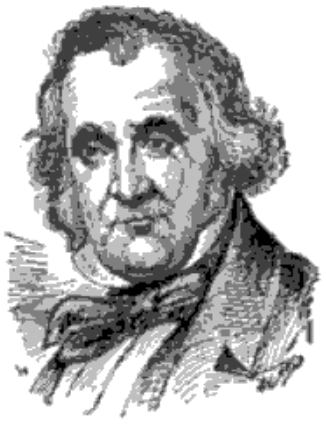
Historical · U.S. House · Rhode Island · At-Large
Benjamin Bourne
Former U.S. Representative · Rhode Island At-Large · 1789–1797 · Federalist
Benjamin Bourne represented Rhode Island's At-Large in the United States House of Representatives (1789–1797) for the Federalist party. The page below collects sourced biographical facts, term history, committee roles, and provenance for Bourne.
Bioguide ID: B000669
Key facts
- Full name
- Benjamin Bourne
- State
- Rhode Island
- District
- At-Large
- Party
- Federalist
- House service
- 1789–1797
- First House term
- 1789
- Status
- Left office
- Current term ends
- —
- Born
- 1755
- Bioguide ID
- B000669
- Committee assignments
- —
- Dataset version
- 1.20260606
Biographical narrative
939 words · sourced from the Wikipedia REST extract
Benjamin Bourne was a prominent figure in early American politics, serving as a United States Representative from Rhode Island and later as a federal judge. A member of the Federalist Party, he played a significant role in the formative years of the United States government. His career spanned various capacities, including legislative and judicial roles, reflecting a commitment to public service that began in his youth and continued until his death in 1808.
Early life and career
Born on September 9, 1755, in Bristol, Rhode Island, Benjamin Bourne was the son of Shearjashub Bourn, a lawyer who would later serve on the Rhode Island Supreme Court. Growing up in a family with a legal background, Bourne was exposed to the principles of law and governance from an early age. He pursued his education at Harvard University, where he graduated in 1775. His academic achievements included earning a Master of Arts degree from Harvard in 1778, which further solidified his foundation in legal studies.
Following his education, Bourne began his legal career by reading law, a common practice at the time for those aspiring to enter the legal profession. His involvement in the military during the American Revolutionary War saw him serve as the quartermaster of the Second Rhode Island Regiment in 1776, a role that underscored his commitment to the American cause. After the war, he was admitted to the bar and began practicing law in Providence, Rhode Island.
Bourne's political career commenced with his election as a deputy in the Rhode Island General Assembly in 1780, a position he held intermittently until 1790. His legislative experience was complemented by his role as clerk of the Rhode Island General Assembly from 1780 to 1786. Additionally, he served as a Justice of the Peace in Providence from 1785 to 1790, further establishing his reputation as a dedicated public servant.
House tenure
Bourne's congressional career began following the ratification of the United States Constitution by Rhode Island. He was elected as a Pro-Administration candidate to represent Rhode Island's at-large congressional district in the United States House of Representatives. His first term commenced in 1790, and he was subsequently re-elected for multiple terms, serving in the 1st through 3rd Congresses. As a member of the Federalist Party, Bourne aligned with the party's principles, which emphasized a strong central government and support for the policies of President George Washington.
During his time in the House, Bourne was involved in the early legislative processes that shaped the new nation. His tenure included significant debates and discussions surrounding the establishment of federal laws and policies that would guide the United States in its formative years. He served in the House until his resignation on October 13, 1796, before the conclusion of the 4th Congress. His decision to resign was influenced by his subsequent appointment to the federal judiciary, marking a transition from legislative to judicial responsibilities.
Legislative focus and committees
Throughout his time in the House of Representatives, Bourne's legislative focus aligned with the interests of the Federalist Party. His participation in the early Congresses was marked by a commitment to issues that were pivotal to the young nation, including economic policies, national defense, and the establishment of a functioning federal government. While specific details of his legislative initiatives are not extensively documented, his alignment with the Federalist agenda suggests that he supported measures aimed at strengthening the federal government and promoting economic stability.
Bourne's service in Congress coincided with a period of significant political and social change in the United States. The debates and decisions made during this time laid the groundwork for the future of American governance. His involvement in these discussions would have contributed to shaping the legislative landscape of the nation.
After resigning from the House, Bourne transitioned to a judicial role. He received a recess appointment from President George Washington to the United States District Court for the District of Rhode Island on October 13, 1796. This position was a natural progression for Bourne, given his legal background and experience in public service. He was officially nominated to the same position by President Washington on December 21, 1796, and confirmed by the Senate the following day.
Bourne's judicial career continued to evolve when he was nominated by President John Adams on February 18, 1801, to serve on the United States Circuit Court for the First Circuit. This appointment was to a new seat authorized by legislation, reflecting the expanding judicial framework of the United States. He was confirmed by the Senate and received his commission on February 20, 1801. However, his service on the Circuit Court was relatively short-lived, as it ended on July 1, 1802, due to the abolition of the court.
Following his departure from the federal bench, Bourne returned to private practice in Providence and Bristol, where he continued to engage in legal work until his death. His career spanned various roles within the legal and political spheres, showcasing his adaptability and commitment to public service.
Benjamin Bourne passed away on September 17, 1808, in Bristol, Rhode Island. He was interred in Juniper Hill Cemetery, leaving behind a legacy as a dedicated public servant who contributed to the early governance of the United States. His familial connections extended into politics, as he was a first cousin once removed of Shearjashub Bourne, a United States Representative from Massachusetts.
In summary, Benjamin Bourne's life and career reflect the complexities of early American governance and the evolving role of public servants in shaping the nation. His contributions as a legislator and judge illustrate the interconnectedness of law and politics during a pivotal era in United States history.
Notable legislation
Sponsored and co-sponsored legislation for Benjamin Bourne is pending operator curation. The biographical narrative above carries the same provenance trail until per-bill rows are written.
Sources
- [1]https://en.wikipedia.org/wiki/Benjamin_BourneWikipedia · retrieved 2026-06-06
Notable quotes
Sourced quotes for Benjamin Bourne are pending operator curation. Narrative-scope provenance remains attached below.
Sources
- [1]https://en.wikipedia.org/wiki/Benjamin_BourneWikipedia · retrieved 2026-06-06
Key positions
Curated policy positions for Benjamin Bourne are pending operator review. The biographical narrative above carries the same provenance trail until per-topic positions are written.
Sources
- [1]https://en.wikipedia.org/wiki/Benjamin_BourneWikipedia · retrieved 2026-06-06
Terms served
- 1789–1791U.S. House · Term 1 · Federalist
- 1791–1793U.S. House · Term 2 · Federalist
- 1793–1795U.S. House · Term 3 · Federalist
- 1795–1797U.S. House · Term 4 · Federalist
Sources & provenance
Every attributable claim above carries a per-section [N] marker that resolves to the corresponding URL below. Each entry records the upstream provider, the canonical URL, and the timestamp at which the source was retrieved by the ingest pipeline.
Key facts
- https://bioguide.congress.gov/search/bio/B000669bioguide · retrieved 2026-06-06
- https://www.govtrack.us/congress/members/401631govtrack · retrieved 2026-06-06
Biographical narrative
- https://en.wikipedia.org/wiki/Benjamin_Bournewikipedia · retrieved 2026-06-06
Find your representative
Every U.S. state elects representatives by district. Browse Rhode Island’s delegation, the full former-representative roster, or explore the role and term length.
Related on The Candidate
- Succeeded by Thomas TillinghastLater holder of the Rhode Island At-Large House seat · Republican.Open
- Aime ForandFormer U.S. Representative · Rhode Island District 1 · DemocraticOpen
- Benjamin EamesFormer U.S. Representative · Rhode Island District 1 · RepublicanOpen
- Charles RiskFormer U.S. Representative · Rhode Island District 1 · RepublicanOpen
- Christopher RobinsonFormer U.S. Representative · Rhode Island District 1 · RepublicanOpen
- Representatives from Rhode IslandEvery former U.S. Representative who has represented Rhode Island.Open