
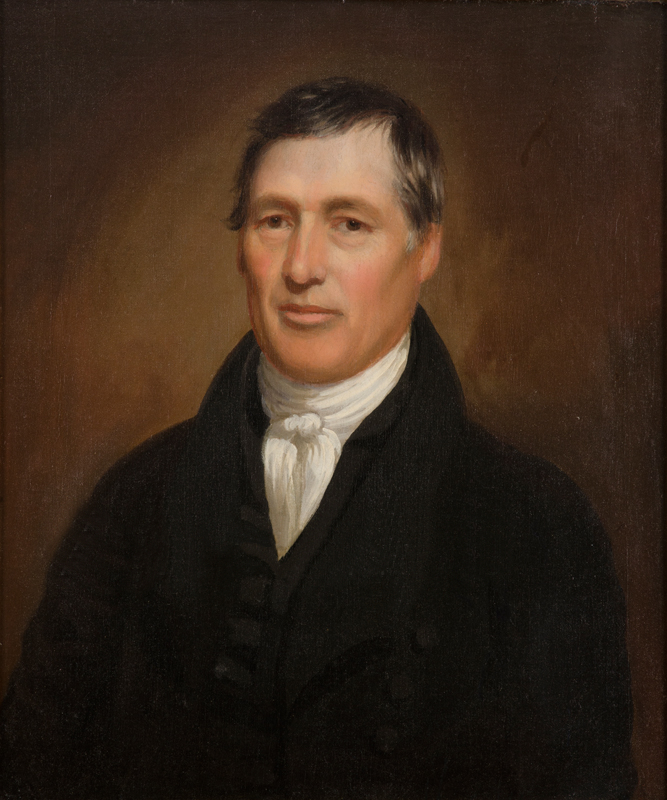
Historical · U.S. House · Rhode Island · At-Large
Samuel Eddy
Former U.S. Representative · Rhode Island At-Large · 1819–1825
Samuel Eddy represented Rhode Island's At-Large in the United States House of Representatives (1819–1825). The page below collects sourced biographical facts, term history, committee roles, and provenance for Eddy.
Bioguide ID: E000040
Key facts
- Full name
- Samuel Eddy
- State
- Rhode Island
- District
- At-Large
- Party
- —
- House service
- 1819–1825
- First House term
- 1819
- Status
- Left office
- Current term ends
- —
- Born
- 1769
- Bioguide ID
- E000040
- Committee assignments
- —
- Dataset version
- 1.20260606
Biographical narrative
977 words · sourced from the Wikipedia REST extract
Samuel Eddy was a prominent political figure in early 19th-century America, serving as a U.S. Representative from Rhode Island. He was a member of the Democratic-Republican Party and later identified with the Adams-Clay faction. Eddy's tenure in the U.S. House of Representatives spanned from 1819 to 1825, during which he participated in significant legislative activities and contributed to the governance of the nation. Following his congressional career, he held judicial positions, including serving as an associate justice and later as chief justice of the Rhode Island Supreme Court. His life and career reflect the evolving political landscape of the United States during a formative period in its history.
Early life and career
Samuel Eddy was born on March 31, 1769, in Johnston, which was part of the Colony of Rhode Island and Providence Plantations. His early education included preparatory studies that laid the groundwork for his future academic pursuits. Eddy graduated from Brown University in 1787, an institution known for its rigorous academic standards and its role in shaping many influential leaders of the time. Following his graduation, Eddy pursued a career in law, a field that was both prestigious and vital for those seeking to engage in public service during this period.
In 1790, Eddy was admitted to the bar, allowing him to practice law in Providence, Rhode Island. However, his legal career was relatively brief, as he transitioned into public service shortly thereafter. From 1790 to 1793, he served as the clerk of the Rhode Island Supreme Court, a position that provided him with valuable experience in the legal system and governance. This role likely enhanced his understanding of the law and its application, which would later inform his legislative work.
Eddy's commitment to public service continued when he was appointed as the Rhode Island Secretary of State, a position he held from 1798 until 1819. This long tenure in the Secretary of State's office allowed him to influence state policy and administration significantly. His responsibilities would have included overseeing elections, maintaining public records, and managing various administrative functions of the state government. This experience would prove beneficial as he transitioned to a national political role.
House tenure
Eddy's entry into national politics came when he was elected to the U.S. House of Representatives as a member of the Democratic-Republican Party. He began his first term in the Sixteenth Congress, which convened on March 4, 1819. His election to Congress occurred during a time of significant political change in the United States, as the nation was grappling with issues related to expansion, economic development, and the balance of power between federal and state governments.
During his time in the House, Eddy was re-elected to serve in the Seventeenth Congress and subsequently in the Eighteenth Congress, where he was affiliated with the Adams-Clay faction of the Democratic-Republican Party. His legislative activities during these terms would have involved addressing the pressing issues of the day, including economic policies, infrastructure development, and the implications of westward expansion. Eddy's ability to navigate the political landscape of his time contributed to his re-elections and demonstrated his commitment to representing the interests of his constituents in Rhode Island.
Eddy's congressional career concluded with the end of his term in the Eighteenth Congress on March 3, 1825. Following his departure from the House, he sought re-election in 1824 for the Nineteenth Congress but was unsuccessful. He also attempted to regain a congressional seat in 1828 for the Twenty-first Congress but did not succeed in that endeavor either. Despite these setbacks, Eddy's contributions during his time in Congress left a lasting impact on his state and the nation.
Legislative focus and committees
Throughout his tenure in the U.S. House of Representatives, Samuel Eddy was involved in various legislative matters that reflected the priorities and concerns of his time. As a member of the Democratic-Republican Party, he was aligned with the principles of limited government, agrarian interests, and the promotion of individual liberties. These principles guided his legislative focus and informed his positions on various issues.
While specific details regarding the bills he sponsored or supported are not provided, it can be inferred that Eddy's background in law and his experience as Secretary of State would have influenced his approach to legislation. He likely participated in discussions and debates on matters related to state rights, economic policies, and the implications of federal legislation on local governance. His role in the House would have required collaboration with other legislators, and he would have been involved in committee work that shaped the legislative agenda.
In addition to his congressional responsibilities, Eddy's legal expertise became increasingly relevant after his time in the House. In 1826, he was appointed as an associate justice of the Rhode Island Supreme Court, a role that allowed him to apply his legal knowledge in a judicial capacity. He served in this position for a year before being elevated to chief justice, a role he held from 1827 to 1835. During his time as chief justice, Eddy wrote the court's first published decision, Stoddard v. Martin, in 1828, marking a significant contribution to the legal history of Rhode Island.
Eddy's involvement in the American Antiquarian Society, to which he was elected in 1819, further illustrates his commitment to preserving and promoting American history and culture. This organization played a crucial role in collecting and disseminating information about the early history of the United States, and Eddy's membership indicates his interest in the historical context of the nation he served.
Samuel Eddy passed away on February 3, 1839, in Providence, Rhode Island. He was interred in North Burial Ground, leaving behind a legacy as a dedicated public servant who contributed to both the legislative and judicial branches of government in Rhode Island. His career reflects the complexities of early American politics and the evolving nature of governance in a young nation.
Notable legislation
Sponsored and co-sponsored legislation for Samuel Eddy is pending operator curation. The biographical narrative above carries the same provenance trail until per-bill rows are written.
Sources
- [1]https://en.wikipedia.org/wiki/Samuel_EddyWikipedia · retrieved 2026-06-06
Notable quotes
Sourced quotes for Samuel Eddy are pending operator curation. Narrative-scope provenance remains attached below.
Sources
- [1]https://en.wikipedia.org/wiki/Samuel_EddyWikipedia · retrieved 2026-06-06
Key positions
Curated policy positions for Samuel Eddy are pending operator review. The biographical narrative above carries the same provenance trail until per-topic positions are written.
Sources
- [1]https://en.wikipedia.org/wiki/Samuel_EddyWikipedia · retrieved 2026-06-06
Terms served
- 1819–1821U.S. House · Term 1 · Republican
- 1821–1823U.S. House · Term 2 · Republican
- 1823–1825U.S. House · Term 3
Sources & provenance
Every attributable claim above carries a per-section [N] marker that resolves to the corresponding URL below. Each entry records the upstream provider, the canonical URL, and the timestamp at which the source was retrieved by the ingest pipeline.
Key facts
- https://bioguide.congress.gov/search/bio/E000040bioguide · retrieved 2026-06-06
- https://www.govtrack.us/congress/members/403735govtrack · retrieved 2026-06-06
Biographical narrative
- https://en.wikipedia.org/wiki/Samuel_Eddywikipedia · retrieved 2026-06-06
Find your representative
Every U.S. state elects representatives by district. Browse Rhode Island’s delegation, the full former-representative roster, or explore the role and term length.
Related on The Candidate
- Preceded by James MasonEarlier holder of the Rhode Island At-Large House seat · Federalist.Open
- Succeeded by Dutee PearceLater holder of the Rhode Island At-Large House seat · Anti Masonic.Open
- Aime ForandFormer U.S. Representative · Rhode Island District 1 · DemocraticOpen
- Benjamin EamesFormer U.S. Representative · Rhode Island District 1 · RepublicanOpen
- Charles RiskFormer U.S. Representative · Rhode Island District 1 · RepublicanOpen
- Christopher RobinsonFormer U.S. Representative · Rhode Island District 1 · RepublicanOpen