
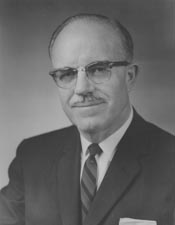
Historical · U.S. House · South Dakota · District 2
Ellis Berry
Former U.S. Representative · South Dakota District 2 · 1951–1971 · Republican
Ellis Berry represented South Dakota's District 2 in the United States House of Representatives (1951–1971) for the Republican party. The page below collects sourced biographical facts, term history, committee roles, and provenance for Berry.
Bioguide ID: B000416
Key facts
- Full name
- Ellis Berry
- State
- South Dakota
- District
- District 2
- Party
- Republican
- House service
- 1951–1971
- First House term
- 1951
- Status
- Left office
- Current term ends
- —
- Born
- 1902
- Bioguide ID
- B000416
- Committee assignments
- —
- Dataset version
- 1.20260605
Biographical narrative
877 words · sourced from the Wikipedia REST extract
Ellis Berry was an American attorney and politician who served as a U.S. Representative for South Dakota's 2nd congressional district from 1951 until 1971. A member of the Republican Party, Berry completed ten consecutive terms in the House of Representatives, during which he engaged in various legislative activities and held significant positions within the political landscape of South Dakota. His career spanned several decades, encompassing roles in law, journalism, and state politics before his long tenure in Congress.
Early life and career
Ellis Berry was born on October 6, 1902, in Larchwood, Iowa. He spent his formative years in South Dakota, where he graduated from Philip High School. Following high school, Berry pursued higher education at Morningside College from 1920 to 1922 before transferring to the University of South Dakota. At the university, he completed his undergraduate studies and went on to earn a law degree in 1927. He was admitted to the bar that same year, utilizing the diploma privilege that allowed graduates to practice law without taking the bar exam.
Berry began his legal career in Kennebec, South Dakota, where he established a law practice. After two years, he relocated to McLaughlin, South Dakota, where he became involved in local governance and community affairs. His political career began to take shape as he was elected as the state's attorney and later served as the probate court judge for Corson County. Additionally, he held the position of mayor of McLaughlin, further solidifying his presence in local politics.
In 1938, Berry expanded his professional portfolio by becoming the publisher of the McLaughlin Messenger, a role he maintained for many years. He also served as the editor of the State Bar Association Journal from 1938 until 1950, contributing to legal discourse in South Dakota. His early career was marked by a blend of legal practice, journalism, and public service, laying a strong foundation for his future political endeavors.
House tenure
Berry's political career at the federal level began when he was elected as a Republican to the United States House of Representatives in 1950. He successfully secured reelection nine times, serving a total of ten consecutive terms until his retirement in 1971. During his time in Congress, Berry was involved in various legislative initiatives and participated in the broader political discourse of the era.
Throughout his tenure, Berry was known for his engagement with significant national issues. He voted in favor of several key pieces of civil rights legislation, including the Civil Rights Acts of 1957, 1960, and 1968, as well as the Voting Rights Act of 1965. However, he also opposed the Civil Rights Act of 1964 and the 24th Amendment to the U.S. Constitution, reflecting the complex and often contentious nature of civil rights discussions during the 1960s.
In addition to his legislative activities, Berry was recognized for his political affiliations and actions. In 1966, he was reported to be among a group of Congressmen who received the "Statesman of the Republic" award from Liberty Lobby, an organization known for its right-wing advocacy. This recognition highlighted his alignment with certain conservative principles and his involvement in the political movements of the time.
Berry's congressional career was characterized by a commitment to his constituents in South Dakota, as well as an active participation in national legislative matters. His long service in the House allowed him to build a reputation as a seasoned politician, navigating the complexities of federal governance while representing the interests of his state.
Legislative focus and committees
During his time in the House of Representatives, Ellis Berry's legislative focus encompassed a range of issues pertinent to his constituents and the nation. His voting record on civil rights legislation indicates a nuanced approach to the evolving social landscape of the United States during the mid-20th century. While he supported several key civil rights measures, his opposition to certain landmark legislation suggests a complex relationship with the civil rights movement.
In addition to civil rights, Berry's legislative interests likely included issues relevant to South Dakota, such as agriculture, infrastructure, and economic development. However, specific details regarding his committee assignments or particular legislative initiatives are not provided in the available information. It is common for members of Congress to serve on various committees that align with their interests and the needs of their constituents, and Berry's long tenure suggests he may have held such roles during his time in office.
After retiring from Congress in 1971, Berry continued to engage with his community and the political landscape in South Dakota. He settled in Rapid City, where he lived until his death on April 1, 1999, at the age of 96. His contributions to South Dakota's political history are preserved through the Berry Collection, which he donated to Black Hills State University. This collection, housed at the E. Y. Berry Library-Learning Center, consists of over 500 boxes of manuscript materials, reflecting his extensive career and involvement in public service.
Berry's legacy is further recognized through the naming of the library-learning center at Black Hills State University in his honor, ensuring that his contributions to the state and the nation are remembered. Although he has been mistakenly associated with the Berry Amendment, which predates his congressional service, his impact on South Dakota's political landscape remains significant.
Notable legislation
Sponsored and co-sponsored legislation for Ellis Berry is pending operator curation. The biographical narrative above carries the same provenance trail until per-bill rows are written.
Sources
- [1]https://en.wikipedia.org/wiki/E._Y._BerryWikipedia · retrieved 2026-06-05
Notable quotes
Sourced quotes for Ellis Berry are pending operator curation. Narrative-scope provenance remains attached below.
Sources
- [1]https://en.wikipedia.org/wiki/E._Y._BerryWikipedia · retrieved 2026-06-05
Key positions
Curated policy positions for Ellis Berry are pending operator review. The biographical narrative above carries the same provenance trail until per-topic positions are written.
Sources
- [1]https://en.wikipedia.org/wiki/E._Y._BerryWikipedia · retrieved 2026-06-05
Terms served
- 1951–1953U.S. House · Term 1 · Republican
- 1953–1955U.S. House · Term 2 · Republican
- 1955–1957U.S. House · Term 3 · Republican
- 1957–1959U.S. House · Term 4 · Republican
- 1959–1961U.S. House · Term 5 · Republican
- 1961–1963U.S. House · Term 6 · Republican
- 1963–1965U.S. House · Term 7 · Republican
- 1965–1967U.S. House · Term 8 · Republican
- 1967–1969U.S. House · Term 9 · Republican
- 1969–1971U.S. House · Term 10 · Republican
Sources & provenance
Every attributable claim above carries a per-section [N] marker that resolves to the corresponding URL below. Each entry records the upstream provider, the canonical URL, and the timestamp at which the source was retrieved by the ingest pipeline.
Key facts
- https://bioguide.congress.gov/search/bio/B000416bioguide · retrieved 2026-06-05
- https://www.govtrack.us/congress/members/401403govtrack · retrieved 2026-06-05
Biographical narrative
- https://en.wikipedia.org/wiki/E._Y._Berrywikipedia · retrieved 2026-06-05
Find your representative
Every U.S. state elects representatives by district. Browse South Dakota’s delegation, the full former-representative roster, or explore the role and term length.
Related on The Candidate
- Preceded by Theodore WernerEarlier holder of the South Dakota District 2 House seat · Democratic.Open
- Succeeded by Clint RobertsLater holder of the South Dakota District 2 House seat · Republican.Open
- Benjamin ReifelFormer U.S. Representative · South Dakota District 1 · RepublicanOpen
- Charles ChristophersonFormer U.S. Representative · South Dakota District 1 · RepublicanOpen
- Charles DillonFormer U.S. Representative · South Dakota District 1 · RepublicanOpen
- Frank DenholmFormer U.S. Representative · South Dakota District 1 · DemocraticOpen