
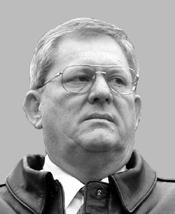
Historical · U.S. House · South Dakota · At-Large
Bill Janklow
Former U.S. Representative · South Dakota At-Large · 2003–2004 · Republican
Bill Janklow represented South Dakota's At-Large in the United States House of Representatives (2003–2004) for the Republican party. The page below collects sourced biographical facts, term history, committee roles, and provenance for Janklow.
Bioguide ID: J000286
Key facts
- Full name
- Bill Janklow
- State
- South Dakota
- District
- At-Large
- Party
- Republican
- House service
- 2003–2004
- First House term
- 2003
- Status
- Left office
- Current term ends
- —
- Born
- 1939
- Bioguide ID
- J000286
- Committee assignments
- —
- Dataset version
- 1.20260605
Biographical narrative
821 words · sourced from the Wikipedia REST extract
William J. Janklow was an American lawyer and politician who served as a U.S. Representative for South Dakota and is notably recognized for his extensive tenure as the governor of South Dakota. A member of the Republican Party, Janklow's political career spanned several decades, during which he held various significant positions, including attorney general and governor, before concluding his congressional service in the early 2000s. His time in office was marked by both legislative achievements and controversies, culminating in a conviction that led to his resignation from Congress.
Early life and career
William John Janklow was born on September 13, 1939, in Chicago, Illinois. His early life was shaped by personal tragedy when his father, a prosecutor at the Nuremberg Trials, passed away from a heart attack when Janklow was just ten years old. Following this loss, his mother relocated the family to Flandreau, South Dakota, her hometown, where they settled. Janklow's teenage years were tumultuous; by the age of fifteen, he found himself in legal trouble due to repeated acts of juvenile delinquency. This led to a pivotal moment when a judge presented him with two options: reform school or military service. Choosing the latter, Janklow dropped out of high school and enlisted in the U.S. Marine Corps in 1956.
During his military service, Janklow underwent basic training at Camp Pendleton, California, and was later assigned to the 3rd Marine Division in Okinawa. He participated in the U.S. response to the Quemoy-Matsu international crisis in 1958, during which he sustained a gunshot wound to the leg. He received an honorable discharge in 1959, having achieved the rank of private first class. In recognition of his service, he was later awarded the 823 Badge of Honor by the government of Taiwan.
After leaving the military, Janklow pursued higher education at the University of South Dakota. Despite lacking a high school diploma, he successfully convinced university administrators to allow him to enroll on the condition that he maintain good academic performance. He graduated in 1964 with a Bachelor of Science degree in business administration. Following this, he continued his education at the University of South Dakota School of Law, earning his Juris Doctor degree in 1966. Janklow began his legal career as a Legal Services lawyer on the Rosebud Indian Reservation, where he advanced to direct the program.
In 1973, he was appointed as chief prosecutor and chief of litigation in the South Dakota Attorney General's Office, where he quickly gained recognition as a skilled trial lawyer. His legal expertise and political ambitions led him to run for the office of attorney general.
House tenure
Janklow was elected as the attorney general of South Dakota in 1974, serving from 1975 to 1979. His tenure included notable cases, such as South Dakota v. Opperman and Rosebud Sioux Tribe v. Kneip, both of which he argued before the United States Supreme Court. Janklow's legal career laid the groundwork for his subsequent political ascent, culminating in his election as governor.
He first assumed the governorship in 1979, serving until 1987, and was later re-elected for two additional terms from 1995 to 2003. His governorship is marked by significant legislative actions, including the reinstatement of capital punishment and the implementation of tax reforms aimed at addressing budgetary shortfalls. Janklow's policies attracted businesses to South Dakota, notably leading to the establishment of a Citibank credit card center in Sioux Falls.
In 2002, Janklow transitioned to federal politics, winning election to the United States House of Representatives. He served as the representative for South Dakota's at-large congressional district, beginning his term in January 2003. However, his time in Congress was brief, as he resigned in January 2004 following a conviction for manslaughter related to a fatal automobile accident. This conviction significantly impacted his political career and legacy.
Legislative focus and committees
During his short tenure in the House of Representatives, Janklow was involved in various legislative activities, although the specifics of his committee assignments and legislative initiatives are not detailed in the available records. His background as a lawyer and former governor likely influenced his approach to legislation, focusing on issues pertinent to South Dakota and the broader national landscape.
Janklow's legislative focus may have included topics such as public safety, economic development, and state rights, reflecting his previous experiences in state governance. However, the limited duration of his congressional service meant that he had less opportunity to make a lasting impact at the federal level compared to his extensive tenure as governor.
In summary, William J. Janklow's political career was characterized by significant achievements in state governance, a brief period in the U.S. House of Representatives, and a controversial end to his public service. His legacy remains complex, shaped by both his contributions to South Dakota and the legal challenges that ultimately defined the latter part of his career. Janklow passed away on January 12, 2012, leaving behind a multifaceted legacy in American politics.
Notable legislation
Sponsored and co-sponsored legislation for Bill Janklow is pending operator curation. The biographical narrative above carries the same provenance trail until per-bill rows are written.
Sources
- [1]https://en.wikipedia.org/wiki/Bill_JanklowWikipedia · retrieved 2026-06-05
Notable quotes
Sourced quotes for Bill Janklow are pending operator curation. Narrative-scope provenance remains attached below.
Sources
- [1]https://en.wikipedia.org/wiki/Bill_JanklowWikipedia · retrieved 2026-06-05
Key positions
Curated policy positions for Bill Janklow are pending operator review. The biographical narrative above carries the same provenance trail until per-topic positions are written.
Sources
- [1]https://en.wikipedia.org/wiki/Bill_JanklowWikipedia · retrieved 2026-06-05
Terms served
- 2003–2004U.S. House · Term 1 · Republican
Sources & provenance
Every attributable claim above carries a per-section [N] marker that resolves to the corresponding URL below. Each entry records the upstream provider, the canonical URL, and the timestamp at which the source was retrieved by the ingest pipeline.
Key facts
- https://bioguide.congress.gov/search/bio/J000286bioguide · retrieved 2026-06-05
- http://www.house.gov/janklowhouse.gov · retrieved 2026-06-05
Biographical narrative
- https://en.wikipedia.org/wiki/Bill_Janklowwikipedia · retrieved 2026-06-05
Find your representative
Every U.S. state elects representatives by district. Browse South Dakota’s delegation, the full former-representative roster, or explore the role and term length.
Related on The Candidate
- Preceded by Philo HallEarlier holder of the South Dakota At-Large House seat · Republican.Open
- Succeeded by Stephanie Herseth SandlinLater holder of the South Dakota At-Large House seat · Democratic.Open
- Benjamin ReifelFormer U.S. Representative · South Dakota District 1 · RepublicanOpen
- Charles ChristophersonFormer U.S. Representative · South Dakota District 1 · RepublicanOpen
- Charles DillonFormer U.S. Representative · South Dakota District 1 · RepublicanOpen
- Frank DenholmFormer U.S. Representative · South Dakota District 1 · DemocraticOpen