
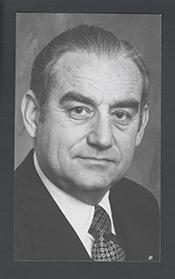
Historical · U.S. House · Texas · District 1
Sam Hall Jr.
Former U.S. Representative · Texas District 1 · 1975–1987 · Democratic
Sam Hall Jr. represented Texas's District 1 in the United States House of Representatives (1975–1987) for the Democratic party. The page below collects sourced biographical facts, term history, committee roles, and provenance for Jr..
Bioguide ID: H000070
Key facts
- Full name
- Sam Hall Jr.
- State
- Texas
- District
- District 1
- Party
- Democratic
- House service
- 1975–1987
- First House term
- 1975
- Status
- Left office
- Current term ends
- —
- Born
- 1924
- Bioguide ID
- H000070
- Committee assignments
- —
- Dataset version
- 1.20260605
Biographical narrative
922 words · sourced from the Wikipedia REST extract
Samuel Blakeley Hall Jr. was an American lawyer, politician, and judge who served as a U.S. Representative for Texas's 1st congressional district from 1975 until 1987. A member of the Democratic Party, Hall was known for his commitment to public service, which spanned both legislative and judicial roles. After completing six terms in the House of Representatives, he transitioned to a federal judicial position, where he served until his death in 1994.
Early life and career
Sam B. Hall Jr. was born on January 11, 1924, in Marshall, Texas. He spent his formative years in this East Texas town, where he also began his higher education at the College of Marshall. During his time there, he met Mary Madeleine Segal, who would later become his wife. Hall graduated from the College of Marshall with an Associate of Arts degree in 1942, after which he continued his education at the University of Texas. His academic pursuits were interrupted by World War II, during which he enlisted in the United States Army Air Corps, serving his country until the war concluded.
Following his military service, Hall returned to Marshall, where he married Mary Madeleine Segal. He completed his education by graduating from Baylor University in 1946 and subsequently earned a Bachelor of Laws from Baylor Law School in 1948. Upon being admitted to the bar, Hall began his legal career in private practice in Marshall, where he worked until 1976. His legal career laid the groundwork for his later political endeavors, as he developed a reputation within the community and gained valuable experience in the legal system.
Hall's initial foray into politics came in 1962 when he sought the Democratic Party nomination for Congress in Texas's 1st congressional district. Although he was unsuccessful in that attempt, he remained active in local governance, serving as chairman of Marshall's board of education from 1972 to 1976. This role allowed him to engage with educational issues and community concerns, further solidifying his commitment to public service.
House tenure
In 1976, Hall successfully won a special election to the U.S. House of Representatives following the death of incumbent Wright Patman. His election marked the beginning of a significant political career at the federal level. Hall was reelected five times, serving a total of six terms in the House. His tenure in Congress was characterized by active participation in various legislative matters, and he was a member of both the Judiciary and Veterans' Affairs committees.
During his time in the House, Hall focused on a range of issues pertinent to his constituents and the broader national landscape. His involvement in the Judiciary Committee allowed him to engage with critical legal reforms and oversight of judicial appointments, while his role on the Veterans' Affairs Committee highlighted his commitment to supporting veterans and addressing their needs. Hall's legislative work was shaped by the political climate of the time, as well as the specific concerns of the East Texas region he represented.
Hall's congressional career came to an end on January 3, 1987, when he resigned from the House to accept a judicial appointment. His departure from Congress was part of a broader political strategy, as his seat was expected to transition to a Republican following his resignation. This shift reflected the changing political dynamics in the southern United States during the 1980s, as many traditionally Democratic areas began to lean Republican.
Legislative focus and committees
Throughout his six terms in the U.S. House of Representatives, Hall was known for his active engagement in legislative matters, particularly those that aligned with his roles on the Judiciary and Veterans' Affairs committees. His work on the Judiciary Committee involved oversight of judicial nominations and consideration of various legal issues, including civil rights, criminal justice reform, and federal judicial processes. Hall's legal background equipped him with the knowledge and expertise necessary to contribute meaningfully to discussions and decisions within the committee.
On the Veterans' Affairs Committee, Hall advocated for policies and programs aimed at improving the lives of veterans and their families. This included addressing issues such as healthcare access, benefits, and support services for those who had served in the military. His commitment to veterans was a significant aspect of his legislative focus, reflecting a broader national concern for the welfare of those who had defended the country.
In addition to his committee work, Hall's legislative efforts were influenced by the needs and priorities of his constituents in Texas's 1st congressional district. He sought to represent their interests in Congress, advocating for policies that would benefit the local economy, education, and infrastructure. His ability to navigate the complexities of federal legislation while remaining attuned to local concerns was a hallmark of his tenure.
After leaving the House, Hall transitioned to a judicial role when he was nominated by President Ronald Reagan to serve as a United States district judge for the Eastern District of Texas. This appointment marked a significant shift in his career, allowing him to continue his public service in a different capacity. Hall's judicial service lasted until his death on April 10, 1994, and he was remembered for his contributions to both the legislative and judicial branches of government.
In recognition of his legacy, the Sam B. Hall Federal Courthouse in Marshall was later named in his honor, reflecting the impact he had on the legal and political landscape of Texas. His life and career continue to be commemorated, illustrating the importance of public service and the role of elected officials in shaping their communities and the nation.
Notable legislation
Sponsored and co-sponsored legislation for Sam Hall Jr. is pending operator curation. The biographical narrative above carries the same provenance trail until per-bill rows are written.
Sources
- [1]https://en.wikipedia.org/wiki/Sam_B._Hall_Jr.Wikipedia · retrieved 2026-06-05
Notable quotes
Sourced quotes for Sam Hall Jr. are pending operator curation. Narrative-scope provenance remains attached below.
Sources
- [1]https://en.wikipedia.org/wiki/Sam_B._Hall_Jr.Wikipedia · retrieved 2026-06-05
Key positions
Curated policy positions for Sam Hall Jr. are pending operator review. The biographical narrative above carries the same provenance trail until per-topic positions are written.
Sources
- [1]https://en.wikipedia.org/wiki/Sam_B._Hall_Jr.Wikipedia · retrieved 2026-06-05
Terms served
- 1975–1977U.S. House · Term 1 · Democratic
- 1977–1979U.S. House · Term 2 · Democratic
- 1979–1981U.S. House · Term 3 · Democratic
- 1981–1983U.S. House · Term 4 · Democratic
- 1983–1985U.S. House · Term 5 · Democratic
- 1985–1987U.S. House · Term 6 · Democratic
Sources & provenance
Every attributable claim above carries a per-section [N] marker that resolves to the corresponding URL below. Each entry records the upstream provider, the canonical URL, and the timestamp at which the source was retrieved by the ingest pipeline.
Key facts
- https://bioguide.congress.gov/search/bio/H000070bioguide · retrieved 2026-06-05
- https://www.govtrack.us/congress/members/404954govtrack · retrieved 2026-06-05
Biographical narrative
- https://en.wikipedia.org/wiki/Sam_B._Hall_Jr.wikipedia · retrieved 2026-06-05
Find your representative
Every U.S. state elects representatives by district. Browse Texas’s delegation, the full former-representative roster, or explore the role and term length.
Related on The Candidate
- Preceded by Eugene BlackEarlier holder of the Texas District 1 House seat · Democratic.Open
- Succeeded by Max Sandlin Jr.Later holder of the Texas District 1 House seat · Democratic.Open
- Charles StewartFormer U.S. Representative · Texas District 1 · DemocraticOpen
- David KaufmanFormer U.S. Representative · Texas District 1 · DemocraticOpen
- George SmythFormer U.S. Representative · Texas District 1 · DemocraticOpen
- Democratic PartyFederal candidates and office holders on the Democratic line.Open