
Historical · U.S. House · Texas · District 10
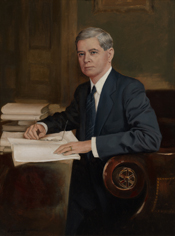
James Buchanan
Former U.S. Representative · Texas District 10 · 1913–1939 · Democratic
James Buchanan represented Texas's District 10 in the United States House of Representatives (1913–1939) for the Democratic party. The page below collects sourced biographical facts, term history, committee roles, and provenance for Buchanan.
Bioguide ID: B001006
Key facts
- Full name
- James Buchanan
- State
- Texas
- District
- District 10
- Party
- Democratic
- House service
- 1913–1939
- First House term
- 1913
- Status
- Left office
- Current term ends
- —
- Born
- 1867
- Bioguide ID
- B001006
- Committee assignments
- —
- Dataset version
- 1.20260605
Biographical narrative
815 words · sourced from the Wikipedia REST extract
James Buchanan was a prominent U.S. Representative from Texas, serving the 10th congressional district from 1913 until his death in 1937. A member of the Democratic Party, Buchanan was known for his long tenure in the House of Representatives, where he played a significant role in various legislative matters and held influential positions, including the chairmanship of the House Committee on Appropriations.
Early life and career
James Paul Buchanan was born on April 30, 1867, in Midway, Orangeburg County, South Carolina. His family relocated to Texas later that same year, settling near Chappell Hill in Washington County. Buchanan's early education took place in the local schools of Chappell Hill, where he developed a foundation for his future endeavors. In 1889, he graduated with a law degree from the University of Texas at Austin, marking the beginning of his professional career.
Following his graduation, Buchanan established a law practice in Washington County and quickly became involved in local politics as a member of the Democratic Party. His political career commenced with his election as a county justice of the peace, a position he held from 1889 to 1892. Subsequently, he served as the county's prosecuting attorney from 1892 to 1899. His legal expertise and commitment to public service led to his appointment as the district attorney for the twenty-first judicial district, a role he occupied from 1899 until 1906.
Buchanan's political aspirations continued to grow, and he was elected to the Texas House of Representatives, where he served from 1906 until 1913. His time in the state legislature provided him with valuable experience and connections, paving the way for his future congressional career.
House tenure
In 1913, Buchanan was elected to the U.S. House of Representatives, filling a vacancy left by the resignation of Albert Sidney Burleson. He began his first term in the Sixty-third Congress on April 15, 1913. Following this initial term, Buchanan was elected to a full term in the Sixty-fourth Congress and subsequently won reelection eleven additional times, demonstrating his strong support within his district.
Buchanan's tenure in the House lasted until January 3, 1939, when he passed away while still in office. Over the course of his 13 terms, he became known for his leadership and influence, particularly as the chairman of the House Committee on Appropriations from 1933 until his death. This position allowed him to play a critical role in shaping federal budgetary policies and funding allocations during a tumultuous period in American history, which included the Great Depression and the New Deal era.
Throughout his congressional career, Buchanan was recognized as a member of the Miller Group, a coalition of conservative Democrats who opposed many of President Franklin D. Roosevelt's New Deal initiatives. This group, led by lobbyist Henry Pomeroy Miller, sought to maintain traditional Democratic values and resist what they viewed as excessive government intervention in the economy.
Legislative focus and committees
Buchanan's legislative focus was characterized by his commitment to fiscal responsibility and appropriations. As chairman of the House Committee on Appropriations, he was instrumental in overseeing the allocation of federal funds and ensuring that government spending was managed effectively. His leadership in this role was particularly significant during the 1930s, a time when the federal government was expanding its role in response to economic challenges.
Buchanan's conservative stance on fiscal matters often put him at odds with more progressive members of Congress, particularly those aligned with Roosevelt's New Deal policies. His opposition to certain aspects of the New Deal reflected broader tensions within the Democratic Party during this period, as members grappled with the appropriate response to the economic crisis facing the nation.
In addition to his work on the Appropriations Committee, Buchanan was involved in various other legislative initiatives throughout his career. His extensive experience in law and local governance informed his approach to policymaking, as he sought to balance the needs of his constituents with the broader national interests.
Buchanan's contributions to Congress extended beyond his committee work. He was known for his ability to navigate complex political landscapes and build coalitions, which allowed him to advocate effectively for the interests of Texas and his district. His long service in the House is a testament to his political acumen and the trust placed in him by his constituents.
James Buchanan passed away on February 22, 1937, while still serving in Congress. His death marked the end of a significant chapter in Texas political history, and he was succeeded by Lyndon B. Johnson, who would later become the 36th President of the United States. Buchanan was laid to rest at Prairie Lea Cemetery in Brenham, Texas.
In recognition of his contributions, Buchanan's legacy endures through various memorials, including the Buchanan Dam and the lake it forms, Lake Buchanan, located near Burnet, Texas. These landmarks serve as a reminder of his impact on the state and his long-standing commitment to public service.
Notable legislation
Sponsored and co-sponsored legislation for James Buchanan is pending operator curation. The biographical narrative above carries the same provenance trail until per-bill rows are written.
Sources
- [1]https://en.wikipedia.org/wiki/James_P._BuchananWikipedia · retrieved 2026-06-05
Notable quotes
Sourced quotes for James Buchanan are pending operator curation. Narrative-scope provenance remains attached below.
Sources
- [1]https://en.wikipedia.org/wiki/James_P._BuchananWikipedia · retrieved 2026-06-05
Key positions
Curated policy positions for James Buchanan are pending operator review. The biographical narrative above carries the same provenance trail until per-topic positions are written.
Sources
- [1]https://en.wikipedia.org/wiki/James_P._BuchananWikipedia · retrieved 2026-06-05
Terms served
- 1913–1915U.S. House · Term 1 · Democratic
- 1915–1917U.S. House · Term 2 · Democratic
- 1917–1919U.S. House · Term 3 · Democratic
- 1919–1921U.S. House · Term 4 · Democratic
- 1921–1923U.S. House · Term 5 · Democratic
- 1923–1925U.S. House · Term 6 · Democratic
- 1925–1927U.S. House · Term 7 · Democratic
- 1927–1929U.S. House · Term 8 · Democratic
- 1929–1931U.S. House · Term 9 · Democratic
- 1931–1933U.S. House · Term 10 · Democratic
- 1933–1935U.S. House · Term 11 · Democratic
- 1935–1937U.S. House · Term 12 · Democratic
- 1937–1939U.S. House · Term 13 · Democratic
Sources & provenance
Every attributable claim above carries a per-section [N] marker that resolves to the corresponding URL below. Each entry records the upstream provider, the canonical URL, and the timestamp at which the source was retrieved by the ingest pipeline.
Key facts
- https://bioguide.congress.gov/search/bio/B001006bioguide · retrieved 2026-06-05
- https://www.govtrack.us/congress/members/401956govtrack · retrieved 2026-06-05
Biographical narrative
- https://en.wikipedia.org/wiki/James_P._Buchananwikipedia · retrieved 2026-06-05
Find your representative
Every U.S. state elects representatives by district. Browse Texas’s delegation, the full former-representative roster, or explore the role and term length.
Related on The Candidate
- Preceded by Robert HawleyEarlier holder of the Texas District 10 House seat · Republican.Open
- Succeeded by William ThornberryLater holder of the Texas District 10 House seat · Democratic.Open
- Charles StewartFormer U.S. Representative · Texas District 1 · DemocraticOpen
- David KaufmanFormer U.S. Representative · Texas District 1 · DemocraticOpen
- Eugene BlackFormer U.S. Representative · Texas District 1 · DemocraticOpen
- George SmythFormer U.S. Representative · Texas District 1 · DemocraticOpen