
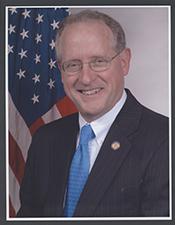
Historical · U.S. House · Texas · District 11
K. Conaway
Former U.S. Representative · Texas District 11 · 2005–2021 · Republican
K. Conaway represented Texas's District 11 in the United States House of Representatives (2005–2021) for the Republican party. The page below collects sourced biographical facts, term history, committee roles, and provenance for Conaway.
Bioguide ID: C001062
Key facts
- Full name
- K. Conaway
- State
- Texas
- District
- District 11
- Party
- Republican
- House service
- 2005–2021
- First House term
- 2005
- Status
- Left office
- Current term ends
- —
- Born
- 1948
- Bioguide ID
- C001062
- Committee assignments
- —
- Dataset version
- 1.20260604
Biographical narrative
907 words · sourced from the Wikipedia REST extract
K. Michael Conaway is a former U.S. Representative who served Texas's 11th congressional district from 2005 until 2021. A member of the Republican Party, Conaway's tenure in the House of Representatives included leadership roles on significant committees, notably the House Agriculture Committee and the House Ethics Committee. He is recognized for his involvement in investigations related to Russian interference in the 2016 U.S. elections and has been active in various legislative initiatives throughout his time in office.
Early life and career
K. Michael Conaway was born on June 11, 1948, in Borger, Texas, located in the Texas Panhandle northeast of Amarillo. He is the son of Helen Jean McCormick and Louis Denton Conaway. Conaway completed his high school education at Permian High School in Odessa, Texas, where he distinguished himself as a notable athlete, contributing to the school's football team that won the state championship in 1965. Following high school, he pursued higher education at Ranger College, where he received a football scholarship. He later transferred to Texas A&M University-Commerce, then known as East Texas State University, where he continued to excel in football and was part of two Lone Star Conference championship teams. Conaway graduated in 1970 with a degree in Accounting.
After completing his education, Conaway served in the United States Army from 1970 to 1972. Upon returning to civilian life, he became a Certified Public Accountant in 1974 and held various financial positions, including serving as chief financial officer at a bank. From 1981 to 1986, he was the chief financial officer for Arbusto Energy Inc., an oil and gas exploration company founded by George W. Bush. Following Bush's election as governor of Texas, Conaway was appointed to the Texas State Board of Public Accountancy, where he served as a volunteer for seven years, including five years as chairman.
House tenure
Conaway's political career in the U.S. House of Representatives began when he was elected to represent Texas's 11th congressional district in 2005. This district, which includes cities such as Midland, Odessa, San Angelo, Brownwood, and Granbury, is situated in West Texas and is known for its strong Republican leanings. Conaway's initial campaign for elective office occurred in 2003 when he ran in a special election for the 19th Congressional District but was narrowly defeated. Following redistricting efforts that created the new 11th District, Conaway successfully secured his seat in the House.
During his time in Congress, Conaway served a total of eight terms, concluding his service on January 3, 2021. His tenure was marked by significant involvement in various legislative and investigative efforts. He was a member of the National Republican Congressional Committee (NRCC) and chaired its audit committee, where he uncovered financial discrepancies within the committee's accounts. Conaway's leadership roles included serving as the chair of the House Agriculture Committee and later as its ranking member. He also held positions on the House Armed Services Committee and the Permanent Select Committee on Intelligence.
Conaway's political endorsements included support for Mitt Romney in the 2008 presidential election and Donald Trump in the 2016 election. His legislative actions included voting against the extension of the Voting Rights Act of 1965 in 2006. He announced in July 2019 that he would not seek reelection, and he was succeeded by fellow Republican August Pfluger.
Legislative focus and committees
Throughout his congressional career, Conaway focused on a range of issues pertinent to his constituents and the broader national landscape. He was particularly active in agricultural policy, reflecting the interests of the rural and agricultural communities within his district. As the chair of the House Agriculture Committee, he played a crucial role in shaping legislation related to farming, food production, and rural development.
In addition to his agricultural focus, Conaway was involved in national security matters as a member of the House Armed Services Committee. His work on this committee included participation in subcommittees that addressed intelligence, emerging threats, and military capabilities. He also served on the subcommittee focused on seapower and projection forces, which dealt with naval and maritime issues.
Conaway's involvement in intelligence matters became particularly prominent during the investigation into Russian interference in the 2016 U.S. elections. Following the recusal of the committee chair, he assumed leadership of the House Intelligence Committee's investigation. His actions during this period included preventing Democratic efforts to subpoena financial records related to President Trump and his associates. Conaway's committee ultimately concluded that there was no evidence of collusion between the Trump campaign and Russia, a finding that was met with contention from Democratic members.
In addition to his committee assignments, Conaway was a founder of the CPA Caucus, which aimed to promote the interests of certified public accountants in Congress. He also participated in various caucuses related to international conservation, reliable energy, sportsmen's issues, the Constitution, and Western interests.
Conaway's legislative initiatives included introducing measures to extend and reform federal tax credits aimed at promoting the commercial deployment of carbon capture and storage technologies. His work in Congress reflected a commitment to addressing both local and national issues, particularly those affecting the agricultural sector and national security.
Overall, K. Michael Conaway's career in the U.S. House of Representatives was characterized by a focus on agricultural policy, national security, and financial oversight, alongside significant involvement in investigations of national importance. His tenure concluded in early 2021 after a successful run of eight terms, during which he contributed to various legislative efforts and served in key leadership roles.
Notable legislation
Sponsored and co-sponsored legislation for K. Conaway is pending operator curation. The biographical narrative above carries the same provenance trail until per-bill rows are written.
Sources
- [1]https://en.wikipedia.org/wiki/Mike_ConawayWikipedia · retrieved 2026-06-04
Notable quotes
Sourced quotes for K. Conaway are pending operator curation. Narrative-scope provenance remains attached below.
Sources
- [1]https://en.wikipedia.org/wiki/Mike_ConawayWikipedia · retrieved 2026-06-04
Key positions
Curated policy positions for K. Conaway are pending operator review. The biographical narrative above carries the same provenance trail until per-topic positions are written.
Sources
- [1]https://en.wikipedia.org/wiki/Mike_ConawayWikipedia · retrieved 2026-06-04
Terms served
- 2005–2007U.S. House · Term 1 · Republican
- 2007–2009U.S. House · Term 2 · Republican
- 2009–2011U.S. House · Term 3 · Republican
- 2011–2013U.S. House · Term 4 · Republican
- 2013–2015U.S. House · Term 5 · Republican
- 2015–2017U.S. House · Term 6 · Republican
- 2017–2019U.S. House · Term 7 · Republican
- 2019–2021U.S. House · Term 8 · Republican
Sources & provenance
Every attributable claim above carries a per-section [N] marker that resolves to the corresponding URL below. Each entry records the upstream provider, the canonical URL, and the timestamp at which the source was retrieved by the ingest pipeline.
Key facts
- https://bioguide.congress.gov/search/bio/C001062bioguide · retrieved 2026-06-04
- https://conaway.house.govhouse.gov · retrieved 2026-06-04
Biographical narrative
- https://en.wikipedia.org/wiki/Mike_Conawaywikipedia · retrieved 2026-06-04
Find your representative
Every U.S. state elects representatives by district. Browse Texas’s delegation, the full former-representative roster, or explore the role and term length.
Related on The Candidate
- Preceded by James LeathEarlier holder of the Texas District 11 House seat · Democratic.Open
- Charles StewartFormer U.S. Representative · Texas District 1 · DemocraticOpen
- David KaufmanFormer U.S. Representative · Texas District 1 · DemocraticOpen
- Eugene BlackFormer U.S. Representative · Texas District 1 · DemocraticOpen
- George SmythFormer U.S. Representative · Texas District 1 · DemocraticOpen
- Republican PartyFederal candidates and office holders on the Republican line.Open