
Historical · U.S. House · Texas · District 11
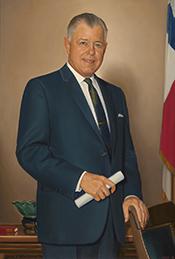
William Poage
Former U.S. Representative · Texas District 11 · 1937–1979 · Democratic
William Poage represented Texas's District 11 in the United States House of Representatives (1937–1979) for the Democratic party. The page below collects sourced biographical facts, term history, committee roles, and provenance for Poage.
Bioguide ID: P000398
Key facts
- Full name
- William Poage
- State
- Texas
- District
- District 11
- Party
- Democratic
- House service
- 1937–1979
- First House term
- 1937
- Status
- Left office
- Current term ends
- —
- Born
- 1899
- Bioguide ID
- P000398
- Committee assignments
- —
- Dataset version
- 1.20260605
Biographical narrative
915 words · sourced from the Wikipedia REST extract
William Robert Poage was a prominent American politician who served as a U.S. Representative for Texas's 11th congressional district from 1937 until 1979. A member of the Democratic Party, Poage's lengthy tenure in the House of Representatives spanned over four decades, during which he was elected to office 21 times. His legislative career was marked by his advocacy for agricultural policies and animal welfare, as well as his involvement in various committees, notably serving as the chairman of the Committee on Agriculture for several years.
Early life and career
William Robert Poage was born on December 28, 1899, in Waco, Texas, to William Allen Poage and Helen Wheeler (née Conger). He spent his formative years in the vicinity of Woodson, Texas, where he attended local schools in Throckmorton County. During World War I, Poage served as an apprentice seaman in the United States Navy, an experience that contributed to his early understanding of service and leadership.
After the war, Poage pursued higher education at the University of Texas at Austin and the University of Colorado Boulder. He ultimately earned a Bachelor of Arts degree from Baylor University in 1921. Following his graduation, he engaged in farming and also taught geology at Baylor University. His academic pursuits continued as he attended Baylor Law School, where he received his LL.B. in 1924. Poage practiced law in Waco and maintained a teaching position at Baylor Law, reflecting his commitment to education and public service.
Poage's political career began in the Texas House of Representatives, where he served from 1925 to 1929. He then moved to the Texas State Senate, serving from 1931 until 1937. His early political engagements laid the groundwork for his later success at the national level, as he developed a reputation for addressing the needs of his constituents.
House tenure
In 1936, Poage was elected to the U.S. House of Representatives, marking the beginning of a lengthy and influential congressional career. He faced personal challenges during his time in office, including a diagnosis of Ménière's disease, which eventually resulted in deafness in one ear. Despite these challenges, Poage remained an active and engaged member of Congress.
Throughout his tenure, Poage was a staunch supporter of policies aimed at assisting rural residents, particularly through the agricultural initiatives of the Roosevelt Administration. His legislative efforts included advocating for farm price supports, which were crucial for the economic stability of farmers in his district. Poage's commitment to animal welfare was evident in his sponsorship of the Humane Slaughter Act of 1958 and his authorship of legislation that contributed to the establishment of the Animal Welfare Act of 1966.
Poage's influence within the House was further solidified when he was appointed chairman of the Committee on Agriculture, a position he held from 1967 until 1975. His leadership in this role allowed him to shape agricultural policy significantly, although his tenure ended amid a revolt within the House Democratic Caucus. Poage was perceived as too conservative by some members, leading to his replacement by Tom Foley, who would later become Speaker of the House.
During his time in Congress, Poage's voting record reflected a complex relationship with civil rights legislation. He was among the majority of the Texas delegation who chose not to sign the 1956 Southern Manifesto, which opposed the Supreme Court's decision to desegregate public schools. However, he voted against several key civil rights measures, including the Civil Rights Acts of 1957, 1960, 1964, and 1968, as well as the Voting Rights Act of 1965. His responses to civil rights initiatives were often controversial, illustrating the tensions within the Democratic Party during this transformative period in American history.
Legislative focus and committees
Throughout his congressional career, Poage's legislative focus primarily revolved around agricultural issues and animal welfare. His advocacy for rural constituents was a defining feature of his time in office, as he championed policies that supported farmers and the agricultural sector. The farm price supports he endorsed were part of broader efforts to stabilize agricultural markets and ensure the livelihoods of those in rural communities.
In addition to his work on agriculture, Poage's involvement in animal welfare legislation marked a significant aspect of his legacy. His sponsorship of the Humane Slaughter Act of 1958 was a critical step in promoting humane treatment of animals in the food production industry. Furthermore, his contributions to the Animal Welfare Act of 1966 established important protections for animals, reflecting a growing awareness of animal rights during that era.
Poage's leadership as chairman of the Committee on Agriculture allowed him to influence a wide range of agricultural policies, from crop insurance to food safety regulations. His tenure in this role was characterized by efforts to address the challenges faced by farmers, particularly in the context of changing economic conditions and agricultural practices.
After 21 terms in office, Poage chose not to seek re-election in 1978, concluding his congressional career on January 3, 1979. Following his retirement, he returned to Waco, Texas, where he remained engaged in community affairs. In recognition of his contributions to public service, the W. R. Poage Legislative Library for Graduate Studies and Research was established at Baylor University to house his congressional papers and those of other former congressmen.
William Robert Poage passed away on January 3, 1987, at the age of 87, following complications from heart surgery. His long and impactful career in the U.S. House of Representatives left a lasting legacy in Texas politics, particularly in the areas of agriculture and animal welfare.
Notable legislation
Sponsored and co-sponsored legislation for William Poage is pending operator curation. The biographical narrative above carries the same provenance trail until per-bill rows are written.
Sources
- [1]https://en.wikipedia.org/wiki/William_R._PoageWikipedia · retrieved 2026-06-05
Notable quotes
Sourced quotes for William Poage are pending operator curation. Narrative-scope provenance remains attached below.
Sources
- [1]https://en.wikipedia.org/wiki/William_R._PoageWikipedia · retrieved 2026-06-05
Key positions
Curated policy positions for William Poage are pending operator review. The biographical narrative above carries the same provenance trail until per-topic positions are written.
Sources
- [1]https://en.wikipedia.org/wiki/William_R._PoageWikipedia · retrieved 2026-06-05
Terms served
- 1937–1939U.S. House · Term 1 · Democratic
- 1939–1941U.S. House · Term 2 · Democratic
- 1941–1943U.S. House · Term 3 · Democratic
- 1943–1945U.S. House · Term 4 · Democratic
- 1945–1947U.S. House · Term 5 · Democratic
- 1947–1949U.S. House · Term 6 · Democratic
- 1949–1951U.S. House · Term 7 · Democratic
- 1951–1953U.S. House · Term 8 · Democratic
- 1953–1955U.S. House · Term 9 · Democratic
- 1955–1957U.S. House · Term 10 · Democratic
- 1957–1959U.S. House · Term 11 · Democratic
- 1959–1961U.S. House · Term 12 · Democratic
- 1961–1963U.S. House · Term 13 · Democratic
- 1963–1965U.S. House · Term 14 · Democratic
- 1965–1967U.S. House · Term 15 · Democratic
- 1967–1969U.S. House · Term 16 · Democratic
- 1969–1971U.S. House · Term 17 · Democratic
- 1971–1973U.S. House · Term 18 · Democratic
- 1973–1975U.S. House · Term 19 · Democratic
- 1975–1977U.S. House · Term 20 · Democratic
- 1977–1979U.S. House · Term 21 · Democratic
Sources & provenance
Every attributable claim above carries a per-section [N] marker that resolves to the corresponding URL below. Each entry records the upstream provider, the canonical URL, and the timestamp at which the source was retrieved by the ingest pipeline.
Key facts
- https://bioguide.congress.gov/search/bio/P000398bioguide · retrieved 2026-06-05
- https://www.govtrack.us/congress/members/408791govtrack · retrieved 2026-06-05
Biographical narrative
- https://en.wikipedia.org/wiki/William_R._Poagewikipedia · retrieved 2026-06-05
Find your representative
Every U.S. state elects representatives by district. Browse Texas’s delegation, the full former-representative roster, or explore the role and term length.
Related on The Candidate
- Preceded by Oliver CrossEarlier holder of the Texas District 11 House seat · Democratic.Open
- Succeeded by James LeathLater holder of the Texas District 11 House seat · Democratic.Open
- Charles StewartFormer U.S. Representative · Texas District 1 · DemocraticOpen
- David KaufmanFormer U.S. Representative · Texas District 1 · DemocraticOpen
- Eugene BlackFormer U.S. Representative · Texas District 1 · DemocraticOpen
- George SmythFormer U.S. Representative · Texas District 1 · DemocraticOpen