
Historical · U.S. House · Texas · District 12
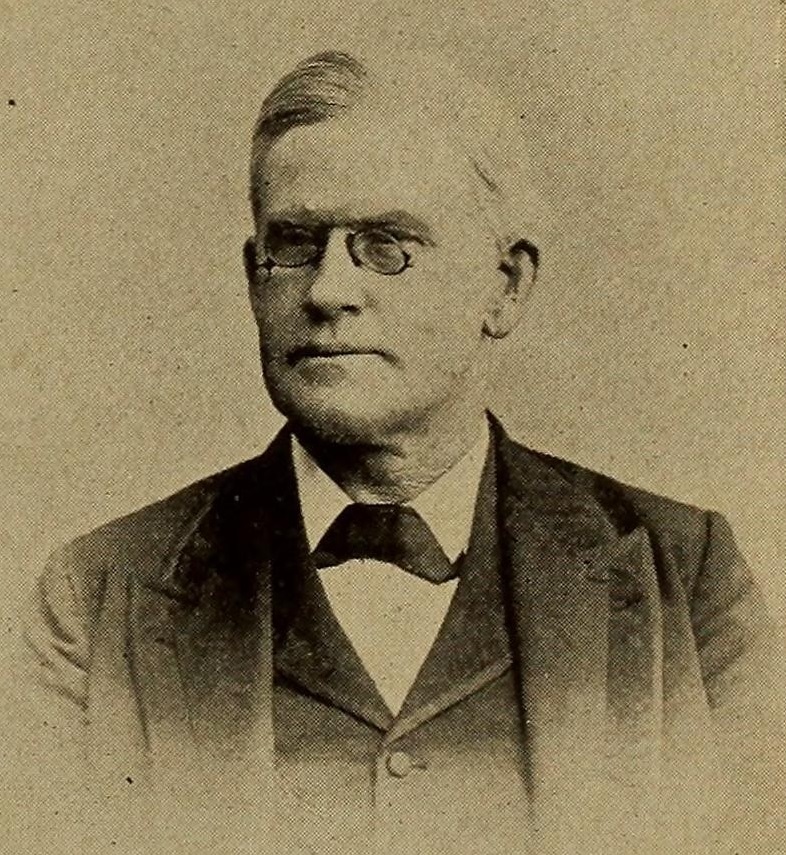
George Noonan
Former U.S. Representative · Texas District 12 · 1895–1897 · Republican
George Noonan represented Texas's District 12 in the United States House of Representatives (1895–1897) for the Republican party. The page below collects sourced biographical facts, term history, committee roles, and provenance for Noonan.
Bioguide ID: N000131
Key facts
- Full name
- George Noonan
- State
- Texas
- District
- District 12
- Party
- Republican
- House service
- 1895–1897
- First House term
- 1895
- Status
- Left office
- Current term ends
- —
- Born
- 1828
- Bioguide ID
- N000131
- Committee assignments
- —
- Dataset version
- 1.20260606
Biographical narrative
901 words · sourced from the Wikipedia REST extract
George Noonan was a U.S. Representative from Texas who served in the House of Representatives during the mid-1890s. A member of the Republican Party, he made history as the first congressman from Texas to be elected to federal office after the Reconstruction era. His political career was preceded by a significant tenure as a state judge, a role he held for over three decades. Noonan's life and career reflect the complexities of American politics during a transformative period in the nation's history, particularly in the southern states following the Civil War.
Early life and career
George Noonan was born on August 20, 1828, in Newark, New Jersey. He received a liberal education, which laid the groundwork for his future endeavors in law and politics. After studying law, he was admitted to the bar, allowing him to begin his legal career. At the age of 24, in 1852, Noonan made a significant life change by migrating westward to Texas. He settled in Castroville, located in Medina County, where he established a private law practice. This move was indicative of the westward expansion that characterized the United States during the mid-19th century, as many individuals sought new opportunities in the growing frontier.
Noonan's legal career in Texas was marked by his increasing involvement in local politics. His commitment to public service was evident when he was elected as the judge of the eighteenth judicial district of Texas in 1862. This position allowed him to influence the legal landscape of the region significantly. He served in this role until 1894, demonstrating a long-standing commitment to the judiciary and the legal system in Texas. His tenure as a judge coincided with a tumultuous period in American history, including the aftermath of the Civil War and the complexities of Reconstruction. During this time, Noonan's legal expertise and leadership would have been crucial in navigating the challenges faced by the state and its citizens.
In 1894, after more than three decades on the bench, Noonan resigned from his judicial position to pursue a new opportunity in federal politics. His decision to enter the political arena was reflective of the shifting dynamics in Texas, particularly as the Republican Party began to gain traction in a region that had been predominantly Democratic since the end of the Civil War.
House tenure
George Noonan's congressional career began when he was elected as a Republican to the Fifty-fourth Congress, which convened on March 4, 1895. His election was historically significant as he became the first Republican congressman from Texas to be elected after the end of Reconstruction. This marked a notable shift in the political landscape of Texas, as the Republican Party was beginning to establish a foothold in a state that had been largely dominated by the Democratic Party for decades.
During his time in the House of Representatives, Noonan represented Texas's 12th congressional district. His tenure lasted until March 3, 1897, when he completed his term. As a member of Congress, Noonan would have been involved in various legislative activities and discussions pertinent to the interests of his constituents and the broader national agenda. However, specific details regarding the legislation he supported or the committees on which he served are not documented in the available records.
Despite his historic election, Noonan faced challenges in maintaining his congressional seat. He ran for reelection in 1896 but was defeated in his campaign for the Fifty-fifth Congress. This defeat underscored the difficulties that Republican candidates faced in the South during this period, as the political landscape was still heavily influenced by the legacy of the Civil War and Reconstruction. Following his defeat, Noonan returned to San Antonio, where he resumed his legal practice, continuing to contribute to the legal community in Texas.
Legislative focus and committees
While specific details regarding George Noonan's legislative focus and committee assignments during his time in Congress are not provided in the available records, it is important to understand the context in which he served. The mid-1890s were a period of significant change in the United States, characterized by economic growth, industrialization, and social change. As a member of the Republican Party, Noonan would have aligned with the party's platform, which during this era often emphasized issues such as economic development, infrastructure improvements, and support for business interests.
Noonan's background as a judge may have influenced his perspective on legal and judicial matters, potentially guiding his contributions to discussions on legislation related to the judiciary or civil rights. However, without specific records of his committee assignments or legislative initiatives, it is difficult to ascertain the precise nature of his contributions to the House.
After leaving Congress, Noonan continued to practice law in San Antonio until his death on August 17, 1907. His passing marked the end of a life dedicated to public service and the legal profession. He is interred at St. Mary's Cemetery in San Antonio, Texas, where he is remembered as a significant figure in the state's political history.
In summary, George Noonan's life and career reflect the complexities of American politics during a transformative period. His role as the first Republican congressman from Texas after Reconstruction highlights the evolving political landscape of the time. Through his long service as a judge and his brief tenure in Congress, Noonan contributed to the legal and political fabric of Texas, leaving a legacy that would be recognized in the annals of the state's history.
Notable legislation
Sponsored and co-sponsored legislation for George Noonan is pending operator curation. The biographical narrative above carries the same provenance trail until per-bill rows are written.
Sources
- [1]https://en.wikipedia.org/wiki/George_H._NoonanWikipedia · retrieved 2026-06-06
Notable quotes
Sourced quotes for George Noonan are pending operator curation. Narrative-scope provenance remains attached below.
Sources
- [1]https://en.wikipedia.org/wiki/George_H._NoonanWikipedia · retrieved 2026-06-06
Key positions
Curated policy positions for George Noonan are pending operator review. The biographical narrative above carries the same provenance trail until per-topic positions are written.
Sources
- [1]https://en.wikipedia.org/wiki/George_H._NoonanWikipedia · retrieved 2026-06-06
Terms served
- 1895–1897U.S. House · Term 1 · Republican
Sources & provenance
Every attributable claim above carries a per-section [N] marker that resolves to the corresponding URL below. Each entry records the upstream provider, the canonical URL, and the timestamp at which the source was retrieved by the ingest pipeline.
Key facts
- https://bioguide.congress.gov/search/bio/N000131bioguide · retrieved 2026-06-06
- https://www.govtrack.us/congress/members/408215govtrack · retrieved 2026-06-06
Biographical narrative
- https://en.wikipedia.org/wiki/George_H._Noonanwikipedia · retrieved 2026-06-06
Find your representative
Every U.S. state elects representatives by district. Browse Texas’s delegation, the full former-representative roster, or explore the role and term length.
Related on The Candidate
- Preceded by Thomas PaschalEarlier holder of the Texas District 12 House seat · Democratic.Open
- Succeeded by Oscar GillespieLater holder of the Texas District 12 House seat · Democratic.Open
- Charles StewartFormer U.S. Representative · Texas District 1 · DemocraticOpen
- David KaufmanFormer U.S. Representative · Texas District 1 · DemocraticOpen
- Eugene BlackFormer U.S. Representative · Texas District 1 · DemocraticOpen
- George SmythFormer U.S. Representative · Texas District 1 · DemocraticOpen