
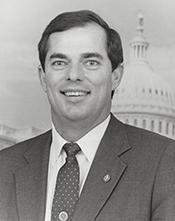
Historical · U.S. House · Texas · District 13
William Sarpalius
Former U.S. Representative · Texas District 13 · 1989–1995 · Democratic
William Sarpalius represented Texas's District 13 in the United States House of Representatives (1989–1995) for the Democratic party. The page below collects sourced biographical facts, term history, committee roles, and provenance for Sarpalius.
Bioguide ID: S000066
Key facts
- Full name
- William Sarpalius
- State
- Texas
- District
- District 13
- Party
- Democratic
- House service
- 1989–1995
- First House term
- 1989
- Status
- Left office
- Current term ends
- —
- Born
- 1948
- Bioguide ID
- S000066
- Committee assignments
- —
- Dataset version
- 1.20260605
Biographical narrative
960 words · sourced from the Wikipedia REST extract
William Clarence Sarpalius is a former American politician and lobbyist who served as a U.S. Representative for Texas's 13th congressional district from 1989 until 1995. A member of the Democratic Party, Sarpalius's congressional career was marked by his involvement in agricultural policy and international relations, particularly concerning Eastern Europe. His life story reflects a journey from personal hardship to public service, showcasing his commitment to both his constituents and broader humanitarian causes.
Early life and career
Bill Sarpalius was born on January 10, 1948, in Los Angeles, California. His early life was marked by significant challenges, including experiencing homelessness in Houston alongside his mother and two younger brothers. In 1961, at the age of thirteen, Sarpalius and his siblings were placed at Cal Farley's Boys Ranch, a residential facility in the Texas Panhandle designed to provide support and education for children in need. This experience had a lasting impact on his life, shaping his values and aspirations.
Sarpalius demonstrated leadership qualities early on, becoming the state president of the Future Farmers of America by the time he reached nineteen. His educational journey began at Clarendon College in Clarendon, Texas, where he laid the groundwork for his future academic and professional endeavors. He later earned a Bachelor of Science degree in agribusiness from Texas Tech University in Lubbock, where he was later honored as a distinguished alumnus for his contributions to the field.
In 1972, Sarpalius returned to Cal Farley's Ranch, this time as a vocational agriculture teacher, where he worked to educate and inspire the next generation of agricultural leaders. His commitment to education and agribusiness led him to further his studies, and in 1978, he received a Master of Business Administration (M.B.A.) from West Texas State University in Canyon, Texas. Following his academic achievements, Sarpalius embarked on a career in agribusiness, which would later inform his political work.
House tenure
Sarpalius's political career began in earnest when he successfully ran for a seat in the Texas State Senate in 1980, where he served until 1989. His tenure in the state legislature provided him with valuable experience in governance and policy-making, which he later brought to the national stage. In 1988, he was elected to the U.S. House of Representatives, representing Texas's 13th congressional district, a region that extends from the Texas Panhandle to Wichita Falls.
During his time in Congress, Sarpalius was a member of the Agricultural Committee, where he played a significant role in shaping agricultural policy. He was involved in drafting the guidelines for the North American Free Trade Agreement (NAFTA), which aimed to enhance trade relations between the United States, Canada, and Mexico. His work on this agreement reflected his commitment to supporting the agricultural sector and promoting economic growth in his district.
Sarpalius was also an advocate for international issues, particularly concerning Lithuania. As a Lithuanian American, he called for U.S. aid to Lithuania during its struggle for independence from the Soviet Union. His efforts in this area were recognized internationally; in 1998, he received the Order of the Lithuanian Grand Duke Gediminas, which is awarded to noncitizens for their contributions to Lithuania.
Throughout his congressional career, Sarpalius faced various electoral challenges. He won his first re-election in 1990 against Republican State Representative Richard A. Waterfield, who had resigned from the state legislature to run for Congress. In 1992, Sarpalius faced a competitive race against his Republican predecessor, Beau Boulter, who had previously held the seat before vacating it to run for the U.S. Senate. Despite these challenges, Sarpalius maintained his position until the 1994 elections, when he was one of many House Democrats defeated during the "Republican Revolution." He lost his seat to Mac Thornberry, a former Reagan administration official, receiving 45 percent of the vote compared to Thornberry's 55 percent.
Legislative focus and committees
During his time in the U.S. House of Representatives, Sarpalius's legislative focus was primarily on agricultural issues, reflecting his background in agribusiness and education. His role on the Agricultural Committee allowed him to advocate for policies that supported farmers and ranchers in his district and across the nation. He was particularly involved in discussions surrounding trade agreements, which were crucial for the agricultural economy.
Sarpalius's commitment to international relations was also a significant aspect of his legislative agenda. His advocacy for Lithuania during its fight for independence highlighted his dedication to humanitarian causes and his desire to support nations striving for freedom and democracy. This focus on international issues distinguished him from many of his contemporaries and underscored the importance of global relationships in U.S. foreign policy.
After leaving Congress in 1995, Sarpalius continued his public service career by being appointed by President Bill Clinton to a prominent position within the U.S. Department of Agriculture. This role allowed him to further influence agricultural policy at the federal level. Subsequently, he became the chief executive officer of Advantage Associates, a consulting firm in Washington, D.C., comprised of former elected officials. His experiences in Congress and the private sector have made him a sought-after motivational speaker, particularly following the publication of his book, "The Grand Duke from Boys Ranch."
In addition to his professional pursuits, Sarpalius has maintained his personal values and commitments. He is a Roman Catholic and is affiliated with Lions International, reflecting his dedication to community service and civic engagement. He has a son, David William Sarpalius, from a previous marriage, and continues to be involved in various initiatives that align with his interests and expertise.
Overall, Bill Sarpalius's career reflects a blend of public service, advocacy for agricultural and international issues, and a commitment to education and community development. His journey from a challenging childhood to a significant role in U.S. politics serves as a testament to his resilience and dedication to serving others.
Notable legislation
Sponsored and co-sponsored legislation for William Sarpalius is pending operator curation. The biographical narrative above carries the same provenance trail until per-bill rows are written.
Sources
- [1]https://en.wikipedia.org/wiki/Bill_SarpaliusWikipedia · retrieved 2026-06-05
Notable quotes
Sourced quotes for William Sarpalius are pending operator curation. Narrative-scope provenance remains attached below.
Sources
- [1]https://en.wikipedia.org/wiki/Bill_SarpaliusWikipedia · retrieved 2026-06-05
Key positions
Curated policy positions for William Sarpalius are pending operator review. The biographical narrative above carries the same provenance trail until per-topic positions are written.
Sources
- [1]https://en.wikipedia.org/wiki/Bill_SarpaliusWikipedia · retrieved 2026-06-05
Terms served
- 1989–1991U.S. House · Term 1 · Democratic
- 1991–1993U.S. House · Term 2 · Democratic
- 1993–1995U.S. House · Term 3 · Democratic
Sources & provenance
Every attributable claim above carries a per-section [N] marker that resolves to the corresponding URL below. Each entry records the upstream provider, the canonical URL, and the timestamp at which the source was retrieved by the ingest pipeline.
Key facts
- https://bioguide.congress.gov/search/bio/S000066bioguide · retrieved 2026-06-05
- https://www.govtrack.us/congress/members/409578govtrack · retrieved 2026-06-05
Biographical narrative
- https://en.wikipedia.org/wiki/Bill_Sarpaliuswikipedia · retrieved 2026-06-05
Find your representative
Every U.S. state elects representatives by district. Browse Texas’s delegation, the full former-representative roster, or explore the role and term length.
Related on The Candidate
- Preceded by Eldon BoulterEarlier holder of the Texas District 13 House seat · Republican.Open
- Succeeded by Mac ThornberryLater holder of the Texas District 13 House seat · Republican.Open
- Charles StewartFormer U.S. Representative · Texas District 1 · DemocraticOpen
- David KaufmanFormer U.S. Representative · Texas District 1 · DemocraticOpen
- Eugene BlackFormer U.S. Representative · Texas District 1 · DemocraticOpen
- George SmythFormer U.S. Representative · Texas District 1 · DemocraticOpen