
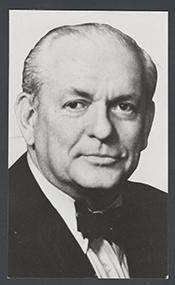
Historical · U.S. House · Texas · District 14
John Young
Former U.S. Representative · Texas District 14 · 1957–1979 · Democratic
John Young represented Texas's District 14 in the United States House of Representatives (1957–1979) for the Democratic party. The page below collects sourced biographical facts, term history, committee roles, and provenance for Young.
Bioguide ID: Y000043
Key facts
- Full name
- John Young
- State
- Texas
- District
- District 14
- Party
- Democratic
- House service
- 1957–1979
- First House term
- 1957
- Status
- Left office
- Current term ends
- —
- Born
- 1916
- Bioguide ID
- Y000043
- Committee assignments
- —
- Dataset version
- 1.20260605
Biographical narrative
996 words · sourced from the Wikipedia REST extract
John Young was a prominent Democratic politician from Texas who served as a U.S. Representative for the 14th congressional district from 1957 until 1979. His lengthy tenure in the House of Representatives spanned over two decades, during which he participated in significant legislative developments and faced various controversies. Young's political career was marked by both his contributions to the legislative process and personal challenges that ultimately influenced his political trajectory.
Early life and career
John Andrew Young was born on November 10, 1916, in Corpus Christi, Texas. He grew up in a region that would later become central to his political identity. Young's early education took place at Incarnate Word Academy and Corpus Christi College-Academy, institutions that provided him with a foundational understanding of the world around him. He pursued higher education at St. Edward's University, where he earned a Bachelor of Arts degree in 1937. Following his undergraduate studies, Young continued his education at the University of Texas School of Law, where he obtained his Bachelor of Laws (L.L.B.) in 1940.
After completing his legal education, Young began his career as a lawyer, establishing a professional background that would serve him well in his future political endeavors. His legal career in Nueces County, Texas, included various roles that showcased his commitment to public service. He began as an assistant county attorney in 1946, subsequently serving as assistant district attorney from 1947 to 1950. His legal expertise and experience in the local judicial system led to his appointment as county attorney from 1951 to 1952, and later as county judge from 1953 to 1956. These positions provided him with valuable insights into the workings of government and the legal system, shaping his perspectives as a legislator.
Young's public service was temporarily interrupted by his enlistment in the United States Navy during World War II. He served from 1941 to 1945, an experience that likely influenced his views on national defense and veterans' affairs. After the war, he returned to his legal practice and continued to build his reputation in the community. His political career began to take shape when he decided to run for the U.S. House of Representatives in 1956. Young successfully defeated the incumbent, John J. Bell, in the Democratic primary and subsequently won the general election, marking the beginning of his lengthy congressional career.
House tenure
Young took office as a U.S. Representative in January 1957 and quickly established himself as a member of the Democratic Party. Over the course of his eleven terms in the House, he became known for his involvement in various legislative initiatives and his voting record, which was predominantly liberal. His long tenure allowed him to witness and participate in significant changes in American society and politics during the 1960s and 1970s.
Throughout his time in Congress, Young was involved in critical legislation, particularly in the areas of civil rights and social justice. Notably, he voted against the Civil Rights Acts of 1957, 1960, and 1964, reflecting a complex stance on civil rights issues during a tumultuous period in American history. However, he did support the Voting Rights Act of 1965 and the Civil Rights Act of 1968, indicating a shift in his perspective on these important issues. His legislative actions were often scrutinized, and his voting record was a subject of interest for constituents and political analysts alike.
Young's political career was not without controversy. In 1976, he faced serious allegations when a former female staff member accused him of requiring sexual favors in exchange for job security. The allegations were significant, given the social and political climate of the time, and they drew considerable media attention. Young denied the accusations, and an investigation into the matter did not yield any evidence to support the claims. Nonetheless, the scandal had a lasting impact on his political standing and reputation.
In addition to the allegations against him, Young faced personal challenges that affected his life and career. His wife, Jane, tragically committed suicide in July 1977, a devastating event that further complicated his public and private life. The combination of personal tragedy and public scrutiny contributed to a decline in his political fortunes.
In 1978, Young lost his bid for re-election to Joseph P. Wyatt, Jr. in the Democratic primary, marking the end of his congressional career. He officially left office on January 3, 1979, concluding a significant chapter in his life that had spanned over two decades.
Legislative focus and committees
During his time in the House of Representatives, John Young served on various committees that shaped his legislative focus and priorities. His involvement in these committees allowed him to influence key areas of policy and contribute to the development of legislation that addressed pressing national issues. While specific committee assignments are not detailed in the available information, it is common for members of Congress to serve on committees that align with their interests and the needs of their constituents.
Young's legislative focus included a range of topics, reflecting the diverse needs of his constituents in Texas. His voting record indicates a willingness to engage with significant social issues, particularly those related to civil rights and voting access. His support for the Voting Rights Act of 1965 and the Civil Rights Act of 1968 suggests a recognition of the importance of these issues in the context of American democracy.
Despite the controversies that marred his later years in office, Young's contributions to the legislative process during his tenure were notable. He navigated the complexities of a changing political landscape, balancing the interests of his constituents with the broader national discourse on civil rights and social justice.
After leaving Congress, Young transitioned to a career as a consultant, applying his extensive experience in government and law to assist various organizations and individuals. He remained engaged in public life until his death on January 22, 2002. His final resting place is at Arlington National Cemetery in Arlington, Virginia, a testament to his service to the nation.
Notable legislation
Sponsored and co-sponsored legislation for John Young is pending operator curation. The biographical narrative above carries the same provenance trail until per-bill rows are written.
Sources
- [1]https://en.wikipedia.org/wiki/John_Andrew_YoungWikipedia · retrieved 2026-06-05
Notable quotes
Sourced quotes for John Young are pending operator curation. Narrative-scope provenance remains attached below.
Sources
- [1]https://en.wikipedia.org/wiki/John_Andrew_YoungWikipedia · retrieved 2026-06-05
Key positions
Curated policy positions for John Young are pending operator review. The biographical narrative above carries the same provenance trail until per-topic positions are written.
Sources
- [1]https://en.wikipedia.org/wiki/John_Andrew_YoungWikipedia · retrieved 2026-06-05
Terms served
- 1957–1959U.S. House · Term 1 · Democratic
- 1959–1961U.S. House · Term 2 · Democratic
- 1961–1963U.S. House · Term 3 · Democratic
- 1963–1965U.S. House · Term 4 · Democratic
- 1965–1967U.S. House · Term 5 · Democratic
- 1967–1969U.S. House · Term 6 · Democratic
- 1969–1971U.S. House · Term 7 · Democratic
- 1971–1973U.S. House · Term 8 · Democratic
- 1973–1975U.S. House · Term 9 · Democratic
- 1975–1977U.S. House · Term 10 · Democratic
- 1977–1979U.S. House · Term 11 · Democratic
Sources & provenance
Every attributable claim above carries a per-section [N] marker that resolves to the corresponding URL below. Each entry records the upstream provider, the canonical URL, and the timestamp at which the source was retrieved by the ingest pipeline.
Key facts
- https://bioguide.congress.gov/search/bio/Y000043bioguide · retrieved 2026-06-05
- https://www.govtrack.us/congress/members/411975govtrack · retrieved 2026-06-05
Biographical narrative
- https://en.wikipedia.org/wiki/John_Andrew_Youngwikipedia · retrieved 2026-06-05
Find your representative
Every U.S. state elects representatives by district. Browse Texas’s delegation, the full former-representative roster, or explore the role and term length.
Related on The Candidate
- Preceded by John BellEarlier holder of the Texas District 14 House seat · Democratic.Open
- Succeeded by Joseph Wyatt Jr.Later holder of the Texas District 14 House seat · Democratic.Open
- Charles StewartFormer U.S. Representative · Texas District 1 · DemocraticOpen
- David KaufmanFormer U.S. Representative · Texas District 1 · DemocraticOpen
- Eugene BlackFormer U.S. Representative · Texas District 1 · DemocraticOpen
- George SmythFormer U.S. Representative · Texas District 1 · DemocraticOpen