
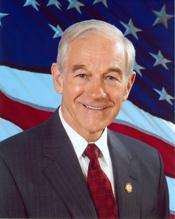
Historical · U.S. House · Texas · District 14
Ron Paul
Former U.S. Representative · Texas District 14 · 1976–2013 · Republican
Ron Paul represented Texas's District 14 in the United States House of Representatives (1976–2013) for the Republican party. The page below collects sourced biographical facts, term history, committee roles, and provenance for Paul.
Bioguide ID: P000583
Key facts
- Full name
- Ron Paul
- State
- Texas
- District
- District 14
- Party
- Republican
- House service
- 1976–2013
- First House term
- 1976
- Status
- Left office
- Current term ends
- —
- Born
- 1935
- Bioguide ID
- P000583
- Committee assignments
- —
- Dataset version
- 1.20260605
Biographical narrative
967 words · sourced from the Wikipedia REST extract
Ron Paul is a former U.S. Representative who served Texas's 14th congressional district from 1997 until 2013, and previously represented the 22nd congressional district from 1976 to 1977 and again from 1979 to 1985. A member of the Republican Party, Paul is known for his libertarian views and has been a prominent critic of various federal policies, including the Federal Reserve, tax policy, and military interventionism. He has also made three bids for the presidency of the United States, first as a Libertarian candidate in 1988 and later as a Republican candidate in 2008 and 2012. Throughout his career, Paul has been influential in promoting libertarian principles and has garnered a dedicated following.
Early life and career
Ronald Ernest Paul was born on August 20, 1935, in Pittsburgh, Pennsylvania. He was raised in a family where his father, Howard Caspar Paul, operated a small dairy business, while his mother, Margaret Paul, was a homemaker. Paul has two older brothers and two younger brothers. His paternal grandparents were German immigrants, and his grandmother was a devout Christian, which influenced his upbringing. During his high school years at Dormont High School, Paul excelled in athletics, winning the state championship in the 200-meter dash.
After completing high school, Paul attended Gettysburg College, where he graduated with a Bachelor of Science degree in biology in 1957. He then pursued a medical degree at Duke University, graduating in 1961. Following his medical education, Paul completed his internship at Henry Ford Hospital in Detroit and his residency in obstetrics and gynecology at Magee-Womens Hospital in Pittsburgh. He served as a flight surgeon in the U.S. Air Force from 1963 to 1965 and continued his service in the U.S. Air National Guard until 1968. After his military service, Paul moved to Texas, where he established a private practice in obstetrics and gynecology, delivering numerous babies, including the famous Tejano singer Selena Quintanilla.
Paul's interest in politics was sparked during his medical residency when he encountered the works of influential economists such as Friedrich Hayek, Ludwig von Mises, and Ayn Rand. These readings shaped his economic philosophy and led him to become increasingly critical of government policies, particularly after President Richard Nixon's decision to end the gold standard in 1971. This pivotal moment motivated Paul to enter the political arena.
House tenure
Paul's political career began when he ran for the U.S. House of Representatives in 1974, but he was defeated by incumbent Robert R. Casey. Following Casey's appointment to the Federal Maritime Commission by President Gerald Ford, Paul won a special election in April 1976 to fill the vacant seat in Texas's 22nd congressional district. His initial term was brief, as he lost the subsequent regular election to Democrat Robert Gammage by a narrow margin. However, Paul successfully defeated Gammage in a rematch in 1978 and was re-elected in both 1980 and 1982.
After serving in the House from 1976 to 1977 and again from 1979 to 1985, Paul left Congress but returned to public office in 1997, representing Texas's 14th congressional district until 2013. Throughout his congressional tenure, Paul was known for his staunch libertarian views and his advocacy for limited government. He served on the House Banking Committee, where he frequently criticized the Federal Reserve for its role in inflation and the mismanagement of banking practices. His positions often placed him at odds with the prevailing political consensus.
During his time in Congress, Paul became known for his consistent adherence to his principles, often opposing legislation that he believed expanded government authority or infringed upon individual liberties. His approach to governance was characterized by a commitment to constitutionalism and a belief in the importance of personal responsibility.
Legislative focus and committees
Throughout his congressional career, Ron Paul focused on several key issues that reflected his libertarian ideology. He was a vocal critic of the Federal Reserve, advocating for monetary policy reform and transparency within the banking system. Paul argued that the Federal Reserve's actions contributed to economic instability and inflation, and he called for a return to a sound monetary system based on gold or other commodities.
In addition to his critiques of monetary policy, Paul was an outspoken opponent of U.S. military interventions and foreign wars. He frequently questioned the necessity and effectiveness of military spending, arguing that such expenditures diverted resources from domestic needs and infringed upon civil liberties. His stance on foreign policy was rooted in a belief in non-interventionism and a commitment to reducing the military-industrial complex's influence on American governance.
Paul also took a strong position against the war on drugs, advocating for drug policy reform and the decriminalization of certain substances. He argued that the war on drugs disproportionately affected marginalized communities and failed to address the underlying issues related to addiction and substance abuse.
During his tenure, Paul served on various committees, including the House Banking Committee, where he was able to influence discussions on economic policy. He was known for his ability to articulate complex economic concepts to a broader audience, drawing on his background as a medical doctor and his extensive reading in economics.
In the later years of his congressional career, Paul gained national attention for his presidential campaigns, particularly in 2008 and 2012. His grassroots support and ability to connect with younger voters helped to revitalize interest in libertarian principles within the Republican Party. Despite not securing the nomination, he finished with a significant number of delegates and maintained a loyal following.
After retiring from Congress in 2013, Paul continued to engage in public discourse, promoting libertarian ideas through various platforms, including speeches at universities and his web show, The Ron Paul Liberty Report. His influence on the libertarian movement and his contributions to political discourse continue to resonate in contemporary discussions about government policy and individual liberties.
Notable legislation
Sponsored and co-sponsored legislation for Ron Paul is pending operator curation. The biographical narrative above carries the same provenance trail until per-bill rows are written.
Sources
- [1]https://en.wikipedia.org/wiki/Ron_PaulWikipedia · retrieved 2026-06-05
Notable quotes
Sourced quotes for Ron Paul are pending operator curation. Narrative-scope provenance remains attached below.
Sources
- [1]https://en.wikipedia.org/wiki/Ron_PaulWikipedia · retrieved 2026-06-05
Key positions
Curated policy positions for Ron Paul are pending operator review. The biographical narrative above carries the same provenance trail until per-topic positions are written.
Sources
- [1]https://en.wikipedia.org/wiki/Ron_PaulWikipedia · retrieved 2026-06-05
Terms served
- 1976–1977U.S. House · Term 1 · Republican
- 1979–1981U.S. House · Term 2 · Republican
- 1981–1983U.S. House · Term 3 · Republican
- 1983–1985U.S. House · Term 4 · Republican
- 1997–1999U.S. House · Term 5 · Republican
- 1999–2001U.S. House · Term 6 · Republican
- 2001–2003U.S. House · Term 7 · Republican
- 2003–2005U.S. House · Term 8 · Republican
- 2005–2007U.S. House · Term 9 · Republican
- 2007–2009U.S. House · Term 10 · Republican
- 2009–2011U.S. House · Term 11 · Republican
- 2011–2013U.S. House · Term 12 · Republican
Sources & provenance
Every attributable claim above carries a per-section [N] marker that resolves to the corresponding URL below. Each entry records the upstream provider, the canonical URL, and the timestamp at which the source was retrieved by the ingest pipeline.
Key facts
- https://bioguide.congress.gov/search/bio/P000583bioguide · retrieved 2026-06-05
- http://www.house.gov/paulhouse.gov · retrieved 2026-06-05
Biographical narrative
- https://en.wikipedia.org/wiki/Ron_Paulwikipedia · retrieved 2026-06-05
Find your representative
Every U.S. state elects representatives by district. Browse Texas’s delegation, the full former-representative roster, or explore the role and term length.
Related on The Candidate
- Preceded by John BellEarlier holder of the Texas District 14 House seat · Democratic.Open
- Charles StewartFormer U.S. Representative · Texas District 1 · DemocraticOpen
- David KaufmanFormer U.S. Representative · Texas District 1 · DemocraticOpen
- Eugene BlackFormer U.S. Representative · Texas District 1 · DemocraticOpen
- George SmythFormer U.S. Representative · Texas District 1 · DemocraticOpen
- Republican PartyFederal candidates and office holders on the Republican line.Open