
Historical · U.S. House · Texas · District 19
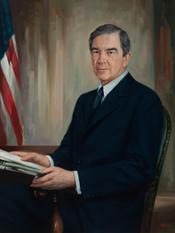
George Mahon
Former U.S. Representative · Texas District 19 · 1935–1979 · Democratic
George Mahon represented Texas's District 19 in the United States House of Representatives (1935–1979) for the Democratic party. The page below collects sourced biographical facts, term history, committee roles, and provenance for Mahon.
Bioguide ID: M000065
Key facts
- Full name
- George Mahon
- State
- Texas
- District
- District 19
- Party
- Democratic
- House service
- 1935–1979
- First House term
- 1935
- Status
- Left office
- Current term ends
- —
- Born
- 1900
- Bioguide ID
- M000065
- Committee assignments
- —
- Dataset version
- 1.20260605
Biographical narrative
1,052 words · sourced from the Wikipedia REST extract
George H. Mahon was a prominent American politician and attorney who served as a U.S. Representative for Texas's 19th congressional district for an extensive period. A member of the Democratic Party, Mahon was known for his long tenure in Congress, spanning 22 consecutive terms from 1935 until his retirement in 1979. His legislative career was marked by significant involvement in various committees, particularly as the chairman of the Appropriations Committee, and he played a notable role in the political landscape of Texas and the nation during his time in office.
Early life and career
George Herman Mahon was born on September 22, 1900, near Haynesville, Louisiana. His family relocated to Texas during his childhood, where he would eventually establish his political career. Mahon pursued higher education at Hardin–Simmons University in Abilene, Texas, graduating in 1924. He continued his studies at the University of Texas School of Law in Austin, earning his law degree in 1925. Following his education, Mahon began his professional career in law and politics.
In 1926, Mahon was elected as the county attorney for Mitchell County, Texas, marking the beginning of his public service. He further advanced his legal career by serving as the district attorney for the 32nd judicial district of Texas from 1927 to 1933. These early experiences in local government and law provided Mahon with a foundation for his future political endeavors. His involvement in the legal field and local governance helped him build a network and gain the necessary experience that would later facilitate his election to the U.S. House of Representatives.
Mahon's political career took a significant turn when he was elected to the U.S. House of Representatives in 1934. His election came during a transformative period in American politics, as the nation was grappling with the effects of the Great Depression. Mahon quickly became an active member of the Democratic Party and participated as a delegate in each Democratic National Convention from 1936 to 1964. His early years in Congress were characterized by a commitment to his constituents and a focus on issues pertinent to Texas.
House tenure
George H. Mahon's tenure in the U.S. House of Representatives began in 1935 and lasted until January 3, 1979, making him one of the longest-serving members in the history of Congress. Over the course of his 22 terms, Mahon became a key figure in the legislative process, particularly in matters related to federal appropriations and budgetary concerns. His extensive experience and seniority allowed him to wield considerable influence within the House.
Throughout his time in Congress, Mahon was involved in various significant legislative initiatives. He was particularly noted for his role as chairman of the Appropriations Committee, a position he held from 1964 until his retirement. This committee is responsible for determining the allocation of federal funds, and Mahon's leadership in this role underscored his importance in shaping federal budgetary policy during a critical period in American history. His tenure coincided with various national challenges, including the Vietnam War and the civil rights movement, which required careful consideration of federal spending and resource allocation.
Mahon's political career was not without controversy. He voted against several key pieces of civil rights legislation, including the Civil Rights Acts of 1957, 1960, 1964, and 1968, as well as the Voting Rights Act of 1965. His opposition to these measures reflected the complex and often contentious nature of race relations in the United States during the mid-20th century. Additionally, Mahon opposed the ratification of the 24th Amendment to the U.S. Constitution, which aimed to eliminate poll taxes in federal elections. These positions have been subjects of discussion regarding his legacy and the broader context of civil rights in America.
Mahon's leadership extended beyond the Appropriations Committee. He served as the Dean of the House during his final three years in office, a title given to the longest-serving member of the House. This role further solidified his status as a senior statesman and a respected figure among his colleagues. His extensive experience and institutional knowledge contributed to his ability to navigate the complexities of congressional operations and foster relationships across party lines.
After retiring from Congress, Mahon remained active in public service. He continued to contribute to national discussions by working with the Smithsonian Institution, where he had served as a regent from 1964 to 1978. His involvement with the Smithsonian reflected his ongoing commitment to education and cultural preservation.
Legislative focus and committees
Throughout his lengthy congressional career, George H. Mahon was primarily focused on issues related to federal appropriations and budget management. As chairman of the Appropriations Committee, he played a crucial role in determining how federal funds were allocated across various government programs and initiatives. This position allowed him to influence significant aspects of federal policy, particularly in areas such as education, infrastructure, and national defense.
Mahon's legislative priorities often aligned with the interests of his constituents in Texas, as he sought to secure funding for projects and programs that would benefit the state. His work on the Appropriations Committee enabled him to advocate for resources that addressed local needs, including economic development and public services. He was involved in discussions surrounding federal investments in Texas, which were critical for the state's growth and development during his tenure.
In addition to his work on appropriations, Mahon was appointed to the panel for the Manhattan Project, which was a pivotal initiative during World War II focused on the development of nuclear weapons. This involvement highlighted his engagement with national security issues and the scientific advancements of the time.
Mahon's legislative focus was characterized by a pragmatic approach to governance. He navigated the complexities of the political landscape, balancing the demands of his constituents with the broader national interests. His ability to work within the established political framework allowed him to maintain a significant influence in Congress over several decades.
Mahon's legacy is marked by his extensive service and the various roles he held throughout his career. His contributions to the U.S. House of Representatives and his involvement in key legislative matters have left a lasting impact on both Texas and the nation. After his passing on November 19, 1985, in San Angelo, Texas, he was interred in the Loraine City Cemetery in Loraine, Texas, where he is remembered for his long-standing dedication to public service.
Notable legislation
Sponsored and co-sponsored legislation for George Mahon is pending operator curation. The biographical narrative above carries the same provenance trail until per-bill rows are written.
Sources
- [1]https://en.wikipedia.org/wiki/George_H._MahonWikipedia · retrieved 2026-06-05
Notable quotes
Sourced quotes for George Mahon are pending operator curation. Narrative-scope provenance remains attached below.
Sources
- [1]https://en.wikipedia.org/wiki/George_H._MahonWikipedia · retrieved 2026-06-05
Key positions
Curated policy positions for George Mahon are pending operator review. The biographical narrative above carries the same provenance trail until per-topic positions are written.
Sources
- [1]https://en.wikipedia.org/wiki/George_H._MahonWikipedia · retrieved 2026-06-05
Terms served
- 1935–1937U.S. House · Term 1 · Democratic
- 1937–1939U.S. House · Term 2 · Democratic
- 1939–1941U.S. House · Term 3 · Democratic
- 1941–1943U.S. House · Term 4 · Democratic
- 1943–1945U.S. House · Term 5 · Democratic
- 1945–1947U.S. House · Term 6 · Democratic
- 1947–1949U.S. House · Term 7 · Democratic
- 1949–1951U.S. House · Term 8 · Democratic
- 1951–1953U.S. House · Term 9 · Democratic
- 1953–1955U.S. House · Term 10 · Democratic
- 1955–1957U.S. House · Term 11 · Democratic
- 1957–1959U.S. House · Term 12 · Democratic
- 1959–1961U.S. House · Term 13 · Democratic
- 1961–1963U.S. House · Term 14 · Democratic
- 1963–1965U.S. House · Term 15 · Democratic
- 1965–1967U.S. House · Term 16 · Democratic
- 1967–1969U.S. House · Term 17 · Democratic
- 1969–1971U.S. House · Term 18 · Democratic
- 1971–1973U.S. House · Term 19 · Democratic
- 1973–1975U.S. House · Term 20 · Democratic
- 1975–1977U.S. House · Term 21 · Democratic
- 1977–1979U.S. House · Term 22 · Democratic
Sources & provenance
Every attributable claim above carries a per-section [N] marker that resolves to the corresponding URL below. Each entry records the upstream provider, the canonical URL, and the timestamp at which the source was retrieved by the ingest pipeline.
Key facts
- https://bioguide.congress.gov/search/bio/M000065bioguide · retrieved 2026-06-05
- https://www.govtrack.us/congress/members/407093govtrack · retrieved 2026-06-05
Biographical narrative
- https://en.wikipedia.org/wiki/George_H._Mahonwikipedia · retrieved 2026-06-05
Find your representative
Every U.S. state elects representatives by district. Browse Texas’s delegation, the full former-representative roster, or explore the role and term length.
Related on The Candidate
- Succeeded by Kent HanceLater holder of the Texas District 19 House seat · Democratic.Open
- Charles StewartFormer U.S. Representative · Texas District 1 · DemocraticOpen
- David KaufmanFormer U.S. Representative · Texas District 1 · DemocraticOpen
- Eugene BlackFormer U.S. Representative · Texas District 1 · DemocraticOpen
- George SmythFormer U.S. Representative · Texas District 1 · DemocraticOpen
- Democratic PartyFederal candidates and office holders on the Democratic line.Open