
Historical · U.S. House · Texas · District 19
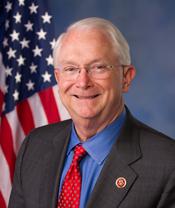
Randy Neugebauer
Former U.S. Representative · Texas District 19 · 2003–2017 · Republican
Randy Neugebauer represented Texas's District 19 in the United States House of Representatives (2003–2017) for the Republican party. The page below collects sourced biographical facts, term history, committee roles, and provenance for Neugebauer.
Bioguide ID: N000182
Key facts
- Full name
- Randy Neugebauer
- State
- Texas
- District
- District 19
- Party
- Republican
- House service
- 2003–2017
- First House term
- 2003
- Status
- Left office
- Current term ends
- —
- Born
- 1949
- Bioguide ID
- N000182
- Committee assignments
- —
- Dataset version
- 1.20260605
Biographical narrative
905 words · sourced from the Wikipedia REST extract
Randy Neugebauer is a former U.S. Representative who served Texas's 19th congressional district from 2003 until 2017. A member of the Republican Party, Neugebauer's tenure in Congress was marked by his conservative stance on various issues, and he was recognized as one of the most conservative members of the House according to a 2011 survey. His district, which encompasses a significant portion of West Texas, includes major cities such as Lubbock and Abilene. Neugebauer chose not to seek re-election for an eighth term in 2016, concluding his congressional career in January 2017.
Early life and career
Randy Neugebauer was born on December 24, 1949, in St. Louis, Missouri. He spent much of his childhood in Lubbock, Texas. Neugebauer's family background includes a father who worked as an insurance salesman and a mother who was involved in real estate and interior design. He has two brothers and a sister. Neugebauer's parents divorced when he was nine years old, and his father passed away in 1985. Following the divorce, his mother remarried Joe W. Smith, a bank manager, in 1963.
Neugebauer completed his secondary education at Coronado High School before pursuing higher education at Texas Tech University. He graduated in 1972 with a Bachelor of Business Administration degree in accounting from the College of Business Administration, which is now known as the Rawls College of Business.
Before entering politics, Neugebauer built a career in the real estate sector. He became president of Lubbock Land, a development company, and was also active in the Texas Association of Builders, serving as its president from 1996 to 1997. His early involvement in local government began when he was elected to the Lubbock City Council, where he served from 1992 to 1998. During this time, he held the position of mayor pro tempore from 1994 to 1996. Neugebauer's tenure on the city council was characterized by efforts to reduce taxes and privatize municipal services, reflecting his commitment to conservative fiscal policies.
House tenure
Neugebauer's political career at the federal level began with his election to the U.S. House of Representatives in a special election in 2003. He represented Texas's 19th congressional district, which includes a diverse range of communities in West Texas. Throughout his seven terms in office, Neugebauer was known for his strong conservative views and was affiliated with various caucuses and committees that aligned with his political ideology.
During his time in Congress, Neugebauer served on several important committees, including the Committee on Agriculture, the Committee on Financial Services, and the Committee on Science, Space and Technology. Within these committees, he held positions on various subcommittees, such as the Subcommittee on General Farm Commodities and Risk Management, and the Subcommittee on Oversight and Investigations, where he served as chair. His involvement in these committees allowed him to influence legislation on a range of issues, particularly those related to agriculture, financial services, and scientific research.
Neugebauer's congressional career was not without controversy. In March 2010, during a heated debate over the Patient Protection and Affordable Care Act, he made headlines for shouting a remark that was widely reported and criticized. He later identified himself as the individual who made the comment and attempted to clarify his intentions, but the incident drew significant media attention and public scrutiny.
In September 2015, Neugebauer announced that he would not seek re-election for an eighth term, marking the end of his congressional career. He officially concluded his service on January 3, 2017.
Legislative focus and committees
Throughout his time in the House, Neugebauer focused on a variety of legislative issues, particularly those that aligned with his conservative principles. He was active in sponsoring and supporting legislation aimed at reducing regulatory burdens and promoting economic growth. One notable piece of legislation he sponsored was the National Association of Registered Agents and Brokers Reform Act of 2013. This bill aimed to streamline the regulatory process for insurance companies operating in multiple states, thereby reducing compliance costs and making insurance more accessible to consumers.
Another significant legislative effort was the National Windstorm Impact Reduction Act Reauthorization of 2014, which Neugebauer introduced in April 2013. This bill sought to reauthorize the National Windstorm Impact Reduction Program, an initiative designed to enhance understanding of windstorms and develop strategies to mitigate their impacts.
Neugebauer's committee assignments also reflected his legislative interests. He was involved in the Committee on Agriculture, where he contributed to discussions on farm commodities and risk management, as well as livestock, dairy, and poultry issues. His role in the Committee on Financial Services allowed him to engage with matters related to capital markets and government-sponsored enterprises, while his position on the Committee on Science, Space and Technology enabled him to address topics related to energy, environment, and technological innovation.
In addition to his committee work, Neugebauer was an associate member of the Congressional Hispanic Conference and participated in the Tea Party Caucus, which aligned with his conservative values and policy priorities. He was also a member of the Congressional Constitution Caucus and the Republican Study Committee, further emphasizing his commitment to conservative governance.
Randy Neugebauer's congressional career was characterized by his strong conservative stance, active participation in various legislative committees, and efforts to influence policy in areas such as agriculture, financial services, and disaster preparedness. His tenure in the House of Representatives reflects a commitment to the principles of limited government and fiscal responsibility, which resonated with his constituents in Texas's 19th congressional district.
Notable legislation
Sponsored and co-sponsored legislation for Randy Neugebauer is pending operator curation. The biographical narrative above carries the same provenance trail until per-bill rows are written.
Sources
- [1]https://en.wikipedia.org/wiki/Randy_NeugebauerWikipedia · retrieved 2026-06-05
Notable quotes
Sourced quotes for Randy Neugebauer are pending operator curation. Narrative-scope provenance remains attached below.
Sources
- [1]https://en.wikipedia.org/wiki/Randy_NeugebauerWikipedia · retrieved 2026-06-05
Key positions
Curated policy positions for Randy Neugebauer are pending operator review. The biographical narrative above carries the same provenance trail until per-topic positions are written.
Sources
- [1]https://en.wikipedia.org/wiki/Randy_NeugebauerWikipedia · retrieved 2026-06-05
Terms served
- 2003–2005U.S. House · Term 1 · Republican
- 2005–2007U.S. House · Term 2 · Republican
- 2007–2009U.S. House · Term 3 · Republican
- 2009–2011U.S. House · Term 4 · Republican
- 2011–2013U.S. House · Term 5 · Republican
- 2013–2015U.S. House · Term 6 · Republican
- 2015–2017U.S. House · Term 7 · Republican
Sources & provenance
Every attributable claim above carries a per-section [N] marker that resolves to the corresponding URL below. Each entry records the upstream provider, the canonical URL, and the timestamp at which the source was retrieved by the ingest pipeline.
Key facts
- https://bioguide.congress.gov/search/bio/N000182bioguide · retrieved 2026-06-05
- http://randy.house.govhouse.gov · retrieved 2026-06-05
Biographical narrative
- https://en.wikipedia.org/wiki/Randy_Neugebauerwikipedia · retrieved 2026-06-05
Find your representative
Every U.S. state elects representatives by district. Browse Texas’s delegation, the full former-representative roster, or explore the role and term length.
Related on The Candidate
- Preceded by Larry CombestEarlier holder of the Texas District 19 House seat · Republican.Open
- Charles StewartFormer U.S. Representative · Texas District 1 · DemocraticOpen
- David KaufmanFormer U.S. Representative · Texas District 1 · DemocraticOpen
- Eugene BlackFormer U.S. Representative · Texas District 1 · DemocraticOpen
- George SmythFormer U.S. Representative · Texas District 1 · DemocraticOpen
- Republican PartyFederal candidates and office holders on the Republican line.Open