
Historical · U.S. House · Texas · District 2
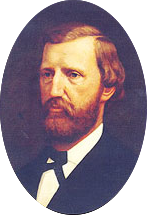
Peter Bell
Former U.S. Representative · Texas District 2 · 1853–1857 · Democratic
Peter Bell represented Texas's District 2 in the United States House of Representatives (1853–1857) for the Democratic party. The page below collects sourced biographical facts, term history, committee roles, and provenance for Bell.
Bioguide ID: B000344
Key facts
- Full name
- Peter Bell
- State
- Texas
- District
- District 2
- Party
- Democratic
- House service
- 1853–1857
- First House term
- 1853
- Status
- Left office
- Current term ends
- —
- Born
- 1812
- Bioguide ID
- B000344
- Committee assignments
- —
- Dataset version
- 1.20260606
Biographical narrative
875 words · sourced from the Wikipedia REST extract
Peter Bell was a prominent American military officer and politician who served as a U.S. Representative for Texas's 2nd congressional district and was the third governor of Texas. His political career spanned several significant events in Texas history, including its early statehood and the Mexican-American War. Bell's legacy is reflected in various aspects of Texas history, including the naming of Bell County in his honor.
Early life and career
Peter Bell was born on May 12, 1812, in Culpeper County, Virginia. He received his education in Virginia and Maryland, which laid the foundation for his future endeavors. In pursuit of greater opportunities, Bell immigrated to Texas, where he became actively involved in the burgeoning Texian movement. By March 1836, he had joined the Texian Army under the command of Sam Houston, participating in the pivotal Battle of San Jacinto, which was crucial for Texas's independence from Mexico.
Bell's military career continued to flourish as he became a member of the Texas Rangers in 1841, serving under Captain John Coffee "Jack" Hays. His involvement in the Battle of Bandera Pass showcased his leadership and tactical skills. Recognized for his contributions, he was appointed to General Houston's staff as adjutant general and later promoted to inspector general of the Republic of Texas's army by 1839. His military service was further distinguished during the Mexican-American War, where he held the rank of lieutenant colonel in the Second Regiment Texas Mounted Volunteers and played a notable role in the Battle of Buena Vista.
Following the war, Bell returned to the Texas Rangers, where he continued to serve along the western frontier. His experiences during this period not only shaped his military career but also influenced his political aspirations. His commitment to the defense of Texas and its interests became a central theme in his later political campaigns.
House tenure
Bell's political career took a significant turn when he was elected to the United States House of Representatives, beginning his first term in 1853. He represented Texas's 2nd congressional district as a member of the Democratic Party. His tenure in Congress lasted until 1857, during which he served two terms. Bell's time in the House coincided with a period of considerable change and tension in the United States, particularly concerning issues related to slavery, state rights, and territorial expansion.
During his congressional service, Bell developed friendships with influential political figures, including Jefferson Davis, who would later become the President of the Confederate States of America. These connections were significant as they positioned Bell within the political landscape of the time, allowing him to advocate for Texas's interests on a national stage. His legislative activities and political alliances were reflective of the broader Democratic Party agenda, which often emphasized states' rights and expansionist policies.
After concluding his congressional service in 1857, Bell transitioned to a different phase of his life. He married Ella Rives Eaton from North Carolina, and following their marriage, he settled in Littleton, North Carolina. His relocation marked a significant change, as he never returned to Texas after this point in his life.
Legislative focus and committees
During his time in the U.S. House of Representatives, Peter Bell's legislative focus was largely aligned with the interests of Texas and the broader Southern states. His background as a military officer and his experiences during the Mexican-American War informed his perspectives on issues such as defense, territorial claims, and the rights of states. Bell's commitment to the defense of Texas was evident in his advocacy for policies that supported the state's military readiness and territorial integrity.
While specific details about the committees he served on during his congressional tenure are not documented, it can be inferred that his military background and political affiliations would have influenced his participation in committees related to military affairs, land management, and territorial issues. His legislative efforts likely aimed to address the needs of a rapidly growing state that was navigating the complexities of its relationship with the federal government.
Bell's political career was characterized by a focus on the challenges facing Texas as it sought to establish itself as a state within the Union. His advocacy for strong frontier defense and support for territorial claims, particularly regarding New Mexico, reflected the priorities of many Texans during this period. These issues were critical as the nation grappled with the implications of expansion and the contentious debates surrounding slavery and state rights.
After leaving Congress, Bell's life continued to be marked by significant events, including his involvement in the American Civil War, where he raised and equipped a regiment at his own expense. His later years were shaped by the economic and social changes that followed the war, particularly the impact of emancipation on his personal wealth and status.
In summary, Peter Bell's life and career were intertwined with the formative years of Texas and the broader historical context of the United States in the 19th century. His contributions as a military leader and politician reflect the complexities of a nation in transition, and his legacy continues to be recognized in Texas history, notably through the naming of Bell County in his honor. Bell passed away on March 8, 1898, in Littleton, North Carolina, and was later reburied with honors in Austin, Texas.
Notable legislation
Sponsored and co-sponsored legislation for Peter Bell is pending operator curation. The biographical narrative above carries the same provenance trail until per-bill rows are written.
Sources
- [1]https://en.wikipedia.org/wiki/Peter_Hansborough_BellWikipedia · retrieved 2026-06-06
Notable quotes
Sourced quotes for Peter Bell are pending operator curation. Narrative-scope provenance remains attached below.
Sources
- [1]https://en.wikipedia.org/wiki/Peter_Hansborough_BellWikipedia · retrieved 2026-06-06
Key positions
Curated policy positions for Peter Bell are pending operator review. The biographical narrative above carries the same provenance trail until per-topic positions are written.
Sources
- [1]https://en.wikipedia.org/wiki/Peter_Hansborough_BellWikipedia · retrieved 2026-06-06
Terms served
- 1853–1855U.S. House · Term 1 · Democratic
- 1855–1857U.S. House · Term 2 · Democratic
Sources & provenance
Every attributable claim above carries a per-section [N] marker that resolves to the corresponding URL below. Each entry records the upstream provider, the canonical URL, and the timestamp at which the source was retrieved by the ingest pipeline.
Key facts
- https://bioguide.congress.gov/search/bio/B000344bioguide · retrieved 2026-06-06
- https://www.govtrack.us/congress/members/401336govtrack · retrieved 2026-06-06
Biographical narrative
- https://en.wikipedia.org/wiki/Peter_Hansborough_Bellwikipedia · retrieved 2026-06-06
Find your representative
Every U.S. state elects representatives by district. Browse Texas’s delegation, the full former-representative roster, or explore the role and term length.
Related on The Candidate
- Preceded by Volney HowardEarlier holder of the Texas District 2 House seat · Democratic.Open
- Succeeded by Guy BryanLater holder of the Texas District 2 House seat · Democratic.Open
- Charles StewartFormer U.S. Representative · Texas District 1 · DemocraticOpen
- David KaufmanFormer U.S. Representative · Texas District 1 · DemocraticOpen
- Eugene BlackFormer U.S. Representative · Texas District 1 · DemocraticOpen
- George SmythFormer U.S. Representative · Texas District 1 · DemocraticOpen