
Historical · U.S. House · Texas · District 22
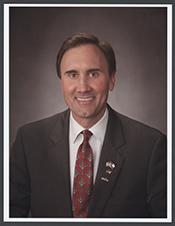
Pete Olson
Former U.S. Representative · Texas District 22 · 2009–2021 · Republican
Pete Olson represented Texas's District 22 in the United States House of Representatives (2009–2021) for the Republican party. The page below collects sourced biographical facts, term history, committee roles, and provenance for Olson.
Bioguide ID: O000168
Key facts
- Full name
- Pete Olson
- State
- Texas
- District
- District 22
- Party
- Republican
- House service
- 2009–2021
- First House term
- 2009
- Status
- Left office
- Current term ends
- —
- Born
- 1962
- Bioguide ID
- O000168
- Committee assignments
- —
- Dataset version
- 1.20260604
Biographical narrative
996 words · sourced from the Wikipedia REST extract
Peter Graham Olson is a former American politician who served as the U.S. Representative for Texas's 22nd congressional district from 2009 until 2021. A member of the Republican Party, Olson's district encompassed a significant portion of southern Houston and included many of the city's southwestern suburbs, such as Katy, Pearland, and Sugar Land. His tenure in the House of Representatives spanned six terms, during which he focused on various legislative issues and participated in multiple committees. Olson announced his retirement from Congress in July 2019, concluding his service at the start of 2021.
Early life and career
Peter Graham Olson was born on December 9, 1962, in Fort Lewis, Washington. In 1972, his family relocated to Seabrook, Texas, a suburb situated near Houston. Olson attended public schools in the area and graduated from Clear Lake High School in 1981. Following high school, he pursued higher education at Rice University, where he played college basketball during his freshman year. He completed his studies at Rice with a Bachelor of Arts degree in computer science in 1985.
After earning his undergraduate degree, Olson continued his education at the University of Texas at Austin, where he attended law school. He received his Juris Doctor (J.D.) degree and was admitted to the State Bar of Texas in 1988. Following his graduation from law school, Olson joined the United States Navy, where he began a distinguished military career. He earned his Naval Aviator wings in March 1991 and served as a pilot of the P-3C Orion aircraft. During his time in the Navy, Olson flew missions in various regions, including the Persian Gulf, the Indian Ocean, and the Pacific, contributing to military operations in the post-Gulf War era. His service in the Navy lasted for nine years, during which he also held the position of Naval liaison to the United States Senate in 1994. In this role, he assisted Republican Senator Phil Gramm on several overseas trips.
After concluding his active military service, Olson transitioned to a political career by joining Senator Gramm's staff in 1998. Following Gramm's retirement in 2002, Olson became the chief of staff for Gramm's successor, Senator John Cornyn, a former Texas Attorney General. He held this position until May 2007, gaining valuable experience in legislative processes and political strategy.
House tenure
Olson's political career took a significant turn when he announced his candidacy for the U.S. House of Representatives in 2007. He sought the Republican nomination for Texas's 22nd congressional district, which had become a focal point for political analysts due to its shifting demographics and recent electoral history. The district had been represented by Democratic incumbent Nick Lampson, who won the seat in 2006 following the resignation of long-time Republican Representative Tom DeLay. DeLay's departure had created a unique political landscape, making the district a prime target for Republican challengers.
In the Republican primary, Olson faced a crowded field of candidates, including former Congresswoman Shelley Sekula-Gibbs. Olson finished second in the initial round of voting, which led to a runoff election. Despite facing criticism from Sekula-Gibbs, who labeled him a "Washington insider," Olson garnered significant support from Texas's Republican congressional delegation, which endorsed him during the primary. In the runoff held on April 8, 2008, Olson emerged victorious with a substantial majority, securing his position as the Republican nominee.
In the general election on November 4, 2008, Olson faced Lampson and Libertarian candidate John Wieder. The race attracted considerable attention due to the district's Republican-leaning history and the vulnerability of the Democratic incumbent. Olson's campaign was bolstered by strong fundraising efforts, including a notable event featuring former Vice President Dick Cheney. Ultimately, Olson won the election with 53% of the vote, defeating Lampson, who received 45%. This victory marked the beginning of Olson's six terms in Congress.
During his time in the House, Olson successfully secured re-election in subsequent elections, including a notable victory in 2010 where he received 67% of the vote against Democratic challenger Kesha Rogers. His tenure in Congress was characterized by a focus on issues pertinent to his constituents in Texas, as well as broader national concerns.
Legislative focus and committees
Throughout his congressional career, Olson was involved in various legislative initiatives and served on several committees. His work in the House reflected the priorities of his constituents, particularly those in his district, which included a mix of suburban and urban communities. Olson's legislative focus encompassed a range of issues, including economic development, national security, and healthcare.
As a member of the Republican Party, Olson aligned with party leadership on key legislative matters, contributing to discussions and decisions that shaped national policy. His experience in the Navy and background in law provided him with a unique perspective on defense and security issues, which he often addressed in his legislative efforts. Olson's military service likely influenced his advocacy for veterans and active-duty service members, as he sought to ensure that their needs were met through appropriate legislation.
In addition to his work on defense and veterans' affairs, Olson participated in committees that dealt with economic issues, including those related to job creation and business development. His district, which included significant suburban areas, was affected by economic trends and challenges, prompting Olson to focus on initiatives that would stimulate growth and support local businesses.
Olson's legislative contributions were also shaped by the dynamics of his district, which had a diverse population with varying needs and interests. His ability to navigate these complexities allowed him to represent his constituents effectively, addressing their concerns while aligning with broader Republican objectives.
In July 2019, Olson announced his decision to retire from Congress at the end of his term, concluding a decade of service in the House. He was succeeded by fellow Republican Troy Nehls, marking the continuation of Republican representation in Texas's 22nd congressional district. Olson's tenure in the House was characterized by his commitment to his constituents and his involvement in key legislative issues, reflecting the priorities of the communities he served.
Notable legislation
Sponsored and co-sponsored legislation for Pete Olson is pending operator curation. The biographical narrative above carries the same provenance trail until per-bill rows are written.
Sources
- [1]https://en.wikipedia.org/wiki/Pete_OlsonWikipedia · retrieved 2026-06-04
Notable quotes
Sourced quotes for Pete Olson are pending operator curation. Narrative-scope provenance remains attached below.
Sources
- [1]https://en.wikipedia.org/wiki/Pete_OlsonWikipedia · retrieved 2026-06-04
Key positions
Curated policy positions for Pete Olson are pending operator review. The biographical narrative above carries the same provenance trail until per-topic positions are written.
Sources
- [1]https://en.wikipedia.org/wiki/Pete_OlsonWikipedia · retrieved 2026-06-04
Terms served
- 2009–2011U.S. House · Term 1 · Republican
- 2011–2013U.S. House · Term 2 · Republican
- 2013–2015U.S. House · Term 3 · Republican
- 2015–2017U.S. House · Term 4 · Republican
- 2017–2019U.S. House · Term 5 · Republican
- 2019–2021U.S. House · Term 6 · Republican
Sources & provenance
Every attributable claim above carries a per-section [N] marker that resolves to the corresponding URL below. Each entry records the upstream provider, the canonical URL, and the timestamp at which the source was retrieved by the ingest pipeline.
Key facts
- https://bioguide.congress.gov/search/bio/O000168bioguide · retrieved 2026-06-04
- https://olson.house.govhouse.gov · retrieved 2026-06-04
Biographical narrative
- https://en.wikipedia.org/wiki/Pete_Olsonwikipedia · retrieved 2026-06-04
Find your representative
Every U.S. state elects representatives by district. Browse Texas’s delegation, the full former-representative roster, or explore the role and term length.
Related on The Candidate
- Preceded by Nick LampsonEarlier holder of the Texas District 22 House seat · Democratic.Open
- Charles StewartFormer U.S. Representative · Texas District 1 · DemocraticOpen
- David KaufmanFormer U.S. Representative · Texas District 1 · DemocraticOpen
- Eugene BlackFormer U.S. Representative · Texas District 1 · DemocraticOpen
- George SmythFormer U.S. Representative · Texas District 1 · DemocraticOpen
- Republican PartyFederal candidates and office holders on the Republican line.Open