
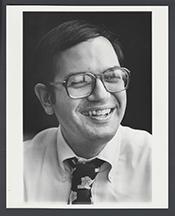
Historical · U.S. House · Texas · District 24
Martin Frost III
Former U.S. Representative · Texas District 24 · 1979–2005 · Democratic
Martin Frost III represented Texas's District 24 in the United States House of Representatives (1979–2005) for the Democratic party. The page below collects sourced biographical facts, term history, committee roles, and provenance for III.
Bioguide ID: F000392
Key facts
- Full name
- Martin Frost III
- State
- Texas
- District
- District 24
- Party
- Democratic
- House service
- 1979–2005
- First House term
- 1979
- Status
- Left office
- Current term ends
- —
- Born
- 1942
- Bioguide ID
- F000392
- Committee assignments
- —
- Dataset version
- 1.20260605
Biographical narrative
982 words · sourced from the Wikipedia REST extract
Jonas Martin Frost III, born on January 1, 1942, is a former American politician who served as a Democratic representative in the U.S. House of Representatives for Texas's 24th congressional district from 1979 until 2005. Throughout his 13 terms in office, Frost became known for his leadership roles within the Democratic Caucus and his involvement in various legislative initiatives. His tenure was marked by significant political developments, including the redistricting efforts that ultimately impacted his electoral prospects.
Early life and career
Martin Frost was born in Glendale, California, into a Jewish family, the son of Doris and Jack Frost. He has one sibling, a sister named Carol Frost Wagner. His family relocated to Fort Worth, Texas, in 1949, where his father found employment with Convair Aircraft. Frost's educational journey began at the University of Missouri, where he graduated in 1964 with a dual degree in journalism and history. While in college, he served as the editor of the student newspaper, The Maneater, and was involved in various honor societies, including Omicron Delta Kappa and QEBH. He was also a member of the Zeta Beta Tau fraternity.
Following his undergraduate studies, Frost began his career as a newspaper reporter, working for outlets such as The News Journal in Wilmington, Delaware. He pursued further education at Georgetown University Law Center, earning his Juris Doctor degree in 1970. After completing his legal education, Frost served as a law clerk for Federal Judge Sarah T. Hughes in the Northern District of Texas. He then practiced law in the Dallas-Fort Worth area and contributed as a legal commentator on KERA-TV.
Frost's military service includes a tenure in the United States Army Reserve from 1966 to 1972, which provided him with a foundation in leadership and public service.
House tenure
Frost's political career began with an unsuccessful bid for a House seat in 1974. However, he successfully ran for the 24th congressional district in Texas in 1978, becoming the first Jewish congressman from the state. His electoral success continued as he was re-elected 12 times, often facing minimal opposition. Notably, in 1980, he won against Republican opponent Clay Smothers, who was African American.
During his time in Congress, Frost was involved in significant legislative decisions, including voting in favor of authorizing the invasion of Iraq in October 2002, alongside a majority of House Democrats. His leadership capabilities were recognized when he served as the chair of the House Democratic Caucus for two terms from 1999 to 2003. In this role, he was positioned as the third-highest leader within the Democratic Party in the House, following the minority leader and minority whip. His tenure as Caucus Chair saw him frequently at odds with Republican leaders, particularly Dick Armey, the House Majority Leader from Texas.
Frost's aspirations within the Democratic leadership included a bid for Minority Leader following the resignation of Dick Gephardt after the 2002 midterm elections. However, he withdrew from the race and endorsed Nancy Pelosi, who ultimately won the position. In his final term, he served as the ranking member of the House Rules Committee, which plays a crucial role in determining the legislative agenda and the rules governing debate on the House floor.
Frost's political career faced challenges due to redistricting efforts that aimed to reshape the electoral landscape in Texas. He was a target of a controversial mid-decade redistricting led by then-House Majority Leader Tom DeLay, which significantly altered the demographics of his district. The changes made the district more favorable to Republican candidates, shifting its political balance. As a result, Frost's home was moved into a more Republican-leaning district, prompting him to seek re-election in the newly drawn 32nd District. However, he lost the election to Republican Pete Sessions by a notable margin.
Legislative focus and committees
Throughout his congressional career, Frost focused on a variety of legislative issues, reflecting the interests and needs of his constituents in Texas. His leadership roles within the Democratic Caucus allowed him to influence party strategy and legislative priorities during a period of significant political change. As a member of the House Rules Committee, he contributed to shaping the legislative process and ensuring that Democratic perspectives were represented in discussions regarding the rules governing House proceedings.
Frost's ability to fundraise for fellow Democrats was a notable aspect of his political career, enhancing his influence within the party. His involvement in the 1991 redistricting process in Texas demonstrated his commitment to ensuring that Democratic interests were protected, although it ultimately made him a target for subsequent redistricting efforts that aimed to consolidate Republican power in the state.
After leaving Congress in 2005, Frost continued to engage in political discourse and reform initiatives. He briefly pursued the chairmanship of the Democratic National Committee but withdrew from the race early in 2005. Subsequently, he became a political commentator for Fox News and later joined the Polsinelli law firm as an attorney. He also took on leadership roles in organizations focused on political reform, including serving as president of America Votes and participating in the ReFormers Caucus of Issue One.
Frost's post-congressional career has included contributions to discussions on political polarization in the United States. He co-authored a book in 2014 that explored the increasing divide within Congress and proposed potential solutions to address the challenges facing the legislative body. Additionally, he has remained active in advocating for reforms aimed at improving the functioning of Congress, collaborating with other former members to promote changes that enhance democratic processes.
In his personal life, Frost has experienced significant changes, including two marriages. He was first married to Valerie H. Hall in 1976, but they divorced in 1998. Later that year, he married Kathryn Frost, a major general in the United States Army, who passed away in 2006. In 2008, he married Jo Ellen Ronson. Through these personal and professional experiences, Frost has maintained a commitment to public service and political engagement.
Notable legislation
Sponsored and co-sponsored legislation for Martin Frost III is pending operator curation. The biographical narrative above carries the same provenance trail until per-bill rows are written.
Sources
- [1]https://en.wikipedia.org/wiki/Martin_FrostWikipedia · retrieved 2026-06-05
Notable quotes
Sourced quotes for Martin Frost III are pending operator curation. Narrative-scope provenance remains attached below.
Sources
- [1]https://en.wikipedia.org/wiki/Martin_FrostWikipedia · retrieved 2026-06-05
Key positions
Curated policy positions for Martin Frost III are pending operator review. The biographical narrative above carries the same provenance trail until per-topic positions are written.
Sources
- [1]https://en.wikipedia.org/wiki/Martin_FrostWikipedia · retrieved 2026-06-05
Terms served
- 1979–1981U.S. House · Term 1 · Democratic
- 1981–1983U.S. House · Term 2 · Democratic
- 1983–1985U.S. House · Term 3 · Democratic
- 1985–1987U.S. House · Term 4 · Democratic
- 1987–1989U.S. House · Term 5 · Democratic
- 1989–1991U.S. House · Term 6 · Democratic
- 1991–1993U.S. House · Term 7 · Democratic
- 1993–1995U.S. House · Term 8 · Democratic
- 1995–1997U.S. House · Term 9 · Democratic
- 1997–1999U.S. House · Term 10 · Democratic
- 1999–2001U.S. House · Term 11 · Democratic
- 2001–2003U.S. House · Term 12 · Democratic
- 2003–2005U.S. House · Term 13 · Democratic
Sources & provenance
Every attributable claim above carries a per-section [N] marker that resolves to the corresponding URL below. Each entry records the upstream provider, the canonical URL, and the timestamp at which the source was retrieved by the ingest pipeline.
Key facts
- https://bioguide.congress.gov/search/bio/F000392bioguide · retrieved 2026-06-05
- http://www.house.gov/frosthouse.gov · retrieved 2026-06-05
Biographical narrative
- https://en.wikipedia.org/wiki/Martin_Frostwikipedia · retrieved 2026-06-05
Find your representative
Every U.S. state elects representatives by district. Browse Texas’s delegation, the full former-representative roster, or explore the role and term length.
Related on The Candidate
- Preceded by Dale MilfordEarlier holder of the Texas District 24 House seat · Democratic.Open
- Succeeded by Kenny MarchantLater holder of the Texas District 24 House seat · Republican.Open
- Charles StewartFormer U.S. Representative · Texas District 1 · DemocraticOpen
- David KaufmanFormer U.S. Representative · Texas District 1 · DemocraticOpen
- Eugene BlackFormer U.S. Representative · Texas District 1 · DemocraticOpen
- George SmythFormer U.S. Representative · Texas District 1 · DemocraticOpen