
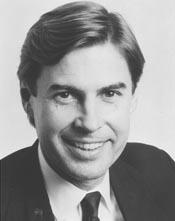
Historical · U.S. House · Texas · District 25
Michael Andrews
Former U.S. Representative · Texas District 25 · 1983–1995 · Democratic
Michael Andrews represented Texas's District 25 in the United States House of Representatives (1983–1995) for the Democratic party. The page below collects sourced biographical facts, term history, committee roles, and provenance for Andrews.
Bioguide ID: A000209
Key facts
- Full name
- Michael Andrews
- State
- Texas
- District
- District 25
- Party
- Democratic
- House service
- 1983–1995
- First House term
- 1983
- Status
- Left office
- Current term ends
- —
- Born
- 1944
- Bioguide ID
- A000209
- Committee assignments
- —
- Dataset version
- 1.20260605
Biographical narrative
910 words · sourced from the Wikipedia REST extract
Michael Andrews is a former American politician and attorney who served as a member of the United States House of Representatives, representing Texas's 25th congressional district. A member of the Democratic Party, Andrews held office from January 3, 1983, until January 3, 1995, during which he was elected to six consecutive terms. His political career was marked by a commitment to his constituents and a focus on various legislative issues that reflected the needs of his district.
Early life and career
Michael Allen Andrews was born on February 7, 1944, in Houston, Texas. He completed his secondary education at Arlington Heights High School in Fort Worth, Texas, graduating in 1962. Following high school, Andrews pursued higher education at the University of Texas at Austin, where he earned a Bachelor of Arts degree in 1967. His academic journey continued at the Dedman School of Law, where he obtained his Juris Doctor in 1970.
After completing his legal education, Andrews was admitted to the Texas bar in 1971, marking the beginning of his professional career as an attorney. His early career included a position as a law clerk for a United States District Court judge in the Southern District of Texas from 1971 to 1972. This role provided him with valuable insights into the judicial process and the workings of federal law. Following his clerkship, Andrews transitioned to a role as an assistant district attorney for Harris County, Texas, serving from 1972 to 1976. This experience in the legal system further shaped his understanding of law enforcement and public service.
In 1976, Andrews returned to private legal practice, where he continued to build his career until he entered politics. His legal background and experience in public service would later inform his work as a legislator, as he drew upon his understanding of the law and the needs of his constituents throughout his congressional tenure.
House tenure
Andrews's political career began in earnest when he first ran for Congress in 1980, seeking to represent Texas's 22nd congressional district. In that election, he faced off against the Republican incumbent, Ron Paul. Despite a vigorous campaign, Andrews narrowly lost the election. However, he did not let this setback deter him. In 1982, he shifted his focus to the neighboring 25th congressional district, which had been reconfigured to include a larger portion of the Democratic electorate from the previous district. This strategic move proved successful, as Andrews won the election and began his first term in the 98th United States Congress on January 3, 1983.
During his time in the House, Andrews was re-elected five additional times, demonstrating a strong connection with his constituents and a solid electoral base. His ability to secure re-election was particularly notable in 1986 and 1990 when he ran unopposed, indicating a high level of support within his district. Throughout his six terms in office, Andrews was involved in various legislative efforts and initiatives that addressed the needs and concerns of his constituents.
In 1994, Andrews made the decision not to seek renomination for his House seat. Instead, he opted to pursue the Democratic nomination for the United States Senate in the 1994 election cycle. This decision marked the end of his tenure in the House, which concluded on January 3, 1995. His departure from Congress was a significant transition in his career, as he sought to expand his political influence and continue serving the public in a different capacity.
Legislative focus and committees
During his time in Congress, Michael Andrews was a member of several committees that played a crucial role in shaping legislation and addressing key issues facing the nation. His legislative focus included a range of topics that were pertinent to his constituents and the broader American public. Although specific details about the bills he sponsored or co-sponsored are not provided, it is known that his work in Congress was characterized by a commitment to public service and advocacy for the interests of his district.
Andrews's background as an attorney likely influenced his approach to legislative matters, as he brought a legal perspective to the discussions and debates that took place in the House. His experience in the judicial system and as a district attorney would have equipped him with the skills necessary to navigate complex legal issues and advocate for effective policies.
Throughout his congressional career, Andrews was known for his engagement with his constituents and his willingness to address their concerns. This connection to the community was essential in shaping his legislative priorities and ensuring that the voices of his constituents were heard in the halls of Congress. His ability to communicate effectively with the public and understand their needs contributed to his success as a representative.
After leaving Congress, Andrews continued his professional career as senior counsel for the Washington, D.C. branch of King & Spalding, a prominent law firm. In this role, he has been able to leverage his extensive legal background and experience in public service to provide valuable counsel and guidance in various legal matters.
Michael Andrews's career reflects a dedication to public service and a commitment to the legal profession. His time in the U.S. House of Representatives was marked by a focus on the needs of his constituents and an understanding of the legislative process that was informed by his legal expertise. Although he is no longer in office, his contributions to Texas politics and the legislative process continue to be recognized as part of his legacy.
Notable legislation
Sponsored and co-sponsored legislation for Michael Andrews is pending operator curation. The biographical narrative above carries the same provenance trail until per-bill rows are written.
Sources
- [1]https://en.wikipedia.org/wiki/Michael_A._AndrewsWikipedia · retrieved 2026-06-05
Notable quotes
Sourced quotes for Michael Andrews are pending operator curation. Narrative-scope provenance remains attached below.
Sources
- [1]https://en.wikipedia.org/wiki/Michael_A._AndrewsWikipedia · retrieved 2026-06-05
Key positions
Curated policy positions for Michael Andrews are pending operator review. The biographical narrative above carries the same provenance trail until per-topic positions are written.
Sources
- [1]https://en.wikipedia.org/wiki/Michael_A._AndrewsWikipedia · retrieved 2026-06-05
Terms served
- 1983–1985U.S. House · Term 1 · Democratic
- 1985–1987U.S. House · Term 2 · Democratic
- 1987–1989U.S. House · Term 3 · Democratic
- 1989–1991U.S. House · Term 4 · Democratic
- 1991–1993U.S. House · Term 5 · Democratic
- 1993–1995U.S. House · Term 6 · Democratic
Sources & provenance
Every attributable claim above carries a per-section [N] marker that resolves to the corresponding URL below. Each entry records the upstream provider, the canonical URL, and the timestamp at which the source was retrieved by the ingest pipeline.
Key facts
- https://bioguide.congress.gov/search/bio/A000209bioguide · retrieved 2026-06-05
- https://www.govtrack.us/congress/members/400882govtrack · retrieved 2026-06-05
Biographical narrative
- https://en.wikipedia.org/wiki/Michael_A._Andrewswikipedia · retrieved 2026-06-05
Find your representative
Every U.S. state elects representatives by district. Browse Texas’s delegation, the full former-representative roster, or explore the role and term length.
Related on The Candidate
- Succeeded by Ken BentsenLater holder of the Texas District 25 House seat · Democratic.Open
- Charles StewartFormer U.S. Representative · Texas District 1 · DemocraticOpen
- David KaufmanFormer U.S. Representative · Texas District 1 · DemocraticOpen
- Eugene BlackFormer U.S. Representative · Texas District 1 · DemocraticOpen
- George SmythFormer U.S. Representative · Texas District 1 · DemocraticOpen
- Democratic PartyFederal candidates and office holders on the Democratic line.Open