
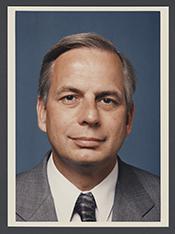
Historical · U.S. House · Texas · District 29
Gene Green
Former U.S. Representative · Texas District 29 · 1993–2019 · Democratic
Gene Green represented Texas's District 29 in the United States House of Representatives (1993–2019) for the Democratic party. The page below collects sourced biographical facts, term history, committee roles, and provenance for Green.
Bioguide ID: G000410
Key facts
- Full name
- Gene Green
- State
- Texas
- District
- District 29
- Party
- Democratic
- House service
- 1993–2019
- First House term
- 1993
- Status
- Left office
- Current term ends
- —
- Born
- 1947
- Bioguide ID
- G000410
- Committee assignments
- —
- Dataset version
- 1.20260605
Biographical narrative
816 words · sourced from the Wikipedia REST extract
Raymond Eugene Green, born on October 17, 1947, is a former American politician who served as the U.S. Representative for Texas's 29th congressional district from 1993 until his retirement in 2019. A member of the Democratic Party, Green represented a district that encompasses much of eastern Houston, including parts of its suburbs. Over his 13 terms in Congress, he became known for his involvement in various legislative issues, particularly those related to energy, health care, education, and economic development.
Early life and career
Gene Green was born in Houston, Texas, where he spent his formative years. He pursued higher education at the University of Houston, earning a bachelor's degree in business administration in 1971. Following this, he continued his studies at the same institution, obtaining a Juris Doctor degree in 1977. His educational background laid the groundwork for his professional career, which included roles as a business manager and a private attorney prior to his entry into politics.
Green's political career began in the early 1970s when he was elected to the Texas House of Representatives in 1972. He served in this capacity for over a decade, during which he gained valuable experience in state governance. In 1985, he advanced to the Texas Senate, where he continued to represent his constituents until he transitioned to federal office.
House tenure
Gene Green was first elected to the U.S. House of Representatives in 1992, succeeding in a competitive Democratic primary for Texas's 29th congressional district. Although he initially finished second in a five-way primary, he won the subsequent runoff election by a narrow margin, which positioned him favorably for the general election in a district that has historically leaned Democratic. Throughout his congressional career, Green was re-elected 12 times, often without facing significant opposition. Notably, he ran unopposed in several elections, including those in 1998, 2002, and 2004.
During his tenure, Green became a prominent figure in the House, particularly as a member of the Energy and Commerce Committee from 1996 until his retirement in 2019. His role on this committee allowed him to influence a wide range of legislative matters, especially those related to energy policy and health care. In 2011, he was appointed as the Ranking Member of the Subcommittee on Environment and the Economy, further solidifying his position as a key player in discussions surrounding environmental issues.
In November 2017, Green announced his decision to retire from Congress at the end of his term, opting not to seek re-election in 2018. He endorsed State Senator Sylvia Garcia as his successor, who had previously competed against him in the 1992 Democratic primary. Garcia ultimately won the primary and the general election, succeeding Green in representing the district.
Legislative focus and committees
Throughout his congressional career, Gene Green focused on a variety of legislative issues that reflected the needs and interests of his constituents. His work encompassed areas such as education, labor, energy, domestic manufacturing, health care, and veterans' benefits. Green was particularly committed to improving access to quality health care and supporting initiatives aimed at economic growth and job training. He also advocated for maintaining financial aid for students, recognizing the importance of education in fostering opportunity.
Green's legislative record includes significant votes and proposals that shaped his political identity. He voted in favor of the Iraq Resolution in 2002 and made a notable speech linking Saddam Hussein to the September 11 attacks, a position that was controversial within his party. Despite the Democratic leadership's opposition to the war, Green opposed measures that sought to impose a timetable for military withdrawal.
In September 2004, he introduced the Every Vote Counts Amendment, which aimed to abolish the U.S. electoral college in presidential elections, reflecting his commitment to electoral reform. Additionally, he was proactive in addressing environmental concerns related to electronic waste. He introduced H.R. 2284, known as The Responsible Electronics Recycling Act of 2011, which sought to prohibit the exportation of certain electronics that posed environmental, health, or national security risks.
Green played a significant role in the drafting of the Affordable Care Act in 2010 while serving on the Energy and Commerce Committee's Subcommittee on Health. His involvement in this landmark legislation underscored his dedication to expanding access to affordable health care for Americans.
In addition to his committee assignments, Green was a member of several caucuses, including the Congressional Arts Caucus, the Congressional Vision Caucus, the Afterschool Caucus, the Congressional NextGen 9-1-1 Caucus, and the U.S.-Japan Caucus. These memberships highlighted his engagement with various issues beyond his primary legislative focus, allowing him to collaborate with colleagues on a range of topics.
Gene Green's congressional career spanned nearly three decades, during which he established himself as a prominent figure in Texas politics and a dedicated advocate for his constituents. His legacy includes a commitment to public service and a focus on issues that have had a lasting impact on the communities he represented.
Notable legislation
Sponsored and co-sponsored legislation for Gene Green is pending operator curation. The biographical narrative above carries the same provenance trail until per-bill rows are written.
Sources
- [1]https://en.wikipedia.org/wiki/Gene_GreenWikipedia · retrieved 2026-06-05
Notable quotes
Sourced quotes for Gene Green are pending operator curation. Narrative-scope provenance remains attached below.
Sources
- [1]https://en.wikipedia.org/wiki/Gene_GreenWikipedia · retrieved 2026-06-05
Key positions
Curated policy positions for Gene Green are pending operator review. The biographical narrative above carries the same provenance trail until per-topic positions are written.
Sources
- [1]https://en.wikipedia.org/wiki/Gene_GreenWikipedia · retrieved 2026-06-05
Terms served
- 1993–1995U.S. House · Term 1 · Democratic
- 1995–1997U.S. House · Term 2 · Democratic
- 1997–1999U.S. House · Term 3 · Democratic
- 1999–2001U.S. House · Term 4 · Democratic
- 2001–2003U.S. House · Term 5 · Democratic
- 2003–2005U.S. House · Term 6 · Democratic
- 2005–2007U.S. House · Term 7 · Democratic
- 2007–2009U.S. House · Term 8 · Democratic
- 2009–2011U.S. House · Term 9 · Democratic
- 2011–2013U.S. House · Term 10 · Democratic
- 2013–2015U.S. House · Term 11 · Democratic
- 2015–2017U.S. House · Term 12 · Democratic
- 2017–2019U.S. House · Term 13 · Democratic
Sources & provenance
Every attributable claim above carries a per-section [N] marker that resolves to the corresponding URL below. Each entry records the upstream provider, the canonical URL, and the timestamp at which the source was retrieved by the ingest pipeline.
Key facts
- https://bioguide.congress.gov/search/bio/G000410bioguide · retrieved 2026-06-05
- https://green.house.govhouse.gov · retrieved 2026-06-05
Biographical narrative
- https://en.wikipedia.org/wiki/Gene_Greenwikipedia · retrieved 2026-06-05
Find your representative
Every U.S. state elects representatives by district. Browse Texas’s delegation, the full former-representative roster, or explore the role and term length.
Related on The Candidate
- Charles StewartFormer U.S. Representative · Texas District 1 · DemocraticOpen
- David KaufmanFormer U.S. Representative · Texas District 1 · DemocraticOpen
- Eugene BlackFormer U.S. Representative · Texas District 1 · DemocraticOpen
- George SmythFormer U.S. Representative · Texas District 1 · DemocraticOpen
- Democratic PartyFederal candidates and office holders on the Democratic line.Open
- Representatives from TexasEvery former U.S. Representative who has represented Texas.Open