
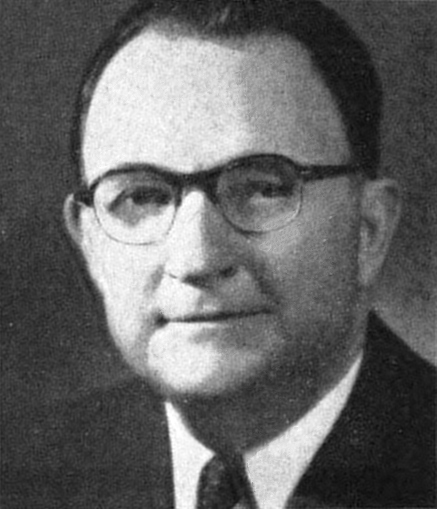
Historical · U.S. House · Texas · District 3
Brady Gentry
Former U.S. Representative · Texas District 3 · 1953–1957 · Democratic
Brady Gentry represented Texas's District 3 in the United States House of Representatives (1953–1957) for the Democratic party. The page below collects sourced biographical facts, term history, committee roles, and provenance for Gentry.
Bioguide ID: G000124
Key facts
- Full name
- Brady Gentry
- State
- Texas
- District
- District 3
- Party
- Democratic
- House service
- 1953–1957
- First House term
- 1953
- Status
- Left office
- Current term ends
- —
- Born
- 1896
- Bioguide ID
- G000124
- Committee assignments
- —
- Dataset version
- 1.20260605
Biographical narrative
828 words · sourced from the Wikipedia REST extract
Brady Gentry was a U.S. Representative from Texas, serving in the House of Representatives during the early to mid-1950s. A member of the Democratic Party, Gentry represented Texas's 3rd congressional district and was known for his involvement in local and state politics prior to his congressional career. His tenure in the House spanned two terms, during which he participated in significant legislative discussions of the time. After concluding his service in Congress, he returned to his legal practice until his passing in 1966.
Early life and career
Brady Gentry was born on March 25, 1896, in Colfax, Texas. He received his early education in the public school system and furthered his studies at East Texas State College, located in Commerce, Texas. Gentry later graduated from Cumberland University in Lebanon, Tennessee, where he pursued a degree in law. Following his education, he was admitted to the bar and began practicing law in Tyler, Texas.
Gentry's career was marked by a commitment to public service. In 1918, during World War I, he enlisted in the United States Army. He served in Europe, where he attained the rank of captain in the Infantry. His military service contributed to his leadership skills and public profile, which would later aid him in his political endeavors.
After returning from military service, Gentry entered local politics. He served as the county attorney for Smith County from 1921 to 1924, where he gained valuable experience in legal and governmental affairs. Subsequently, he was elected as the county judge of Smith County, a position he held from 1931 to 1939. His tenure as county judge allowed him to influence local governance and policy-making significantly.
In addition to his roles in local government, Gentry was appointed as the chairman of the Texas State Highway Commission from 1939 to 1945. This position placed him at the forefront of infrastructure development in Texas during a critical period, as the state was expanding its transportation network. His work on the commission further established his reputation as a dedicated public servant committed to improving the state's infrastructure.
House tenure
Brady Gentry's congressional career began when he was elected as a Democrat to the Eighty-third Congress, which commenced on January 3, 1953. He was subsequently re-elected to the Eighty-fourth Congress, serving until January 3, 1957. During his time in the House of Representatives, Gentry was involved in various legislative discussions and decisions that shaped the policies of the era.
His election to Congress came at a time of significant change in the United States, particularly regarding civil rights and social issues. Gentry was part of a larger delegation from Texas, and he notably chose not to sign the 1956 Southern Manifesto. This document was a response to the Supreme Court's decision in Brown v. Board of Education, which mandated the desegregation of public schools. Gentry's decision to abstain from signing the manifesto placed him among a minority of Texas representatives who opposed the document, reflecting a complex political landscape in the South during this period.
Throughout his congressional tenure, Gentry focused on issues pertinent to his constituents and the broader Texas community. His legislative work was characterized by a commitment to addressing the needs and concerns of the people he represented. However, specific details regarding the bills he sponsored or supported during his time in office are not extensively documented.
After completing his second term in Congress, Gentry chose not to seek renomination for the Eighty-fifth Congress in 1956. Following his departure from the House, he returned to his legal practice in Texas, where he continued to contribute to his community through his work in law.
Legislative focus and committees
While specific details regarding the committees on which Brady Gentry served during his time in the House of Representatives are not provided, it can be inferred that his background in law and local government likely influenced his legislative focus. Representatives often draw upon their professional experiences to guide their work in Congress, and Gentry's extensive background in legal and public service would have informed his approach to governance.
Gentry's legislative priorities would have been shaped by the needs of his constituents in Texas's 3rd congressional district, which included a diverse population with varying interests. Issues such as infrastructure development, education, and civil rights were likely significant during his tenure, given the national context of the 1950s. His role as a member of the Democratic Party also positioned him within a broader political framework that was navigating the complexities of post-war America.
After leaving Congress, Gentry continued to engage with the legal community and maintained his professional practice until his death. He passed away on November 9, 1966, in Houston, Texas. Following his death, he was interred in Rose Hill Cemetery in Tyler, Texas, leaving behind a legacy of public service and commitment to his community. Gentry's career reflects the experiences of many politicians of his time, who balanced local concerns with national issues during a transformative period in American history.
Notable legislation
Sponsored and co-sponsored legislation for Brady Gentry is pending operator curation. The biographical narrative above carries the same provenance trail until per-bill rows are written.
Sources
- [1]https://en.wikipedia.org/wiki/Brady_P._GentryWikipedia · retrieved 2026-06-05
Notable quotes
Sourced quotes for Brady Gentry are pending operator curation. Narrative-scope provenance remains attached below.
Sources
- [1]https://en.wikipedia.org/wiki/Brady_P._GentryWikipedia · retrieved 2026-06-05
Key positions
Curated policy positions for Brady Gentry are pending operator review. The biographical narrative above carries the same provenance trail until per-topic positions are written.
Sources
- [1]https://en.wikipedia.org/wiki/Brady_P._GentryWikipedia · retrieved 2026-06-05
Terms served
- 1953–1955U.S. House · Term 1 · Democratic
- 1955–1957U.S. House · Term 2 · Democratic
Sources & provenance
Every attributable claim above carries a per-section [N] marker that resolves to the corresponding URL below. Each entry records the upstream provider, the canonical URL, and the timestamp at which the source was retrieved by the ingest pipeline.
Key facts
- https://bioguide.congress.gov/search/bio/G000124bioguide · retrieved 2026-06-05
- https://www.govtrack.us/congress/members/404494govtrack · retrieved 2026-06-05
Biographical narrative
- https://en.wikipedia.org/wiki/Brady_P._Gentrywikipedia · retrieved 2026-06-05
Find your representative
Every U.S. state elects representatives by district. Browse Texas’s delegation, the full former-representative roster, or explore the role and term length.
Related on The Candidate
- Preceded by Morgan SandersEarlier holder of the Texas District 3 House seat · Democratic.Open
- Succeeded by Joe PoolLater holder of the Texas District 3 House seat · Democratic.Open
- Charles StewartFormer U.S. Representative · Texas District 1 · DemocraticOpen
- David KaufmanFormer U.S. Representative · Texas District 1 · DemocraticOpen
- Eugene BlackFormer U.S. Representative · Texas District 1 · DemocraticOpen
- George SmythFormer U.S. Representative · Texas District 1 · DemocraticOpen