
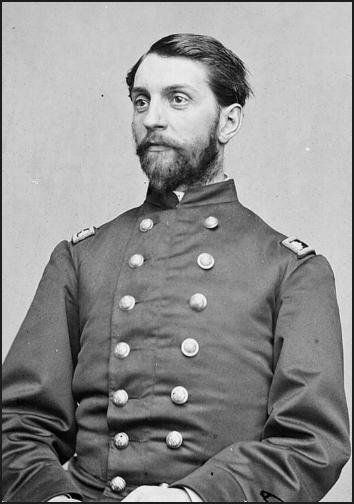
Historical · U.S. House · Texas · District 3
William Clark
Former U.S. Representative · Texas District 3 · 1869–1873 · Republican
William Clark represented Texas's District 3 in the United States House of Representatives (1869–1873) for the Republican party. The page below collects sourced biographical facts, term history, committee roles, and provenance for Clark.
Bioguide ID: C000455
Key facts
- Full name
- William Clark
- State
- Texas
- District
- District 3
- Party
- Republican
- House service
- 1869–1873
- First House term
- 1869
- Status
- Left office
- Current term ends
- —
- Born
- 1831
- Bioguide ID
- C000455
- Committee assignments
- —
- Dataset version
- 1.20260606
Biographical narrative
953 words · sourced from the Wikipedia REST extract
William Clark was a U.S. Representative from Texas, serving in the 3rd congressional district as a member of the Republican Party during the Reconstruction era. His political career followed a distinguished military service as a general in the Union Army during the American Civil War. Clark's tenure in the House of Representatives spanned from 1869 until 1873, during which he played a significant role in securing federal appropriations for infrastructure projects in Texas, particularly in Galveston.
Early life and career
William Clark was born on June 29, 1831, in Norwalk, Connecticut. He pursued a career in education early on, working as a school teacher before transitioning into law. In 1854, he relocated to New York City, where he successfully passed the bar exam, marking the beginning of his legal career. Following his marriage, Clark moved to Iowa, where he established a legal practice that would serve as the foundation for his future endeavors.
As the nation approached the Civil War, Clark's life took a significant turn. He enlisted in the military, becoming a lieutenant and adjutant of the 13th Iowa Infantry Regiment. His military service was marked by participation in several key battles, including the Battle of Shiloh and the Battle of Corinth. His leadership and dedication during the conflict led to his promotion to assistant adjutant general in the XVII Corps during the siege of Vicksburg. He further distinguished himself as assistant adjutant-general to the Army of the Tennessee during the Atlanta campaign, where he was recognized for his contributions with a brevet brigadier general rank.
In 1865, Clark was promoted to the full rank of brigadier general of volunteers, and by the end of that year, he was awarded the title of brevet major general for his gallant and meritorious service throughout the war. After the Civil War concluded, Clark settled in Galveston, Texas, where he became actively involved in the community. He played a pivotal role in establishing the first school for African Americans in the area, demonstrating a commitment to education and civil rights during a tumultuous period in American history. Additionally, he founded the First National Bank of Galveston, serving as its first cashier, and took on the responsibilities of postmaster, further embedding himself in the local civic landscape.
House tenure
William Clark's political career in the U.S. House of Representatives began in 1869 when he was elected to represent Texas's 3rd congressional district. His election came during a time of significant change in the South, as the Reconstruction era sought to rebuild and redefine the region following the Civil War. Clark's affiliation with the Republican Party aligned him with the party's efforts to promote civil rights and support the newly freed African American population.
During his time in Congress, which lasted until 1873, Clark was involved in various legislative initiatives aimed at improving infrastructure and economic conditions in Texas. One of his notable achievements was securing the first federal appropriation for the harbor of Galveston, amounting to $100,000. This funding was instrumental in facilitating the completion of the jetties at Galveston, which were crucial for enhancing the harbor's capacity and safety, thereby supporting trade and commerce in the region.
Clark's tenure in the House was characterized by his focus on local issues that directly impacted his constituents. He worked to address the needs of a community that was still grappling with the aftermath of the Civil War and the challenges of Reconstruction. His efforts in Congress reflected a broader commitment to rebuilding the South and ensuring that the interests of Texas were represented at the federal level.
After serving two terms in the House, Clark's congressional career came to an end on March 3, 1873. His departure marked the conclusion of a significant chapter in his life, but he remained an influential figure in Texas and continued to engage in various civic activities.
Legislative focus and committees
During his time in the U.S. House of Representatives, William Clark's legislative focus was primarily on issues pertinent to his constituents in Texas, particularly those related to infrastructure and economic development. His successful push for federal funding for the Galveston harbor exemplified his commitment to enhancing the region's economic prospects. By securing this appropriation, Clark not only addressed immediate infrastructural needs but also laid the groundwork for long-term growth and development in the area.
As a member of the Republican Party during the Reconstruction era, Clark was part of a larger movement aimed at addressing the social and economic challenges faced by the South after the Civil War. His legislative efforts were aligned with the party's goals of promoting civil rights and supporting the integration of formerly enslaved individuals into society. While specific committee assignments during his tenure are not detailed, it is likely that Clark participated in discussions and initiatives related to infrastructure, finance, and civil rights, given the pressing issues of the time.
Clark's background as a military leader and his experiences during the Civil War informed his perspective as a legislator. His understanding of the importance of strong infrastructure for economic recovery and growth was a driving force behind his advocacy for federal support. By focusing on local needs and working to secure resources for Texas, Clark demonstrated a pragmatic approach to governance that sought to balance the demands of his constituents with the broader goals of national reconstruction.
After leaving Congress, Clark continued to be involved in various civic and community activities in Texas. His legacy as a soldier, educator, and politician reflects a life dedicated to public service and the advancement of his community during a critical period in American history. William Clark passed away on October 12, 1905, leaving behind a record of service that encompassed both military and political achievements.
Notable legislation
Sponsored and co-sponsored legislation for William Clark is pending operator curation. The biographical narrative above carries the same provenance trail until per-bill rows are written.
Sources
- [1]https://en.wikipedia.org/wiki/William_Thomas_ClarkWikipedia · retrieved 2026-06-06
Notable quotes
Sourced quotes for William Clark are pending operator curation. Narrative-scope provenance remains attached below.
Sources
- [1]https://en.wikipedia.org/wiki/William_Thomas_ClarkWikipedia · retrieved 2026-06-06
Key positions
Curated policy positions for William Clark are pending operator review. The biographical narrative above carries the same provenance trail until per-topic positions are written.
Sources
- [1]https://en.wikipedia.org/wiki/William_Thomas_ClarkWikipedia · retrieved 2026-06-06
Terms served
- 1869–1871U.S. House · Term 1 · Republican
- 1871–1873U.S. House · Term 2 · Republican
Sources & provenance
Every attributable claim above carries a per-section [N] marker that resolves to the corresponding URL below. Each entry records the upstream provider, the canonical URL, and the timestamp at which the source was retrieved by the ingest pipeline.
Key facts
- https://bioguide.congress.gov/search/bio/C000455bioguide · retrieved 2026-06-06
- https://www.govtrack.us/congress/members/402593govtrack · retrieved 2026-06-06
Biographical narrative
- https://en.wikipedia.org/wiki/William_Thomas_Clarkwikipedia · retrieved 2026-06-06
Find your representative
Every U.S. state elects representatives by district. Browse Texas’s delegation, the full former-representative roster, or explore the role and term length.
Related on The Candidate
- Succeeded by James JonesLater holder of the Texas District 3 House seat · Democratic.Open
- Charles StewartFormer U.S. Representative · Texas District 1 · DemocraticOpen
- David KaufmanFormer U.S. Representative · Texas District 1 · DemocraticOpen
- Eugene BlackFormer U.S. Representative · Texas District 1 · DemocraticOpen
- George SmythFormer U.S. Representative · Texas District 1 · DemocraticOpen
- Republican PartyFederal candidates and office holders on the Republican line.Open