
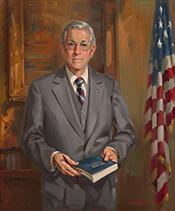
Historical · U.S. House · Texas · District 4
Herbert Roberts
Former U.S. Representative · Texas District 4 · 1961–1981 · Democratic
Herbert Roberts represented Texas's District 4 in the United States House of Representatives (1961–1981) for the Democratic party. The page below collects sourced biographical facts, term history, committee roles, and provenance for Roberts.
Bioguide ID: R000312
Key facts
- Full name
- Herbert Roberts
- State
- Texas
- District
- District 4
- Party
- Democratic
- House service
- 1961–1981
- First House term
- 1961
- Status
- Left office
- Current term ends
- —
- Born
- 1913
- Bioguide ID
- R000312
- Committee assignments
- —
- Dataset version
- 1.20260605
Biographical narrative
863 words · sourced from the Wikipedia REST extract
Herbert Ray Roberts was an American politician affiliated with the Democratic Party who served as a U.S. Representative for Texas's 4th congressional district from 1962 until 1981. His political career spanned two decades, during which he was involved in significant legislative matters and held various leadership roles, including chairing the Committee on Veterans’ Affairs. Prior to his tenure in the House of Representatives, Roberts had a diverse background that included military service and a position in the Texas State Senate.
Early life and career
Ray Roberts was born on March 28, 1913, in rural Collin County, Texas, where he spent his formative years in the ranching town of Westminster, located near McKinney. He completed his secondary education at McKinney High School before pursuing higher education. Roberts attended Texas A&M University and North Texas State University, now known as the University of North Texas, where he earned a bachelor's degree in agribusiness. He furthered his education by obtaining a master's degree from the University of Texas.
Roberts's early career was marked by his service in the United States Navy during World War II, where he was active from 1942 to 1945. Notably, he was the last person to leave the USS Hornet before it sank during the Battle of the Santa Cruz Islands on October 26, 1942. Following his naval service, he continued his military commitment as a member of the U.S. Naval Reserve, participating in active duty during the Korean War.
Before entering Congress, Roberts worked as a farmer and engaged in agribusiness. His political career began in earnest when he was elected to the Texas State Senate, where he served from 1955 to 1961. During his final year in the Senate, he held the position of president pro tempore, demonstrating his leadership capabilities within the state legislature.
House tenure
Roberts's congressional career began when he was elected as a Democrat to the Eighty-seventh Congress by special election on January 30, 1962. This election was necessitated by the death of long-serving Congressman Sam Rayburn, a significant figure in Texas politics and a mentor to Roberts. Following his initial election, Roberts was re-elected to nine subsequent Congresses, maintaining his position until January 3, 1981. His tenure in the House of Representatives was characterized by a commitment to his constituents and active participation in legislative processes.
One notable event during Roberts's time in office occurred on November 22, 1963, when he was present in the Dallas motorcade during the assassination of President John F. Kennedy. Roberts was riding in a car with Dallas Mayor Earl Cabell and the mayor's wife, positioned four cars behind the presidential limousine. Following the assassination, Roberts reportedly expressed his observations regarding the sounds of gunfire and the smell of gun smoke, although he was not questioned by the Warren Commission or other investigative bodies about the incident.
Throughout his congressional career, Roberts was known for his dedication to various issues, particularly those affecting veterans and military personnel. His leadership as chair of the Committee on Veterans’ Affairs from 1975 until the end of his term in 1981 allowed him to influence policies and initiatives aimed at improving the lives of veterans and their families. He chose not to seek re-election in 1980, concluding a significant chapter in his political journey.
Legislative focus and committees
During his time in the House of Representatives, Ray Roberts focused on a range of legislative issues, with a particular emphasis on veterans' affairs. As chair of the Committee on Veterans’ Affairs, he played a crucial role in shaping policies that addressed the needs and concerns of veterans. This position allowed him to advocate for improvements in healthcare, benefits, and support services for those who had served in the military.
Roberts's legislative efforts were indicative of his broader commitment to public service and community welfare. His background in agribusiness also informed his perspectives on agricultural policies, although specific legislative initiatives in this area are not detailed in the available records. His experience as a farmer and his education in agribusiness likely contributed to his understanding of the challenges faced by rural communities and the agricultural sector.
In addition to his work on veterans' issues, Roberts's long tenure in Congress allowed him to engage with a variety of other legislative matters, reflecting the diverse interests of his constituents in Texas's 4th congressional district. His ability to navigate the complexities of federal legislation and his dedication to representing the interests of his district were hallmarks of his time in office.
After leaving Congress, Roberts's legacy continued to be recognized in various ways, including the naming of Lake Ray Roberts in his honor. His official documents from his years in both the Texas State Senate and the U.S. House of Representatives are archived at Texas A&M-Commerce, providing a resource for those interested in his contributions to public service.
Ray Roberts passed away on April 13, 1992, leaving behind a legacy of political service that spanned two decades and impacted numerous lives, particularly among veterans and the communities he represented. His career reflects the dedication of public servants who work to address the needs of their constituents and contribute to the legislative process at the federal level.
Notable legislation
Sponsored and co-sponsored legislation for Herbert Roberts is pending operator curation. The biographical narrative above carries the same provenance trail until per-bill rows are written.
Sources
- [1]https://en.wikipedia.org/wiki/Ray_Roberts_(politician)Wikipedia · retrieved 2026-06-05
Notable quotes
Sourced quotes for Herbert Roberts are pending operator curation. Narrative-scope provenance remains attached below.
Sources
- [1]https://en.wikipedia.org/wiki/Ray_Roberts_(politician)Wikipedia · retrieved 2026-06-05
Key positions
Curated policy positions for Herbert Roberts are pending operator review. The biographical narrative above carries the same provenance trail until per-topic positions are written.
Sources
- [1]https://en.wikipedia.org/wiki/Ray_Roberts_(politician)Wikipedia · retrieved 2026-06-05
Terms served
- 1961–1963U.S. House · Term 1 · Democratic
- 1963–1965U.S. House · Term 2 · Democratic
- 1965–1967U.S. House · Term 3 · Democratic
- 1967–1969U.S. House · Term 4 · Democratic
- 1969–1971U.S. House · Term 5 · Democratic
- 1971–1973U.S. House · Term 6 · Democratic
- 1973–1975U.S. House · Term 7 · Democratic
- 1975–1977U.S. House · Term 8 · Democratic
- 1977–1979U.S. House · Term 9 · Democratic
- 1979–1981U.S. House · Term 10 · Democratic
Sources & provenance
Every attributable claim above carries a per-section [N] marker that resolves to the corresponding URL below. Each entry records the upstream provider, the canonical URL, and the timestamp at which the source was retrieved by the ingest pipeline.
Key facts
- https://bioguide.congress.gov/search/bio/R000312bioguide · retrieved 2026-06-05
- https://www.govtrack.us/congress/members/409283govtrack · retrieved 2026-06-05
Biographical narrative
- https://en.wikipedia.org/wiki/Ray_Roberts_(politician)wikipedia · retrieved 2026-06-05
Find your representative
Every U.S. state elects representatives by district. Browse Texas’s delegation, the full former-representative roster, or explore the role and term length.
Related on The Candidate
- Preceded by Choice RandellEarlier holder of the Texas District 4 House seat · Democratic.Open
- Succeeded by Ralph HallLater holder of the Texas District 4 House seat · Republican.Open
- Charles StewartFormer U.S. Representative · Texas District 1 · DemocraticOpen
- David KaufmanFormer U.S. Representative · Texas District 1 · DemocraticOpen
- Eugene BlackFormer U.S. Representative · Texas District 1 · DemocraticOpen
- George SmythFormer U.S. Representative · Texas District 1 · DemocraticOpen