
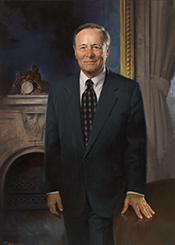
Historical · U.S. House · Texas · District 7
Bill Archer
Former U.S. Representative · Texas District 7 · 1971–2001 · Republican
Bill Archer represented Texas's District 7 in the United States House of Representatives (1971–2001) for the Republican party. The page below collects sourced biographical facts, term history, committee roles, and provenance for Archer.
Bioguide ID: A000215
Key facts
- Full name
- Bill Archer
- State
- Texas
- District
- District 7
- Party
- Republican
- House service
- 1971–2001
- First House term
- 1971
- Status
- Left office
- Current term ends
- —
- Born
- 1928
- Bioguide ID
- A000215
- Committee assignments
- —
- Dataset version
- 1.20260605
Biographical narrative
973 words · sourced from the Wikipedia REST extract
William Reynolds Archer Jr. is a retired American lawyer and politician who served as a U.S. Representative for Texas's 7th congressional district from 1971 until 2001. A member of the Republican Party, Archer's political career spanned three decades, during which he held significant leadership roles, including chairing the House Ways and Means Committee. His tenure in Congress was marked by a strong focus on fiscal conservatism and tax policy, reflecting his belief in reducing government expenditure and minimizing the tax burden on citizens.
Early life and career
Bill Archer was born on March 22, 1928, in Houston, Texas. He completed his secondary education at St. Thomas High School before pursuing higher education at Rice University. Archer later transferred to the University of Texas at Austin, where he earned both a Bachelor of Business Administration and a law degree (LLB). During his time at the University of Texas, he was affiliated with the Texas Rho chapter of Sigma Alpha Epsilon, a national fraternity.
After graduating from law school in 1951, Archer was admitted to the State Bar of Texas and began practicing law in Houston. His legal career was briefly interrupted when he was drafted into the United States Air Force during the Korean War, where he served as a captain until his discharge in 1953. Following his military service, Archer returned to Houston and took on the role of president of Uncle Johnny Mills, Inc., a position he held until 1963.
Archer's entry into politics began at the local level. From 1955 to 1962, he served as a councilman and later as mayor pro tempore of Hunters Creek Village, a suburb of Houston. His political career progressed when he became the director of Heights State Bank in 1967, the same year he was elected to the Texas House of Representatives. Initially a member of the Democratic Party, Archer switched to the Republican Party in December 1967. He served in the Texas House until he successfully ran for the U.S. Congress, succeeding George H. W. Bush, who had vacated the seat to become the U.S. ambassador to the United Nations.
House tenure
Bill Archer's first term in the U.S. House of Representatives began in 1971, and he was subsequently re-elected 14 times, serving a total of 15 terms until his retirement in 2001. His initial election was marked by a significant victory, where he garnered a substantial majority of the vote. Over the years, Archer became a prominent figure in Texas politics, representing a district that evolved into one of the most Republican strongholds in the state. His electoral success was characterized by consistently high vote percentages, with his lowest showing being in 1970. In several election cycles, he ran unopposed, reflecting his strong support within his constituency.
During his time in Congress, Archer held various leadership positions, culminating in his role as chairman of the House Committee on Ways and Means from 1995 until the end of his tenure in 2001. This committee is one of the most influential in Congress, overseeing taxation and revenue generation for the federal government. As chairman, Archer was known for his commitment to fiscal conservatism, advocating for reduced government spending and lower taxes. He pursued policies aimed at "starving the beast," a strategy that sought to limit government size by cutting taxes and reducing public expenditure.
Archer's legislative work included significant involvement in trade policy, notably during the late 1990s when he played a key role in granting temporary Most Favored Nation (MFN) status to China. This action was part of a broader effort to facilitate trade relations between the United States and China, despite ongoing concerns regarding human rights and trade deficits. He introduced legislation aimed at amending the Trade Act of 1974 to establish permanent normal trade relations with China, emphasizing the importance of access to a market that represented a substantial portion of the global population.
In 2001, Archer chose not to seek re-election, concluding his lengthy political career. His departure from Congress marked the end of an era for his district and the Republican Party in Texas, where he had been a significant figure for three decades.
Legislative focus and committees
Throughout his congressional career, Bill Archer maintained a focus on several key areas, particularly fiscal policy, taxation, and trade. His leadership as chairman of the House Ways and Means Committee positioned him at the forefront of national discussions on economic policy. Archer's approach to fiscal matters was characterized by a commitment to reducing the tax burden on individuals and businesses, which he believed would stimulate economic growth and empower citizens.
Archer's legislative priorities included advocating for tax cuts and reforms aimed at simplifying the tax code. He was a proponent of policies that sought to limit government intervention in the economy, arguing that a smaller government would lead to greater individual freedom and prosperity. His tenure on the Ways and Means Committee allowed him to influence critical legislation related to tax policy, social security, and healthcare.
In addition to his focus on taxation, Archer was involved in various social issues, taking conservative stances on topics such as welfare funding and the death penalty. His views reflected a broader Republican agenda during his time in office, which emphasized traditional values and limited government.
After retiring from Congress, Archer remained engaged in public life and continued to influence policy discussions through various roles, including serving as a Senior Policy Analyst at PricewaterhouseCoopers. He also became known for his involvement in educational initiatives, notably as the namesake of the Archer Fellowship Program at the University of Texas System, which provides students with opportunities to gain experience in Washington, D.C.
Archer's legacy in Congress is marked by his long service, leadership on fiscal issues, and contributions to trade policy, reflecting the priorities of the Republican Party during a transformative period in American politics.
Notable legislation
Sponsored and co-sponsored legislation for Bill Archer is pending operator curation. The biographical narrative above carries the same provenance trail until per-bill rows are written.
Sources
- [1]https://en.wikipedia.org/wiki/Bill_ArcherWikipedia · retrieved 2026-06-05
Notable quotes
Sourced quotes for Bill Archer are pending operator curation. Narrative-scope provenance remains attached below.
Sources
- [1]https://en.wikipedia.org/wiki/Bill_ArcherWikipedia · retrieved 2026-06-05
Key positions
Curated policy positions for Bill Archer are pending operator review. The biographical narrative above carries the same provenance trail until per-topic positions are written.
Sources
- [1]https://en.wikipedia.org/wiki/Bill_ArcherWikipedia · retrieved 2026-06-05
Terms served
- 1971–1973U.S. House · Term 1 · Republican
- 1973–1975U.S. House · Term 2 · Republican
- 1975–1977U.S. House · Term 3 · Republican
- 1977–1979U.S. House · Term 4 · Republican
- 1979–1981U.S. House · Term 5 · Republican
- 1981–1983U.S. House · Term 6 · Republican
- 1983–1985U.S. House · Term 7 · Republican
- 1985–1987U.S. House · Term 8 · Republican
- 1987–1989U.S. House · Term 9 · Republican
- 1989–1991U.S. House · Term 10 · Republican
- 1991–1993U.S. House · Term 11 · Republican
- 1993–1995U.S. House · Term 12 · Republican
- 1995–1997U.S. House · Term 13 · Republican
- 1997–1999U.S. House · Term 14 · Republican
- 1999–2001U.S. House · Term 15 · Republican
Sources & provenance
Every attributable claim above carries a per-section [N] marker that resolves to the corresponding URL below. Each entry records the upstream provider, the canonical URL, and the timestamp at which the source was retrieved by the ingest pipeline.
Key facts
- https://bioguide.congress.gov/search/bio/A000215bioguide · retrieved 2026-06-05
- https://www.govtrack.us/congress/members/400567govtrack · retrieved 2026-06-05
Biographical narrative
- https://en.wikipedia.org/wiki/Bill_Archerwikipedia · retrieved 2026-06-05
Find your representative
Every U.S. state elects representatives by district. Browse Texas’s delegation, the full former-representative roster, or explore the role and term length.
Related on The Candidate
- Preceded by George BushEarlier holder of the Texas District 7 House seat · Republican.Open
- Succeeded by John CulbersonLater holder of the Texas District 7 House seat · Republican.Open
- Charles StewartFormer U.S. Representative · Texas District 1 · DemocraticOpen
- David KaufmanFormer U.S. Representative · Texas District 1 · DemocraticOpen
- Eugene BlackFormer U.S. Representative · Texas District 1 · DemocraticOpen
- George SmythFormer U.S. Representative · Texas District 1 · DemocraticOpen