
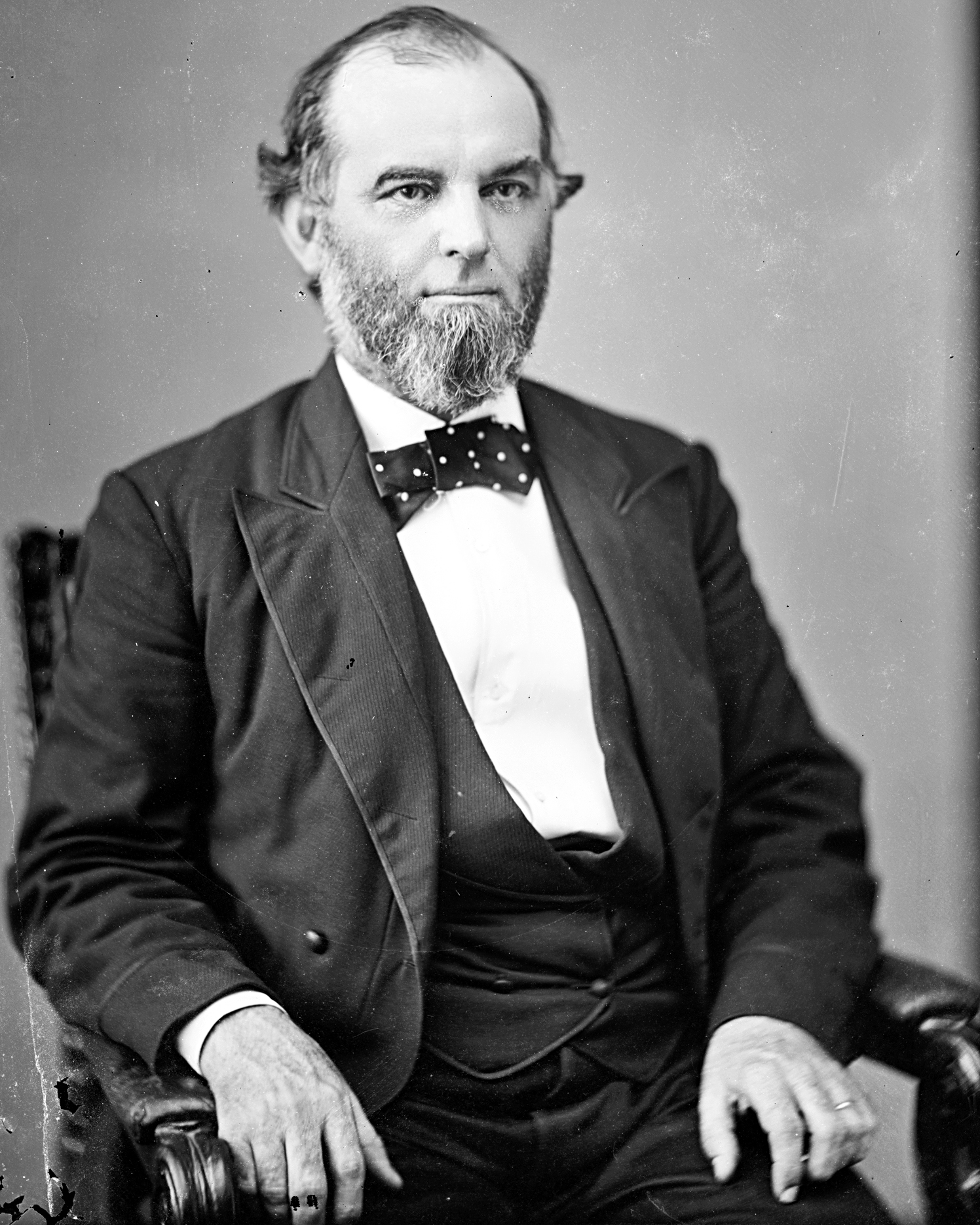
Historical · U.S. House · Texas · District 8
James Miller
Former U.S. Representative · Texas District 8 · 1883–1887 · Democratic
James Miller represented Texas's District 8 in the United States House of Representatives (1883–1887) for the Democratic party. The page below collects sourced biographical facts, term history, committee roles, and provenance for Miller.
Bioguide ID: M000732
Key facts
- Full name
- James Miller
- State
- Texas
- District
- District 8
- Party
- Democratic
- House service
- 1883–1887
- First House term
- 1883
- Status
- Left office
- Current term ends
- —
- Born
- 1830
- Bioguide ID
- M000732
- Committee assignments
- —
- Dataset version
- 1.20260606
Biographical narrative
948 words · sourced from the Wikipedia REST extract
James Miller was an American politician who served as a U.S. Representative for Texas's 8th congressional district during the mid-1880s. A member of the Democratic Party, he was elected to two consecutive terms in the House of Representatives from 1883 to 1887. Miller's career was marked by his legal practice, military service during the American Civil War, and involvement in banking and stock raising. After his tenure in Congress, he continued to engage in various professional pursuits until his death in 1902.
Early life and career
James Francis Miller was born on August 1, 1830, in Winnsboro, South Carolina. His early life was shaped by his family's relocation to Texas in 1842, a move that would influence his future career and political aspirations. In Texas, Miller attended public schools and furthered his education at Reutersville College, where he likely developed the foundational skills that would serve him in his later endeavors.
After completing his education, Miller pursued a career in law. He studied diligently and was admitted to the bar in 1857, marking the beginning of his legal practice in Gonzales, Texas. His work as a lawyer allowed him to establish a reputation within the community and provided him with the skills necessary for his future political career.
The outbreak of the American Civil War in 1861 saw Miller enlist as a private in Company I of the Eighth Texas Cavalry, a unit known as "Terry's Texas Rangers." This regiment was involved in various significant battles throughout the conflict, and Miller served with distinction. His military service not only contributed to the Confederate cause but also shaped his character and leadership abilities, which would later be reflected in his political career.
Following the conclusion of the Civil War, Miller returned to Gonzales and resumed his legal practice. In addition to his work as an attorney, he expanded his professional portfolio by engaging in banking and stock raising, further establishing himself as a prominent figure in the local economy. This multifaceted career provided him with a broad understanding of the issues facing his constituents, which would prove beneficial during his time in Congress.
House tenure
Miller's political career took a significant turn when he was elected to the United States House of Representatives as a Democrat. He began his first term in the Forty-eighth Congress on March 4, 1883, representing Texas's 8th congressional district. His election came during a period of political transformation in the United States, as the nation was recovering from the Civil War and grappling with the challenges of Reconstruction and economic development.
During his time in the House, Miller served two consecutive terms, concluding his service on March 3, 1887. Throughout his tenure, he was involved in various legislative initiatives and discussions that aimed to address the needs and concerns of his constituents. His experience as a lawyer and businessman likely informed his approach to policy-making, particularly in areas related to banking and economic development.
In the Forty-ninth Congress, Miller held the position of chairman of the Committee on Banking and Currency. This role placed him at the forefront of discussions regarding financial legislation, which was particularly relevant during a time when the nation was navigating economic challenges. His leadership in this committee underscored his expertise in financial matters and his commitment to addressing the economic needs of Texas and the broader nation.
Despite his contributions and involvement in Congress, Miller chose not to seek renomination for the Fiftieth Congress. This decision marked the end of his formal political career, but it did not signify a retreat from public life. After leaving Congress, he returned to Gonzales, where he continued to engage in his previous professional pursuits, including law and banking.
Legislative focus and committees
During his time in the House of Representatives, James Miller's legislative focus was primarily centered on banking and economic issues, reflecting his professional background and the needs of his constituents. As chairman of the Committee on Banking and Currency in the Forty-ninth Congress, he played a pivotal role in shaping financial legislation. This position allowed him to influence policies that would impact the banking industry and the economy at large, particularly during a period marked by economic fluctuations and the need for regulatory frameworks.
Miller's involvement in the banking sector extended beyond his congressional duties. In 1885, he was elected as the first president of the Texas Bankers' Association, a position that further highlighted his commitment to the financial industry and his leadership within it. This role not only reinforced his influence in banking but also demonstrated his dedication to the economic development of Texas.
His legislative work was characterized by a focus on fostering economic growth and stability, which was essential for the post-Civil War recovery. The issues he addressed in Congress were reflective of the broader national concerns regarding economic policy, banking regulations, and the financial well-being of citizens. Miller's background as a lawyer and businessman provided him with a unique perspective on these issues, allowing him to advocate effectively for policies that would benefit his constituents.
After his congressional career, Miller continued to be active in his community and professional life. His contributions to the legal and banking fields left a lasting impact on the local economy and the development of financial institutions in Texas. He passed away on July 3, 1902, in Gonzales, Texas, where he was laid to rest in Masonic Cemetery.
James Miller's life and career exemplify the journey of a 19th-century American politician who navigated the complexities of a nation in transition. His experiences as a soldier, lawyer, and banker shaped his approach to governance and public service, leaving a legacy that reflects the challenges and opportunities of his time.
Notable legislation
Sponsored and co-sponsored legislation for James Miller is pending operator curation. The biographical narrative above carries the same provenance trail until per-bill rows are written.
Sources
- [1]https://en.wikipedia.org/wiki/James_Francis_MillerWikipedia · retrieved 2026-06-06
Notable quotes
Sourced quotes for James Miller are pending operator curation. Narrative-scope provenance remains attached below.
Sources
- [1]https://en.wikipedia.org/wiki/James_Francis_MillerWikipedia · retrieved 2026-06-06
Key positions
Curated policy positions for James Miller are pending operator review. The biographical narrative above carries the same provenance trail until per-topic positions are written.
Sources
- [1]https://en.wikipedia.org/wiki/James_Francis_MillerWikipedia · retrieved 2026-06-06
Terms served
- 1883–1885U.S. House · Term 1 · Democratic
- 1885–1887U.S. House · Term 2 · Democratic
Sources & provenance
Every attributable claim above carries a per-section [N] marker that resolves to the corresponding URL below. Each entry records the upstream provider, the canonical URL, and the timestamp at which the source was retrieved by the ingest pipeline.
Key facts
- https://bioguide.congress.gov/search/bio/M000732bioguide · retrieved 2026-06-06
- https://www.govtrack.us/congress/members/407711govtrack · retrieved 2026-06-06
Biographical narrative
- https://en.wikipedia.org/wiki/James_Francis_Millerwikipedia · retrieved 2026-06-06
Find your representative
Every U.S. state elects representatives by district. Browse Texas’s delegation, the full former-representative roster, or explore the role and term length.
Related on The Candidate
- Succeeded by Littleton MooreLater holder of the Texas District 8 House seat · Democratic.Open
- Charles StewartFormer U.S. Representative · Texas District 1 · DemocraticOpen
- David KaufmanFormer U.S. Representative · Texas District 1 · DemocraticOpen
- Eugene BlackFormer U.S. Representative · Texas District 1 · DemocraticOpen
- George SmythFormer U.S. Representative · Texas District 1 · DemocraticOpen
- Democratic PartyFederal candidates and office holders on the Democratic line.Open