
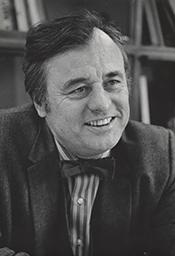
Historical · U.S. House · Texas · District 8
Robert Eckhardt
Former U.S. Representative · Texas District 8 · 1967–1981 · Democratic
Robert Eckhardt represented Texas's District 8 in the United States House of Representatives (1967–1981) for the Democratic party. The page below collects sourced biographical facts, term history, committee roles, and provenance for Eckhardt.
Bioguide ID: E000035
Key facts
- Full name
- Robert Eckhardt
- State
- Texas
- District
- District 8
- Party
- Democratic
- House service
- 1967–1981
- First House term
- 1967
- Status
- Left office
- Current term ends
- —
- Born
- 1913
- Bioguide ID
- E000035
- Committee assignments
- —
- Dataset version
- 1.20260605
Biographical narrative
876 words · sourced from the Wikipedia REST extract
Robert Christian Eckhardt was an American politician and author who served as a U.S. Representative for Texas's 8th congressional district from 1967 until 1981. A member of the Democratic Party, Eckhardt was known for his liberal stance on various issues and his contributions to significant legislation during his tenure in Congress. Before his time in the House of Representatives, he had a notable career in state politics and law, which laid the groundwork for his later achievements in federal office.
Early life and career
Bob Eckhardt was born on July 16, 1913, in Austin, Texas. He came from a politically active family; his grand-uncle was Democratic Congressman Rudolph Kleberg, and he had familial ties to other political figures, including his uncle, Republican Congressman Harry Wurzbach. Eckhardt's educational journey began at the University of Texas at Austin, where he earned his undergraduate degree in 1935. He continued his studies at the University of Texas Law School, receiving his law degree in 1939.
Eckhardt's early career was marked by his service in the United States Army during World War II, where he served from 1942 to 1944. Following his military service, he was appointed as the Southwestern Director of the Office of the Coordinator of Inter-American Affairs from 1944 to 1945, a role that involved promoting inter-American relations during a critical period in history.
After returning to civilian life, Eckhardt moved to Houston, Texas, where he began his political career. He was elected to the Texas House of Representatives in 1958, serving until 1966. During his time in the state legislature, he developed a reputation for his liberal voting record, advocating for progressive policies. One of his notable legislative achievements in the Texas House was the authorship of the Texas Open Beaches Act, which was passed in 1959 and aimed to protect public access to the state's beaches.
House tenure
In 1966, Eckhardt successfully ran for a seat in the United States House of Representatives, representing Texas's 8th congressional district, which encompassed a significant portion of northern Houston. He was elected as a Democrat and began his first term in Congress in 1967. Over the course of his congressional career, Eckhardt was reelected six times, demonstrating a strong base of support within his district. His tenure in the House lasted until January 3, 1981, when he was defeated in a close election by Republican candidate Jack Fields.
Eckhardt's time in Congress was characterized by his involvement in various legislative initiatives and his commitment to addressing issues pertinent to his constituents and the nation. He was known for sponsoring the War Powers Act, which aimed to clarify the balance of power between Congress and the President regarding military engagements. Additionally, he played a significant role in the passage of the Toxic Substances Act, which sought to regulate hazardous substances and protect public health and the environment.
Eckhardt's legislative efforts were often aligned with his progressive values, and he was recognized for his advocacy on issues such as civil rights, environmental protection, and government accountability. His ability to navigate the complexities of federal legislation and his willingness to engage in bipartisan efforts contributed to his effectiveness as a legislator.
Legislative focus and committees
Throughout his congressional career, Bob Eckhardt focused on a range of issues that reflected his commitment to progressive principles. His work on the War Powers Act and the Toxic Substances Act underscored his dedication to ensuring that government actions were transparent and accountable to the public. He was particularly concerned with the implications of military action and the need for legislative oversight in matters of war.
Eckhardt's legislative agenda also included a strong emphasis on environmental issues. He recognized the importance of protecting natural resources and public health, which was reflected in his support for various environmental regulations. His advocacy for the Toxic Substances Act was part of a broader commitment to safeguard communities from hazardous materials and promote a cleaner environment.
In addition to his legislative work, Eckhardt was involved in various committees during his time in the House. These committees provided him with platforms to influence policy and engage with fellow legislators on critical issues. His participation in these committees allowed him to address a wide array of topics, from labor rights to environmental protection, further solidifying his reputation as a dedicated public servant.
Eckhardt's contributions to the political landscape extended beyond his time in office. He was a co-founder of the Texas Observer magazine, which aimed to provide independent journalism and promote social justice issues in Texas. His involvement in the publication reflected his commitment to fostering informed public discourse and advocating for progressive change.
After leaving Congress, Eckhardt continued to be active in public life and remained engaged with issues he cared about. He authored a book titled "The Tides of Power," which explored conversations on the American Constitution, showcasing his deep interest in legal and constitutional matters.
Bob Eckhardt passed away on November 13, 2001, in Austin, Texas. His legacy as a politician, lawyer, and author continues to be recognized for his contributions to Texas and American politics, as well as his commitment to progressive values and public service. He was interred in Austin Memorial Park Cemetery, leaving behind a significant impact on the political landscape of his time.
Notable legislation
Sponsored and co-sponsored legislation for Robert Eckhardt is pending operator curation. The biographical narrative above carries the same provenance trail until per-bill rows are written.
Sources
- [1]https://en.wikipedia.org/wiki/Bob_EckhardtWikipedia · retrieved 2026-06-05
Notable quotes
Sourced quotes for Robert Eckhardt are pending operator curation. Narrative-scope provenance remains attached below.
Sources
- [1]https://en.wikipedia.org/wiki/Bob_EckhardtWikipedia · retrieved 2026-06-05
Key positions
Curated policy positions for Robert Eckhardt are pending operator review. The biographical narrative above carries the same provenance trail until per-topic positions are written.
Sources
- [1]https://en.wikipedia.org/wiki/Bob_EckhardtWikipedia · retrieved 2026-06-05
Terms served
- 1967–1969U.S. House · Term 1 · Democratic
- 1969–1971U.S. House · Term 2 · Democratic
- 1971–1973U.S. House · Term 3 · Democratic
- 1973–1975U.S. House · Term 4 · Democratic
- 1975–1977U.S. House · Term 5 · Democratic
- 1977–1979U.S. House · Term 6 · Democratic
- 1979–1981U.S. House · Term 7 · Democratic
Sources & provenance
Every attributable claim above carries a per-section [N] marker that resolves to the corresponding URL below. Each entry records the upstream provider, the canonical URL, and the timestamp at which the source was retrieved by the ingest pipeline.
Key facts
- https://bioguide.congress.gov/search/bio/E000035bioguide · retrieved 2026-06-05
- https://www.govtrack.us/congress/members/403730govtrack · retrieved 2026-06-05
Biographical narrative
- https://en.wikipedia.org/wiki/Bob_Eckhardtwikipedia · retrieved 2026-06-05
Find your representative
Every U.S. state elects representatives by district. Browse Texas’s delegation, the full former-representative roster, or explore the role and term length.
Related on The Candidate
- Preceded by Albert ThomasEarlier holder of the Texas District 8 House seat · Democratic.Open
- Succeeded by Jack Fields Jr.Later holder of the Texas District 8 House seat · Republican.Open
- Charles StewartFormer U.S. Representative · Texas District 1 · DemocraticOpen
- David KaufmanFormer U.S. Representative · Texas District 1 · DemocraticOpen
- Eugene BlackFormer U.S. Representative · Texas District 1 · DemocraticOpen
- George SmythFormer U.S. Representative · Texas District 1 · DemocraticOpen