
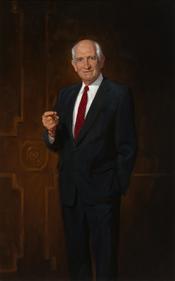
Historical · U.S. House · Texas · District 9
Jack Brooks
Former U.S. Representative · Texas District 9 · 1953–1995 · Democratic
Jack Brooks represented Texas's District 9 in the United States House of Representatives (1953–1995) for the Democratic party. The page below collects sourced biographical facts, term history, committee roles, and provenance for Brooks.
Bioguide ID: B000880
Key facts
- Full name
- Jack Brooks
- State
- Texas
- District
- District 9
- Party
- Democratic
- House service
- 1953–1995
- First House term
- 1953
- Status
- Left office
- Current term ends
- —
- Born
- 1922
- Bioguide ID
- B000880
- Committee assignments
- —
- Dataset version
- 1.20260605
Biographical narrative
1,054 words · sourced from the Wikipedia REST extract
Jack B. Brooks was a prominent American politician who served as a U.S. Representative from Texas for 42 years, representing the state's 2nd congressional district from 1953 to 1967 and the 9th congressional district from 1967 until his retirement in 1995. A member of the Democratic Party, Brooks was known for his long tenure in Congress, where he developed significant political ties with influential figures such as House Speaker Sam Rayburn and President Lyndon B. Johnson. Throughout his career, he was recognized for his involvement in key legislative issues and for his leadership roles within various congressional committees.
Early life and career
Jack Bascom Brooks was born on December 18, 1922, in Crowley, Louisiana. At the age of five, he moved with his family to Beaumont, Texas. Brooks faced personal challenges early in life, as his father, a rice salesman, passed away when Brooks was just 13 years old. To support his family, he took on various jobs, including working as a carhop and a newspaper reporter. His academic journey began at Lamar Junior College in 1939, where he received a scholarship. After completing two years at Lamar, he transferred to the University of Texas at Austin, where he earned a Bachelor of Arts degree in journalism in 1943.
Following his graduation, Brooks enlisted in the U.S. Marine Corps during World War II. He served for approximately two years in the Pacific Theater, including locations such as Guadalcanal, Guam, and Okinawa, as well as in North China. He achieved the rank of first lieutenant during his service and continued his military involvement in the Marine Corps Reserve, ultimately retiring in 1972 with the rank of colonel.
Brooks's political career began in the Texas legislature, where he was elected in 1946 to represent Jefferson County in the Texas House of Representatives. During his tenure, he sponsored legislation aimed at transforming Lamar Junior College into a four-year university. Although his initial attempt to pass the bill failed, it was ultimately successful the following year, leading to the establishment of what is now known as Lamar University. Brooks was re-elected to the state legislature in 1948 without opposition, and the following year, he earned a law degree from the University of Texas Law School.
House tenure
In 1952, Brooks transitioned to national politics by winning a competitive Democratic primary and subsequently being elected to the U.S. House of Representatives. He began his first term in Congress in 1953, representing Texas's 2nd congressional district. His political career was marked by strong affiliations with influential Texas Democrats, including Sam Rayburn and Lyndon B. Johnson. Over the years, Brooks developed a reputation for being a conservative on certain issues, such as the death penalty and gun control, while adopting more liberal stances on domestic spending, labor, and civil rights.
Brooks's voting record reflected a complex political identity. Notably, he refused to sign the Southern Manifesto, which opposed racial integration in public spaces. He voted against the Civil Rights Acts of 1957 and 1960 but supported the 24th Amendment to the U.S. Constitution, as well as the Civil Rights Acts of 1964 and 1968, and the Voting Rights Act of 1965. As a member of the House Judiciary Committee, he played a significant role in drafting the 1964 and 1965 civil rights legislation. His overall voting pattern during his congressional tenure was predominantly liberal.
A pivotal moment in Brooks's career occurred on November 22, 1963, when he was present in the motorcade during the assassination of President John F. Kennedy in Dallas. Later that day, he was also present on Air Force One when Lyndon B. Johnson was sworn in as the new president. Following the Supreme Court's decision in Wesberry v. Sanders, which mandated equal population in congressional districts, Brooks's district was redrawn, and he began representing the 9th congressional district in 1967.
One of Brooks's notable legislative achievements was the Brooks Act, which mandated competitive bidding for federal computing contracts. Initially conceived in the mid-1960s, the act was enacted into law in 1972 and served as the primary guideline for federal computer acquisitions for three decades. It is often credited with fostering technological advancements in government procurement.
Brooks's involvement in significant political events extended to the impeachment process of President Richard Nixon during the Watergate scandal. As a member of the House Judiciary Committee, he participated in the impeachment proceedings and drafted a set of articles of impeachment that were later used as a foundation for the committee's final articles. His role in this historic event earned him recognition, and he was one of the few representatives to vote in favor of all five articles of impeachment against Nixon.
Throughout his congressional career, Brooks held several leadership positions. He served as chairman of the U.S. House Committee on Government Operations from 1975 to 1988 and later chaired the U.S. House Committee on the Judiciary from 1989 until his retirement in 1995. Additionally, he was involved with the Select Committee on Congressional Operations, the Joint Committee on Congressional Operations, and the Subcommittee on Legislation and National Security. In 1979, he became the senior member of the Texas congressional delegation, a position he maintained for fifteen years.
Legislative focus and committees
As chairman of the Government Operations Committee, Brooks oversaw legislation related to budget and accounting matters, as well as the establishment of various federal departments and agencies. His leadership contributed to the passage of several important laws, including the Inspector General Act of 1978, the General Accounting Office Act of 1980, the Paper Reduction Act of 1980, and the Single Audit Act of 1984. His influence extended into trade policy, where he introduced an amendment to a spending bill that prohibited Japanese companies from participating in U.S. public works projects for a year, citing concerns over discriminatory practices against U.S. firms.
Brooks's tenure in Congress was characterized by a commitment to addressing a wide range of issues, from civil rights to government accountability. His legislative efforts and leadership roles positioned him as a significant figure in the U.S. House of Representatives during a transformative period in American history. After serving a total of 21 terms in Congress, Brooks concluded his congressional career on January 3, 1995. He passed away on December 4, 2012, leaving behind a legacy marked by his long service and contributions to American politics.
Notable legislation
Sponsored and co-sponsored legislation for Jack Brooks is pending operator curation. The biographical narrative above carries the same provenance trail until per-bill rows are written.
Sources
- [1]https://en.wikipedia.org/wiki/Jack_Brooks_(American_politician)Wikipedia · retrieved 2026-06-05
Notable quotes
Sourced quotes for Jack Brooks are pending operator curation. Narrative-scope provenance remains attached below.
Sources
- [1]https://en.wikipedia.org/wiki/Jack_Brooks_(American_politician)Wikipedia · retrieved 2026-06-05
Key positions
Curated policy positions for Jack Brooks are pending operator review. The biographical narrative above carries the same provenance trail until per-topic positions are written.
Sources
- [1]https://en.wikipedia.org/wiki/Jack_Brooks_(American_politician)Wikipedia · retrieved 2026-06-05
Terms served
- 1953–1955U.S. House · Term 1 · Democratic
- 1955–1957U.S. House · Term 2 · Democratic
- 1957–1959U.S. House · Term 3 · Democratic
- 1959–1961U.S. House · Term 4 · Democratic
- 1961–1963U.S. House · Term 5 · Democratic
- 1963–1965U.S. House · Term 6 · Democratic
- 1965–1967U.S. House · Term 7 · Democratic
- 1967–1969U.S. House · Term 8 · Democratic
- 1969–1971U.S. House · Term 9 · Democratic
- 1971–1973U.S. House · Term 10 · Democratic
- 1973–1975U.S. House · Term 11 · Democratic
- 1975–1977U.S. House · Term 12 · Democratic
- 1977–1979U.S. House · Term 13 · Democratic
- 1979–1981U.S. House · Term 14 · Democratic
- 1981–1983U.S. House · Term 15 · Democratic
- 1983–1985U.S. House · Term 16 · Democratic
- 1985–1987U.S. House · Term 17 · Democratic
- 1987–1989U.S. House · Term 18 · Democratic
- 1989–1991U.S. House · Term 19 · Democratic
- 1991–1993U.S. House · Term 20 · Democratic
- 1993–1995U.S. House · Term 21 · Democratic
Sources & provenance
Every attributable claim above carries a per-section [N] marker that resolves to the corresponding URL below. Each entry records the upstream provider, the canonical URL, and the timestamp at which the source was retrieved by the ingest pipeline.
Key facts
- https://bioguide.congress.gov/search/bio/B000880bioguide · retrieved 2026-06-05
- https://www.govtrack.us/congress/members/401837govtrack · retrieved 2026-06-05
Biographical narrative
- https://en.wikipedia.org/wiki/Jack_Brooks_(American_politician)wikipedia · retrieved 2026-06-05
Find your representative
Every U.S. state elects representatives by district. Browse Texas’s delegation, the full former-representative roster, or explore the role and term length.
Related on The Candidate
- Preceded by Joseph MansfieldEarlier holder of the Texas District 9 House seat · Democratic.Open
- Charles StewartFormer U.S. Representative · Texas District 1 · DemocraticOpen
- David KaufmanFormer U.S. Representative · Texas District 1 · DemocraticOpen
- Eugene BlackFormer U.S. Representative · Texas District 1 · DemocraticOpen
- George SmythFormer U.S. Representative · Texas District 1 · DemocraticOpen
- Democratic PartyFederal candidates and office holders on the Democratic line.Open