
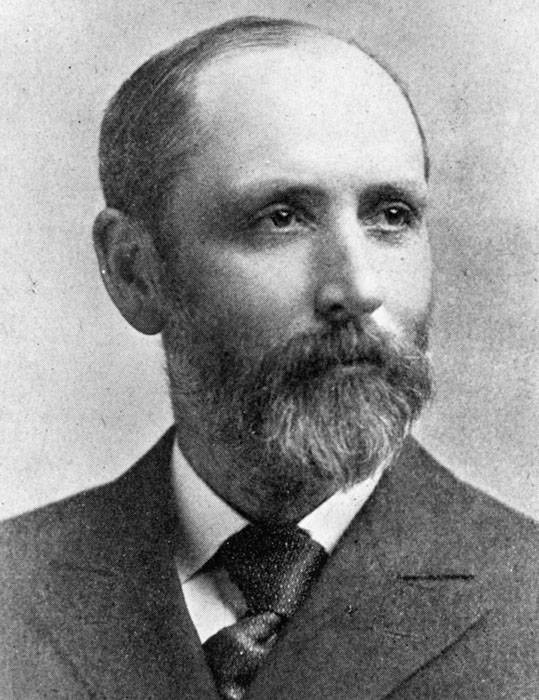
Historical · U.S. House · Utah · District 1
Clarence Allen
Former U.S. Representative · Utah District 1 · 1895–1897 · Republican
Clarence Allen represented Utah's District 1 in the United States House of Representatives (1895–1897) for the Republican party. The page below collects sourced biographical facts, term history, committee roles, and provenance for Allen.
Bioguide ID: A000117
Key facts
- Full name
- Clarence Allen
- State
- Utah
- District
- District 1
- Party
- Republican
- House service
- 1895–1897
- First House term
- 1895
- Status
- Left office
- Current term ends
- —
- Born
- 1852
- Bioguide ID
- A000117
- Committee assignments
- —
- Dataset version
- 1.20260606
Biographical narrative
800 words · sourced from the Wikipedia REST extract
Clarence Allen was a U.S. Representative from Utah, serving in the House of Representatives as a member of the Republican Party. His congressional career spanned a single term from 1896 to 1897, following the admission of Utah as a state. Allen was also known for his contributions to education in Utah and his earlier career as a professional baseball player. Born in Pennsylvania, he later moved to Utah, where he engaged in various professional and political activities before his eventual retirement.
Early life and career
Clarence Emir Allen was born on September 8, 1852, in Girard Township, Pennsylvania. He received his early education at the local district school and attended Girard Academy. Pursuing higher education, Allen graduated from Western Reserve College in Hudson, Ohio, in 1877, where he was recognized for his academic excellence by being inducted into the Phi Beta Kappa honor society.
Following his graduation, Allen married Corinne Marie Tuckerman, and together they had seven children, including five daughters and two sons. His family had notable achievements; one of his daughters, Florence E. Allen, became the first woman to serve on a state supreme court in Ohio and was also the first woman judge on a federal court. Another daughter, Esther Allen Gaw, held the position of Dean of Women at Ohio State University. Tragically, both of Allen's sons lost their lives during World War I.
In addition to his academic pursuits, Allen was an accomplished athlete. He played baseball at the collegiate level for Western Reserve College, where he is credited with perfecting the curveball, a significant development in the sport. Allen's baseball career included a stint with the Erie Keystones, a professional team, during the summer of 1876. His time in Erie allowed him to refine his skills, particularly the curveball, which he mastered during his college years.
After his time in college, Allen transitioned into a teaching role, serving as an instructor of Greek at Western Reserve College from 1880 to 1881. In 1881, he relocated to Salt Lake City, Utah Territory, where he continued his teaching career at Salt Lake Academy until 1886. After resigning from his teaching position, he shifted his focus to mining, which would become a significant aspect of his professional life.
Allen's political career began in the late 1880s when he served as a member of the territorial House of Representatives in 1888, 1890, and 1894. He was a strong advocate for public education and is credited with authoring a bill in 1890 that established free public schools for children aged six to eighteen in Utah. This initiative earned him recognition as the "Father of Utah's Free Schools." In addition to his legislative work, Allen was elected as the county clerk of Salt Lake County in August 1890, a position he held until January 1, 1893.
House tenure
With the admission of Utah as a state in 1896, Clarence Allen was elected as a Republican to the Fifty-fourth Congress. His term began on January 4, 1896, and concluded on March 3, 1897. During his time in the House of Representatives, Allen participated in the legislative process as a freshman member, contributing to discussions and decisions that would shape the new state's governance and policies.
Despite his involvement in Congress, Allen chose not to seek renomination for a subsequent term in 1896. After his congressional tenure, he returned to his earlier pursuits in mining, which had been a significant part of his career prior to entering politics. His decision to step away from the political arena marked the end of his formal involvement in national governance.
Legislative focus and committees
During his brief time in the House of Representatives, Clarence Allen's legislative focus was likely influenced by his background in education and his experiences in local governance. Although specific details regarding the committees he served on or the legislation he sponsored during his term are not documented, his prior advocacy for public education suggests that he may have continued to support educational initiatives and policies aimed at improving the welfare of his constituents.
Allen's commitment to public education and community service remained evident throughout his life. After leaving Congress, he continued to engage in mining until 1922, when he retired from active business pursuits. Following his retirement, he resided in Columbus, Ohio, until 1931, before eventually passing away on July 9, 1932, in Escondido, California. His remains were cremated, and his ashes were interred in Mount Olivet Cemetery in Salt Lake City, Utah.
Clarence Allen's life reflects a diverse array of interests and contributions, from his early achievements in academia and athletics to his later political endeavors and advocacy for education. His legacy, particularly in the realm of public schooling in Utah, remains a notable aspect of his biography, highlighting the impact of his work on future generations.
Notable legislation
Sponsored and co-sponsored legislation for Clarence Allen is pending operator curation. The biographical narrative above carries the same provenance trail until per-bill rows are written.
Sources
- [1]https://en.wikipedia.org/wiki/Clarence_Emir_AllenWikipedia · retrieved 2026-06-06
Notable quotes
Sourced quotes for Clarence Allen are pending operator curation. Narrative-scope provenance remains attached below.
Sources
- [1]https://en.wikipedia.org/wiki/Clarence_Emir_AllenWikipedia · retrieved 2026-06-06
Key positions
Curated policy positions for Clarence Allen are pending operator review. The biographical narrative above carries the same provenance trail until per-topic positions are written.
Sources
- [1]https://en.wikipedia.org/wiki/Clarence_Emir_AllenWikipedia · retrieved 2026-06-06
Terms served
- 1895–1897U.S. House · Term 1 · Republican
Sources & provenance
Every attributable claim above carries a per-section [N] marker that resolves to the corresponding URL below. Each entry records the upstream provider, the canonical URL, and the timestamp at which the source was retrieved by the ingest pipeline.
Key facts
- https://bioguide.congress.gov/search/bio/A000117bioguide · retrieved 2026-06-06
- https://www.govtrack.us/congress/members/400774govtrack · retrieved 2026-06-06
Biographical narrative
- https://en.wikipedia.org/wiki/Clarence_Emir_Allenwikipedia · retrieved 2026-06-06
Find your representative
Every U.S. state elects representatives by district. Browse Utah’s delegation, the full former-representative roster, or explore the role and term length.
Related on The Candidate
- Succeeded by Joseph HowellLater holder of the Utah District 1 House seat · Republican.Open
- Don ColtonFormer U.S. Representative · Utah District 1 · RepublicanOpen
- Douglas StringfellowFormer U.S. Representative · Utah District 1 · RepublicanOpen
- Henry DixonFormer U.S. Representative · Utah District 1 · RepublicanOpen
- James HansenFormer U.S. Representative · Utah District 1 · RepublicanOpen
- Republican PartyFederal candidates and office holders on the Republican line.Open