
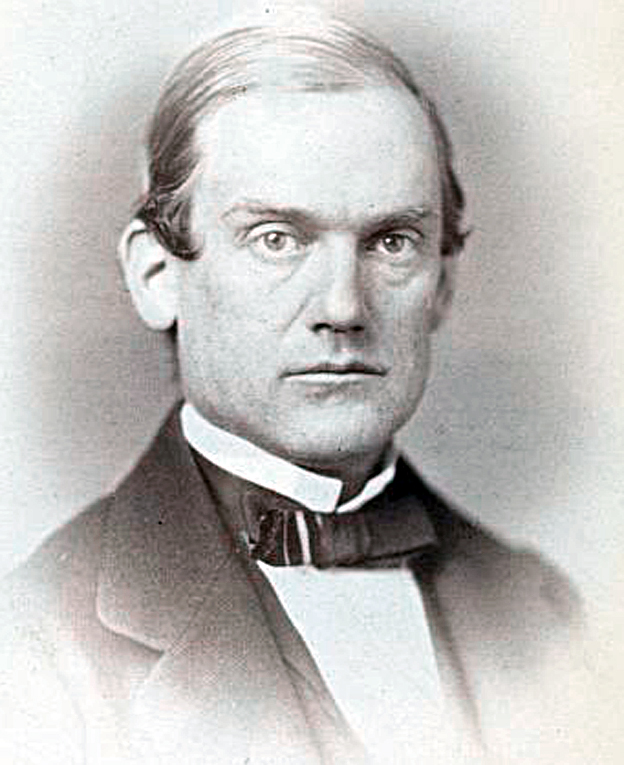
Historical · U.S. House · Virginia · District 1
Muscoe Garnett
Former U.S. Representative · Virginia District 1 · 1855–1861 · Democratic
Muscoe Garnett represented Virginia's District 1 in the United States House of Representatives (1855–1861) for the Democratic party. The page below collects sourced biographical facts, term history, committee roles, and provenance for Garnett.
Bioguide ID: G000076
Key facts
- Full name
- Muscoe Garnett
- State
- Virginia
- District
- District 1
- Party
- Democratic
- House service
- 1855–1861
- First House term
- 1855
- Status
- Left office
- Current term ends
- —
- Born
- 1821
- Bioguide ID
- G000076
- Committee assignments
- —
- Dataset version
- 1.20260606
Biographical narrative
928 words · sourced from the Wikipedia REST extract
Muscoe Garnett was a prominent politician and lawyer from Virginia who served as a U.S. Representative in the mid-19th century. A member of the Democratic Party, Garnett represented Virginia's 1st Congressional District from 1856 until 1861. His political career was marked by his alignment with Southern interests, particularly during the tumultuous period leading up to and during the American Civil War. After his tenure in the U.S. House of Representatives, he became a member of the Confederate Congress, where he continued to advocate for the interests of Virginia and the Confederacy until his death in 1864.
Early life and career
Muscoe Garnett was born on July 25, 1821, on his family's estate known as "Elmwood," located near Loretto, Virginia. He was the son of James Mercer Garnett and Maria Hunter Garnett, and he belonged to a distinguished lineage known as the First Families of Virginia. His early life was marked by personal tragedy; his father passed away when Garnett was just three years old. Following this loss, he was raised by his grandfather, James M. Garnett, and his aunts. This upbringing provided him with a foundation in the values and traditions of his family and region.
Garnett received a private education that was typical for someone of his social standing. He later attended the University of Virginia, where he earned a law degree in 1842. Upon completing his education, he was admitted to the Virginia bar the same year and began practicing law in Loretto, following in the footsteps of his father. His legal career was complemented by his political involvement, which began to take shape in the 1850s.
In 1850 and 1851, Garnett served as a delegate to the Virginia Constitutional Convention, where he expressed his opposition to expanding the electorate. He feared that such changes would lead to internal improvements that would disproportionately benefit the western counties of Virginia. During this period, he authored a pamphlet titled "The Union, Past and Future; how it works and how to save it," which examined the relationship between slavery and the national government, reflecting the prevailing attitudes of his time.
Garnett's early political career included participation as a delegate to the Democratic National Conventions in 1852 and 1856. He also served in the Virginia House of Delegates from 1853 to 1856 and was a member of the Board of Visitors at the University of Virginia from 1855 to 1859. These roles helped him establish a network and gain experience that would later support his congressional ambitions.
House tenure
In 1856, Garnett was elected to the U.S. House of Representatives as a Democrat, filling a vacancy created by the death of Thomas H. Bayly. He represented Virginia's 1st Congressional District and began his first term in December of that year. Garnett was re-elected to the 35th and 36th Congresses, serving until March 3, 1861. His congressional career was characterized by his alignment with Southern interests, particularly as tensions escalated leading to the Civil War.
During his time in Congress, Garnett participated in various legislative discussions and decisions that reflected the political climate of the era. His tenure coincided with significant national debates over issues such as slavery, states' rights, and the growing divide between Northern and Southern states. As a representative from Virginia, a state with deep ties to the Confederacy, Garnett's political actions were influenced by the prevailing sentiments of his constituents.
As the Civil War approached, Garnett's sympathies lay firmly with the Southern cause. He became a delegate to the Virginia secession convention, where he supported the state's decision to leave the Union. Following Virginia's secession, he also participated in the State constitutional convention in 1861, further solidifying his commitment to the Confederate cause.
Legislative focus and committees
During his time in the U.S. House of Representatives, Garnett's legislative focus was shaped by the political landscape of the time, particularly the issues surrounding slavery and states' rights. His background as a lawyer and his experiences in Virginia's political arena informed his perspectives on these critical matters. Although specific details of his legislative initiatives and committee assignments are not extensively documented, it is clear that his alignment with Southern interests guided his actions in Congress.
After leaving the U.S. House, Garnett continued his political career as a member of the Confederate Congress from 1862 until his death in 1864. This role allowed him to further advocate for the interests of Virginia and the Confederacy during a time of significant turmoil and conflict. His uncle, Robert Hunter, held prominent positions within the Confederate government, serving as Secretary of State and later as a senator, which likely influenced Garnett's political trajectory and connections.
Garnett's contributions to the legislative process during his time in both the U.S. and Confederate Congresses reflect the complexities of a nation divided by war and ideological differences. His career illustrates the challenges faced by politicians of the era as they navigated the shifting political landscape and the implications of their decisions on both their constituents and the broader national context.
In summary, Muscoe Garnett's life and career were deeply intertwined with the political developments of the 19th century in the United States. His early life in Virginia, legal background, and political engagements positioned him as a significant figure during a pivotal time in American history. His legacy is marked by his service in both the U.S. House of Representatives and the Confederate Congress, reflecting the complexities and conflicts of his era. Garnett passed away on February 14, 1864, at his family's estate, leaving behind a legacy shaped by the tumultuous events of his time.
Notable legislation
Sponsored and co-sponsored legislation for Muscoe Garnett is pending operator curation. The biographical narrative above carries the same provenance trail until per-bill rows are written.
Sources
- [1]https://en.wikipedia.org/wiki/Muscoe_R._H._GarnettWikipedia · retrieved 2026-06-06
Notable quotes
Sourced quotes for Muscoe Garnett are pending operator curation. Narrative-scope provenance remains attached below.
Sources
- [1]https://en.wikipedia.org/wiki/Muscoe_R._H._GarnettWikipedia · retrieved 2026-06-06
Key positions
Curated policy positions for Muscoe Garnett are pending operator review. The biographical narrative above carries the same provenance trail until per-topic positions are written.
Sources
- [1]https://en.wikipedia.org/wiki/Muscoe_R._H._GarnettWikipedia · retrieved 2026-06-06
Terms served
- 1855–1857U.S. House · Term 1 · Democratic
- 1857–1859U.S. House · Term 2 · Democratic
- 1859–1861U.S. House · Term 3 · Democratic
Sources & provenance
Every attributable claim above carries a per-section [N] marker that resolves to the corresponding URL below. Each entry records the upstream provider, the canonical URL, and the timestamp at which the source was retrieved by the ingest pipeline.
Key facts
- https://bioguide.congress.gov/search/bio/G000076bioguide · retrieved 2026-06-06
- https://www.govtrack.us/congress/members/404448govtrack · retrieved 2026-06-06
Biographical narrative
- https://en.wikipedia.org/wiki/Muscoe_R._H._Garnettwikipedia · retrieved 2026-06-06
Find your representative
Every U.S. state elects representatives by district. Browse Virginia’s delegation, the full former-representative roster, or explore the role and term length.
Related on The Candidate
- Preceded by Archibald AtkinsonEarlier holder of the Virginia District 1 House seat · Democratic.Open
- Succeeded by Richard AyerLater holder of the Virginia District 1 House seat · Republican.Open
- Alexander WhiteFormer U.S. Representative · Virginia District 1Open
- Beverly DouglasFormer U.S. Representative · Virginia District 1 · DemocraticOpen
- Daniel MorganFormer U.S. Representative · Virginia District 1 · FederalistOpen
- Democratic PartyFederal candidates and office holders on the Democratic line.Open