
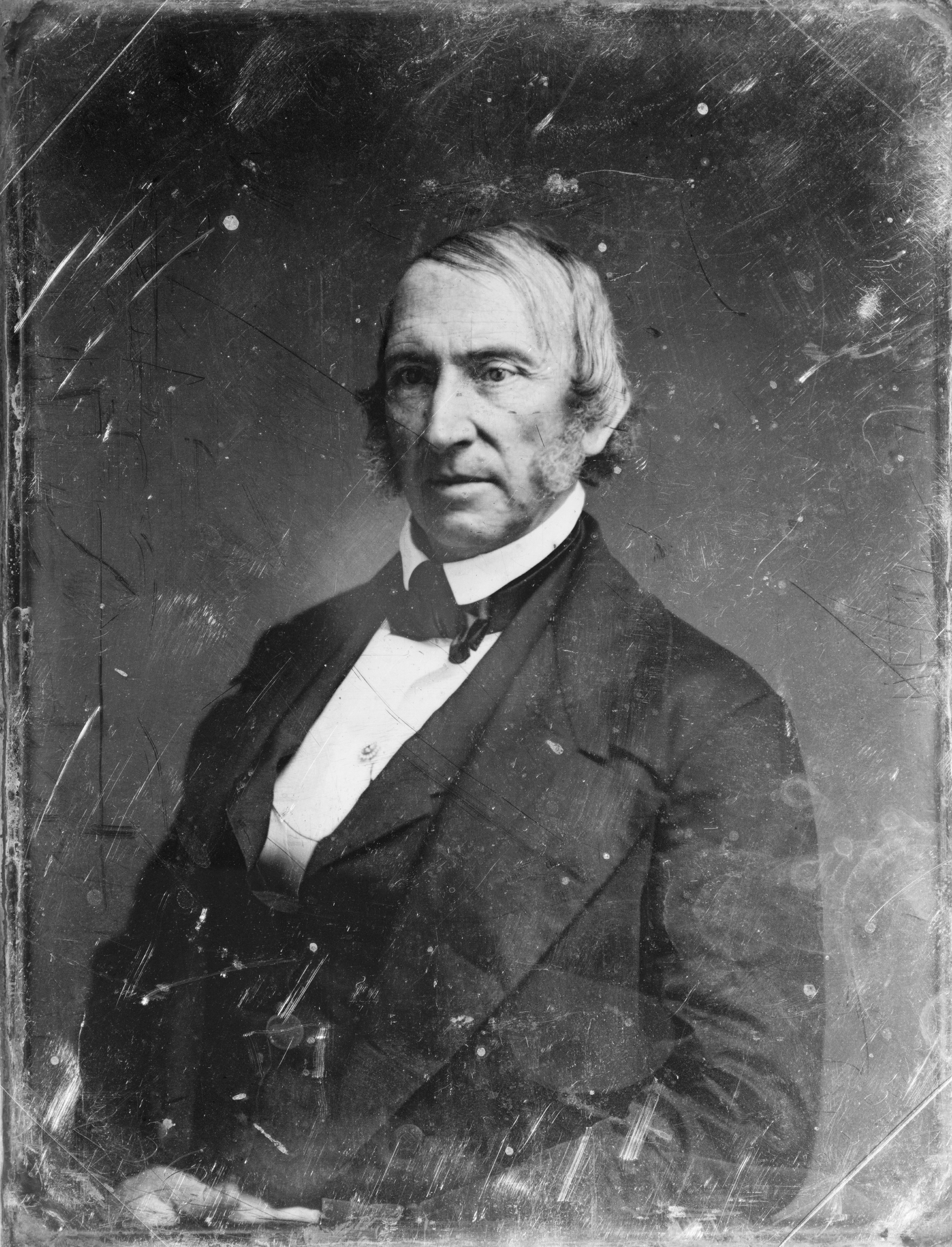
Historical · U.S. House · Virginia · District 11
James McDowell
Former U.S. Representative · Virginia District 11 · 1845–1851 · Democratic
James McDowell represented Virginia's District 11 in the United States House of Representatives (1845–1851) for the Democratic party. The page below collects sourced biographical facts, term history, committee roles, and provenance for McDowell.
Bioguide ID: M000419
Key facts
- Full name
- James McDowell
- State
- Virginia
- District
- District 11
- Party
- Democratic
- House service
- 1845–1851
- First House term
- 1845
- Status
- Left office
- Current term ends
- —
- Born
- 1795
- Bioguide ID
- M000419
- Committee assignments
- —
- Dataset version
- 1.20260606
Biographical narrative
884 words · sourced from the Wikipedia REST extract
James McDowell was a prominent political figure in the 19th century, serving as a U.S. Representative for Virginia's 11th congressional district from 1846 to 1851. A member of the Democratic Party, he also held the office of Governor of Virginia from 1843 to 1846. His career in public service was marked by his commitment to the political landscape of Virginia and the broader national issues of his time. McDowell's life and career reflect the complexities of American politics during a period of significant change.
Early life and career
James McDowell was born on October 13, 1795, at "Cherry Grove," a plantation located near Rockbridge County, Virginia. His early education was rooted in classical studies, which he pursued at a local classical school in Greenville, Virginia. He furthered his education at a private school in Brownsburg and attended Washington College, now known as Washington and Lee University, located in Lexington, Virginia. McDowell's academic journey culminated at Princeton University, where he graduated in 1817. Following his graduation, he studied law and was subsequently admitted to the bar, although he chose not to practice law professionally.
McDowell's initial foray into public service began with his election to the Virginia House of Delegates, where he served two non-consecutive terms from 1831 to 1835 and again in 1838. His legislative experience in the state assembly provided him with valuable insights into governance and the political climate of Virginia. This experience laid the groundwork for his later political ambitions.
In 1843, McDowell was elected as the 29th Governor of Virginia, a position he held until 1846. His tenure as governor was characterized by efforts to address various state issues, including infrastructure improvements and educational reforms. During this period, he gained a reputation as a capable leader, which would later contribute to his election to the U.S. Congress.
House tenure
James McDowell's congressional career began when he was elected to the U.S. House of Representatives to fill a vacancy created by the death of Congressman William Taylor. He took office on March 6, 1846, as a member of the Twenty-ninth Congress. McDowell's election to the House was indicative of his growing influence within the Democratic Party and his commitment to representing the interests of his constituents in Virginia.
During his time in the House, McDowell was re-elected to serve additional terms, including the Thirtieth and Thirty-first Congresses, ultimately concluding his congressional service on March 3, 1851. His tenure in the House spanned a critical period in American history, marked by escalating tensions over issues such as slavery, states' rights, and westward expansion. Although specific details of his legislative actions during this time are not provided, it can be inferred that McDowell participated in the debates and discussions that shaped the national discourse of the era.
McDowell's political career was intertwined with significant national events, including the Mexican-American War, which began in 1846. As a member of Congress during this conflict, he would have been involved in discussions regarding military funding, territorial expansion, and the implications of war on the nation. His role as a representative from Virginia, a state with its own complex relationship to the issues of slavery and expansion, would have influenced his perspectives and legislative priorities.
Legislative focus and committees
While specific details regarding McDowell's committee assignments and legislative focus during his time in the House are not extensively documented, it is essential to understand the broader context of his political environment. As a member of the Democratic Party, McDowell likely aligned with the party's platform, which during this period included support for states' rights and a cautious approach to federal intervention in state matters. The Democratic Party was also characterized by its support for agrarian interests, which resonated with the predominantly agricultural economy of Virginia.
McDowell's background and experiences as a former governor would have informed his legislative priorities, particularly in areas related to infrastructure, education, and economic development. His previous role in the Virginia House of Delegates may have also influenced his approach to federal-state relations and his advocacy for policies that benefited his constituents.
In addition to his legislative duties, McDowell's connections within the political sphere were notable. He was the brother-in-law of Senator Thomas Hart Benton, a prominent figure in the Senate known for his advocacy of westward expansion and opposition to the extension of slavery into new territories. This familial connection may have provided McDowell with additional insights into the political dynamics of the time and influenced his legislative approach.
James McDowell's congressional career came to an end on March 3, 1851, when he completed his final term. Following his departure from Congress, he returned to his estate, "Col Alto," located near Lexington, Virginia. His life came to a close on August 24, 1851, shortly after leaving public office. He was interred in Presbyterian Cemetery, marking the end of a life dedicated to public service and political engagement.
In recognition of his contributions, McDowell County, Virginia, which was formed in 1858, was named in his honor. This designation reflects his lasting impact on the region and his role in shaping the political landscape of Virginia during a transformative period in American history. McDowell's legacy as a public servant continues to be acknowledged in discussions of Virginia's political history and the broader narrative of the United States during the 19th century.
Notable legislation
Sponsored and co-sponsored legislation for James McDowell is pending operator curation. The biographical narrative above carries the same provenance trail until per-bill rows are written.
Sources
- [1]https://en.wikipedia.org/wiki/James_McDowellWikipedia · retrieved 2026-06-06
Notable quotes
Sourced quotes for James McDowell are pending operator curation. Narrative-scope provenance remains attached below.
Sources
- [1]https://en.wikipedia.org/wiki/James_McDowellWikipedia · retrieved 2026-06-06
Key positions
Curated policy positions for James McDowell are pending operator review. The biographical narrative above carries the same provenance trail until per-topic positions are written.
Sources
- [1]https://en.wikipedia.org/wiki/James_McDowellWikipedia · retrieved 2026-06-06
Terms served
- 1845–1847U.S. House · Term 1 · Democratic
- 1847–1849U.S. House · Term 2 · Democratic
- 1849–1851U.S. House · Term 3 · Democratic
Sources & provenance
Every attributable claim above carries a per-section [N] marker that resolves to the corresponding URL below. Each entry records the upstream provider, the canonical URL, and the timestamp at which the source was retrieved by the ingest pipeline.
Key facts
- https://bioguide.congress.gov/search/bio/M000419bioguide · retrieved 2026-06-06
- https://www.govtrack.us/congress/members/407419govtrack · retrieved 2026-06-06
Biographical narrative
- https://en.wikipedia.org/wiki/James_McDowellwikipedia · retrieved 2026-06-06
Find your representative
Every U.S. state elects representatives by district. Browse Virginia’s delegation, the full former-representative roster, or explore the role and term length.
Related on The Candidate
- Preceded by John RobertsonEarlier holder of the Virginia District 11 House seat · Whig.Open
- Succeeded by Charles LewisLater holder of the Virginia District 11 House seat · Democratic.Open
- Alexander WhiteFormer U.S. Representative · Virginia District 1Open
- Archibald AtkinsonFormer U.S. Representative · Virginia District 1 · DemocraticOpen
- Beverly DouglasFormer U.S. Representative · Virginia District 1 · DemocraticOpen
- Daniel MorganFormer U.S. Representative · Virginia District 1 · FederalistOpen