
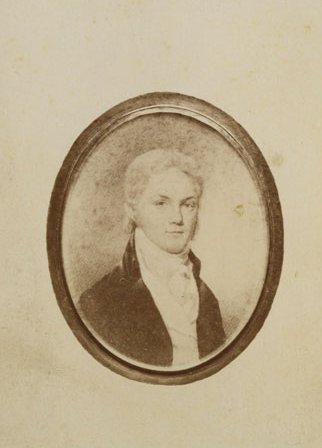
Historical · U.S. House · Virginia · District 14
Charles Mercer
Former U.S. Representative · Virginia District 14 · 1817–1841 · Whig
Charles Mercer represented Virginia's District 14 in the United States House of Representatives (1817–1841) for the Whig party. The page below collects sourced biographical facts, term history, committee roles, and provenance for Mercer.
Bioguide ID: M000642
Key facts
- Full name
- Charles Mercer
- State
- Virginia
- District
- District 14
- Party
- Whig
- House service
- 1817–1841
- First House term
- 1817
- Status
- Left office
- Current term ends
- —
- Born
- 1778
- Bioguide ID
- M000642
- Committee assignments
- —
- Dataset version
- 1.20260606
Biographical narrative
960 words · sourced from the Wikipedia REST extract
Charles Mercer was a prominent 19th-century politician and lawyer from Loudoun County, Virginia, who served as a U.S. Representative for Virginia's 14th congressional district. A member of the Whig Party, Mercer had a long and varied political career, spanning over two decades in the U.S. House of Representatives. His legislative efforts focused on internal improvements, education reform, and the complex issues surrounding slavery in America. He was also involved in various civic organizations, contributing to the discourse on social issues of his time.
Early life and career
Charles Mercer was born on June 16, 1778, in Fredericksburg, Virginia, to James Mercer, a planter, lawyer, and politician, and Eleanor Dick. His family had a notable legacy, with his grandfather, John Mercer, recognized as a colonial lawyer and land speculator. Tragically, Mercer lost his mother at a young age and became an orphan by the time he was fifteen, which profoundly impacted his early life and education. His father, who became a judge, was committed to the education of his sons, serving as a trustee of the Fredericksburg Academy. This institution was considered a progressive alternative to the established colleges of the time, such as the College of William and Mary.
Mercer pursued his higher education at Princeton College, graduating in 1797. Following his graduation, he was commissioned as a captain of cavalry by President George Washington, although the anticipated conflict with France did not materialize. After a brief military career, Mercer returned to Princeton for further studies, ultimately earning another degree in 1800. He then traveled to Europe between 1802 and 1803, which broadened his perspective before he returned to Virginia to study law.
Admitted to the bar in 1802, Mercer established a legal practice in Loudoun County. His political career began in earnest when he was elected to the Virginia House of Delegates in 1810, where he served multiple terms until 1817. During his time in the House of Delegates, he was an advocate for educational reform, introducing a bill aimed at creating a system of free public education for white children. Although this initiative did not pass, it highlighted his commitment to educational issues. Additionally, he chaired the finance committee and proposed a canal project along the Potomac River, reflecting his interest in infrastructure development.
Mercer’s military service during the War of 1812 included a commission as lieutenant colonel of a Virginia regiment, where he was later promoted to major and took command of defenses in Norfolk, Virginia. His military experience further solidified his leadership skills and public profile.
House tenure
In 1816, Mercer was elected to the United States House of Representatives, marking the beginning of a lengthy congressional career that would last until 1839. His tenure in the House was characterized by a commitment to internal improvements and the protection of domestic manufacturing. Over the course of his twelve terms, he became one of the longest-serving members of Congress during that period. His seniority allowed him to ascend to significant leadership roles, including serving as the Chairman of the Committee on Roads and Canals from 1831 to 1839.
Throughout his congressional career, Mercer was affiliated with various political factions, including the Federalist, Crawford Republican, Adams Republican, Anti-Jacksonian, and ultimately the Whig Party. His evolving political affiliations reflected the shifting landscape of American politics during the early 19th century. Mercer was also recognized for his contributions to the American Philosophical Society, having been elected as a member in 1817.
Mercer’s legislative efforts were often focused on infrastructure projects, particularly those that would enhance transportation and trade. He was the first president of the Chesapeake & Ohio Canal Company from 1828 to 1833, a role that underscored his dedication to improving the nation’s transportation networks. His advocacy for internal improvements was part of a broader vision for economic development in the United States.
Legislative focus and committees
Mercer's legislative focus encompassed several key areas, including education, infrastructure, and social issues, particularly concerning slavery. He was a proponent of internal improvements, believing that enhancing the nation’s infrastructure was essential for economic growth. His leadership on the Committee on Roads and Canals allowed him to influence significant projects that aimed to facilitate transportation and commerce across the country.
In addition to his work on infrastructure, Mercer was an early advocate for public education. His attempts to establish a system of free public schooling for white children in Virginia demonstrated his commitment to educational reform, although his proposals faced opposition and ultimately did not succeed in the legislature.
Mercer was also known for his opposition to slavery and his involvement with the American Colonization Society, which he helped to establish in 1816. This organization aimed to address the complex issues surrounding free blacks in America and sought to promote the establishment of a colony in Africa, known as Liberia. Mercer’s involvement in this society reflected his belief in finding solutions to the challenges posed by slavery, even as he navigated the contentious political landscape of his time.
Throughout his career, Mercer maintained a focus on agricultural issues as well, serving as vice president of the National Society of Agriculture in 1842. His diverse interests and involvement in various civic organizations illustrate his commitment to addressing the pressing social and economic issues of his era.
Charles Mercer’s legacy is marked by his extensive service in the U.S. House of Representatives and his contributions to the political discourse of the 19th century. His efforts in education, infrastructure, and social reform continue to be recognized as significant aspects of his public life. After his last term in Congress ended on March 3, 1841, Mercer remained active in public life until his death on May 4, 1858. His career reflects the complexities of American politics during a transformative period in the nation’s history.
Notable legislation
Sponsored and co-sponsored legislation for Charles Mercer is pending operator curation. The biographical narrative above carries the same provenance trail until per-bill rows are written.
Sources
- [1]https://en.wikipedia.org/wiki/Charles_F._MercerWikipedia · retrieved 2026-06-06
Notable quotes
Sourced quotes for Charles Mercer are pending operator curation. Narrative-scope provenance remains attached below.
Sources
- [1]https://en.wikipedia.org/wiki/Charles_F._MercerWikipedia · retrieved 2026-06-06
Key positions
Curated policy positions for Charles Mercer are pending operator review. The biographical narrative above carries the same provenance trail until per-topic positions are written.
Sources
- [1]https://en.wikipedia.org/wiki/Charles_F._MercerWikipedia · retrieved 2026-06-06
Terms served
- 1817–1819U.S. House · Term 1 · Federalist
- 1819–1821U.S. House · Term 2 · Federalist
- 1821–1823U.S. House · Term 3 · Federalist
- 1823–1825U.S. House · Term 4 · Whig
- 1825–1827U.S. House · Term 5 · Adams
- 1827–1829U.S. House · Term 6 · Adams
- 1829–1831U.S. House · Term 7 · Whig
- 1831–1833U.S. House · Term 8 · Whig
- 1833–1835U.S. House · Term 9 · Whig
- 1835–1837U.S. House · Term 10 · Whig
- 1837–1839U.S. House · Term 11 · Whig
- 1839–1841U.S. House · Term 12 · Whig
Sources & provenance
Every attributable claim above carries a per-section [N] marker that resolves to the corresponding URL below. Each entry records the upstream provider, the canonical URL, and the timestamp at which the source was retrieved by the ingest pipeline.
Key facts
- https://bioguide.congress.gov/search/bio/M000642bioguide · retrieved 2026-06-06
- https://www.govtrack.us/congress/members/407628govtrack · retrieved 2026-06-06
Biographical narrative
- https://en.wikipedia.org/wiki/Charles_F._Mercerwikipedia · retrieved 2026-06-06
Find your representative
Every U.S. state elects representatives by district. Browse Virginia’s delegation, the full former-representative roster, or explore the role and term length.
Related on The Candidate
- Preceded by Samuel CabellEarlier holder of the Virginia District 14 House seat · Republican.Open
- Succeeded by Cuthbert PowellLater holder of the Virginia District 14 House seat · Whig.Open
- Alexander WhiteFormer U.S. Representative · Virginia District 1Open
- Archibald AtkinsonFormer U.S. Representative · Virginia District 1 · DemocraticOpen
- Beverly DouglasFormer U.S. Representative · Virginia District 1 · DemocraticOpen
- Daniel MorganFormer U.S. Representative · Virginia District 1 · FederalistOpen