
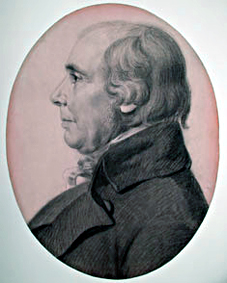
Historical · U.S. House · Virginia · District 17
Leven Powell
Former U.S. Representative · Virginia District 17 · 1799–1801 · Federalist
Leven Powell represented Virginia's District 17 in the United States House of Representatives (1799–1801) for the Federalist party. The page below collects sourced biographical facts, term history, committee roles, and provenance for Powell.
Bioguide ID: P000482
Key facts
- Full name
- Leven Powell
- State
- Virginia
- District
- District 17
- Party
- Federalist
- House service
- 1799–1801
- First House term
- 1799
- Status
- Left office
- Current term ends
- —
- Born
- —
- Bioguide ID
- P000482
- Committee assignments
- —
- Dataset version
- 1.20260606
Biographical narrative
878 words · sourced from the Wikipedia REST extract
Leven Powell was a prominent Virginia planter, merchant, military officer, and politician who served as a U.S. Representative for Virginia's 17th congressional district. A member of the Federalist Party, Powell's political career included a significant tenure in the Virginia House of Delegates and participation in the Virginia Ratification Convention. His contributions to both local and national governance were shaped by his extensive background in agriculture, military service during the American Revolutionary War, and his role in the founding of towns in Loudoun County.
Early life and career
Leven Powell was born in 1737 near Haymarket, in Prince William County, Virginia, to Eleanor Peyton and William Powell. His mother was the daughter of the notable planter and burgess Valentine Peyton, while his father was a ship captain and planter who had relocated from Somerset County, Maryland, to Dumfries around 1734. The family was well-established, tracing their lineage to the First Families of Virginia, which was a significant aspect of their social standing. As was customary for individuals of his class during that period, Powell received a private education, which laid the foundation for his future endeavors.
In 1763, Powell married Sarah (Sally) Harrison, the daughter of another local planter, Burr Harrison. The couple had several children, including William Harrison Powell and Leven Powell Jr., both of whom continued the family legacy in agriculture. Their other sons, Burr, Cuthbert, and Alfred H. Powell, pursued careers in law and politics, with Cuthbert eventually becoming a U.S. Congressman and mayor of Alexandria.
Powell's early career began as the deputy sheriff of Prince William County under his uncle, Col. Henry Peyton. However, he primarily supported his family through his work as a planter. He acquired 500 acres in the newly formed Loudoun County shortly after his marriage and established a home known as "the Shades." Over time, Powell expanded his agricultural operations to encompass five plantations totaling approximately 1,800 acres, utilizing enslaved labor for his agricultural activities. By 1787, he owned 22 enslaved individuals, along with livestock and other assets, which underscored his status as a successful planter. Additionally, Powell operated a store and a flour mill, further contributing to the local economy.
House tenure
Leven Powell's political career began in earnest when he was elected to the Virginia House of Delegates in 1779, representing Loudoun County. His initial term was part-time, and he served alongside his cousin, Francis Peyton. After a brief period, Powell took on the role of deputy register for the land office, which led to a reshuffling of responsibilities among local politicians. He continued to serve in the House of Delegates, with notable terms in 1787 and 1788, during which he was re-elected and served alongside various colleagues.
In 1788, Powell played a significant role in the Virginia Ratification Convention, where he represented Loudoun County alongside Stevens Thomson Mason. While Mason opposed ratification, Powell supported the Constitution, reflecting his alignment with Federalist principles. His political influence grew in the years following the ratification, as he became a leading Federalist figure in the region.
Powell's contributions to local governance extended beyond his legislative duties. He was instrumental in the founding of two towns in Loudoun County, with Middleburg being the most notable. He acquired land at a strategic crossroads, which facilitated trade and transportation, and the area was eventually incorporated as a town. This development not only enhanced Powell's stature in the community but also contributed to the economic growth of the region.
In 1799, Powell was elected to the United States House of Representatives, where he served a single term until March 3, 1801. His time in Congress coincided with a period of significant political change in the United States, as the Federalist Party faced increasing challenges from the Democratic-Republicans. Powell's tenure in the House was marked by his commitment to Federalist ideals, although specific details regarding his legislative activities during this period are not extensively documented.
Legislative focus and committees
During his time in the U.S. House of Representatives, Leven Powell's legislative focus aligned with the principles of the Federalist Party, which advocated for a strong central government, a robust national economy, and the promotion of commerce. While specific details about the bills he sponsored or voted on are not available, it is understood that his political actions were influenced by his background as a planter and merchant, as well as his experiences during the Revolutionary War.
Powell's involvement in various committees during his congressional term would have reflected his interests and expertise in agricultural and economic matters, although the precise committees he served on are not documented. His previous experience in the Virginia House of Delegates likely informed his approach to national issues, emphasizing the importance of agriculture and trade in the economic development of the United States.
After completing his term in the House, Powell returned to Virginia, where he continued to engage in agricultural pursuits and local governance. His legacy as a planter, military officer, and politician left a lasting impact on Loudoun County and the broader Virginia community. Powell passed away on August 23, 1810, while visiting a health spring in Pennsylvania, concluding a life marked by service to his state and country. His descendants continued to play significant roles in Virginia's political landscape, further extending his influence beyond his lifetime.
Notable legislation
Sponsored and co-sponsored legislation for Leven Powell is pending operator curation. The biographical narrative above carries the same provenance trail until per-bill rows are written.
Sources
- [1]https://en.wikipedia.org/wiki/Leven_PowellWikipedia · retrieved 2026-06-06
Notable quotes
Sourced quotes for Leven Powell are pending operator curation. Narrative-scope provenance remains attached below.
Sources
- [1]https://en.wikipedia.org/wiki/Leven_PowellWikipedia · retrieved 2026-06-06
Key positions
Curated policy positions for Leven Powell are pending operator review. The biographical narrative above carries the same provenance trail until per-topic positions are written.
Sources
- [1]https://en.wikipedia.org/wiki/Leven_PowellWikipedia · retrieved 2026-06-06
Terms served
- 1799–1801U.S. House · Term 1 · Federalist
Sources & provenance
Every attributable claim above carries a per-section [N] marker that resolves to the corresponding URL below. Each entry records the upstream provider, the canonical URL, and the timestamp at which the source was retrieved by the ingest pipeline.
Key facts
- https://bioguide.congress.gov/search/bio/P000482bioguide · retrieved 2026-06-06
- https://www.govtrack.us/congress/members/408867govtrack · retrieved 2026-06-06
Biographical narrative
- https://en.wikipedia.org/wiki/Leven_Powellwikipedia · retrieved 2026-06-06
Find your representative
Every U.S. state elects representatives by district. Browse Virginia’s delegation, the full former-representative roster, or explore the role and term length.
Related on The Candidate
- Preceded by Richard LeeEarlier holder of the Virginia District 17 House seat.Open
- Succeeded by John ClaiborneLater holder of the Virginia District 17 House seat · Republican.Open
- Alexander WhiteFormer U.S. Representative · Virginia District 1Open
- Archibald AtkinsonFormer U.S. Representative · Virginia District 1 · DemocraticOpen
- Beverly DouglasFormer U.S. Representative · Virginia District 1 · DemocraticOpen
- Daniel MorganFormer U.S. Representative · Virginia District 1 · FederalistOpen