
Historical · U.S. House · Virginia · District 18
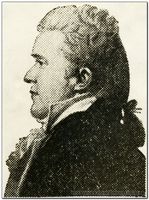
Philip Doddridge
Former U.S. Representative · Virginia District 18 · 1829–1833
Philip Doddridge represented Virginia's District 18 in the United States House of Representatives (1829–1833). The page below collects sourced biographical facts, term history, committee roles, and provenance for Doddridge.
Bioguide ID: D000391
Key facts
- Full name
- Philip Doddridge
- State
- Virginia
- District
- District 18
- Party
- —
- House service
- 1829–1833
- First House term
- 1829
- Status
- Left office
- Current term ends
- —
- Born
- 1773
- Bioguide ID
- D000391
- Committee assignments
- —
- Dataset version
- 1.20260606
Biographical narrative
888 words · sourced from the Wikipedia REST extract
Philip Doddridge was a prominent lawyer and politician from Virginia, known for his role as a U.S. Representative in the early 19th century. He served in the House of Representatives for the Wheeling District, which is located in the Upper Ohio River Valley. His political career was marked by his advocacy for western Virginia interests during a time of significant sectional tension between eastern and western parts of the state. Doddridge's contributions to both state and national politics were significant, particularly in the context of the Virginia Constitutional Convention of 1829-1830, where he emerged as a leading voice for reform.
Early life and career
Philip Doddridge was born on May 17, 1773, in Bedford County, Pennsylvania, to John and Mary Wells Doddridge. His upbringing took place in a frontier environment, specifically along Cross Creek at Doddridge's Fort in Washington County, Pennsylvania. This location was notable for its association with Methodist circuit riders, including the influential bishop Francis Asbury. Doddridge's early education was facilitated by his father, who provided tutoring, and he furthered his studies at Canonsburg Academy, which would later evolve into Washington & Jefferson College. He also pursued legal studies under the guidance of mentors in Wellsburg, Virginia.
In his youth, Doddridge undertook a notable journey down the Mississippi River on a flatboat, an experience that likely contributed to his understanding of the broader American landscape. He married Juliana Parr Musser, and together they had at least five sons who survived into adulthood. The family was also known to have owned household slaves, reflecting the social and economic norms of their time.
Doddridge settled in Wellsburg, Virginia (now part of West Virginia), in 1796. He quickly became involved in local civic matters and was an active member of Trinity Episcopal Church, which was established by his brother, Joseph Doddridge, a notable historian and Episcopal priest. After being admitted to the Virginia bar in 1797, Doddridge practiced law in Brooke County and surrounding areas, specializing in land disputes that were common in the region during that era. His legal acumen led to the mentorship of several notable figures, including Waitman T. Willey, who would later become a founder of West Virginia, and Silas Bent Jr., who served as a judge on the Missouri Supreme Court.
House tenure
Doddridge's political career began in earnest when he was elected to the Virginia Senate from 1804 to 1809, representing six northwestern counties. He resigned from this position to become the Commonwealth Attorney for Brooke County, a role he held while continuing to engage in state politics. In 1815, he was elected to the Virginia House of Delegates, where he served multiple terms, experiencing both victories and defeats in subsequent elections.
His political aspirations extended to the national stage, where he sought election to the U.S. Congress. Although he was unsuccessful in his bids for the Eighteenth and Nineteenth Congresses, he remained active in the Virginia House of Delegates during this period. Doddridge's reputation as a skilled debater was recognized by contemporaries, including Daniel Webster, who reportedly regarded him as a formidable opponent in legislative discussions.
Doddridge was eventually elected as an Anti-Jacksonian candidate to the Twenty-first and Twenty-second Congresses, serving from March 4, 1829, until his death in office on March 3, 1833. During his time in Congress, he was known for his strong advocacy of congressional authority, particularly during the Stanbery-Houston Affair in 1832, a political controversy that tested the limits of legislative privilege and authority. Additionally, he served as chairman of the House Committee for the District of Columbia, where he was involved in the important task of codifying the district's laws, which were inherited from Maryland and Virginia.
Legislative focus and committees
Throughout his congressional tenure, Doddridge's legislative focus was characterized by his commitment to the interests of western Virginia. He was a vocal advocate for reform during the Virginia Constitutional Convention of 1829-1830, where he represented the concerns of western reformers who sought greater representation and influence in the state government, which was often dominated by eastern interests. His efforts were part of a broader movement to address the sectional disparities that existed within Virginia at the time.
As chairman of the House Committee for the District of Columbia, Doddridge played a crucial role in shaping the legal framework governing the district. His work involved the codification of laws that were essential for the administration and governance of the area, reflecting his legal expertise and commitment to effective governance.
Doddridge's legacy extends beyond his legislative contributions. He is remembered as a key figure in the early political landscape of West Virginia, and his efforts to advocate for the needs of western Virginia laid the groundwork for future political developments in the region. His influence is evident in the naming of Doddridge County, West Virginia, in his honor, as well as in the historical narratives that recognize his role in the state's early governance.
Philip Doddridge passed away on November 19, 1832, in Washington, D.C., while still in office. He was interred in the Congressional Cemetery, and his contributions to both state and national politics continue to be acknowledged by historians and scholars. His life and career reflect the complexities of American political development in the early 19th century, particularly in the context of sectionalism and the evolving landscape of governance in the United States.
Notable legislation
Sponsored and co-sponsored legislation for Philip Doddridge is pending operator curation. The biographical narrative above carries the same provenance trail until per-bill rows are written.
Sources
- [1]https://en.wikipedia.org/wiki/Philip_Doddridge_(Virginia_politician)Wikipedia · retrieved 2026-06-06
Notable quotes
Sourced quotes for Philip Doddridge are pending operator curation. Narrative-scope provenance remains attached below.
Sources
- [1]https://en.wikipedia.org/wiki/Philip_Doddridge_(Virginia_politician)Wikipedia · retrieved 2026-06-06
Key positions
Curated policy positions for Philip Doddridge are pending operator review. The biographical narrative above carries the same provenance trail until per-topic positions are written.
Sources
- [1]https://en.wikipedia.org/wiki/Philip_Doddridge_(Virginia_politician)Wikipedia · retrieved 2026-06-06
Terms served
- 1829–1831U.S. House · Term 1
- 1831–1833U.S. House · Term 2
Sources & provenance
Every attributable claim above carries a per-section [N] marker that resolves to the corresponding URL below. Each entry records the upstream provider, the canonical URL, and the timestamp at which the source was retrieved by the ingest pipeline.
Key facts
- https://bioguide.congress.gov/search/bio/D000391bioguide · retrieved 2026-06-06
- https://www.govtrack.us/congress/members/403506govtrack · retrieved 2026-06-06
Biographical narrative
- https://en.wikipedia.org/wiki/Philip_Doddridge_(Virginia_politician)wikipedia · retrieved 2026-06-06
Find your representative
Every U.S. state elects representatives by district. Browse Virginia’s delegation, the full former-representative roster, or explore the role and term length.
Related on The Candidate
- Preceded by Isaac LefflerEarlier holder of the Virginia District 18 House seat · Adams.Open
- Succeeded by John FultonLater holder of the Virginia District 18 House seat · Jackson.Open
- Alexander WhiteFormer U.S. Representative · Virginia District 1Open
- Archibald AtkinsonFormer U.S. Representative · Virginia District 1 · DemocraticOpen
- Beverly DouglasFormer U.S. Representative · Virginia District 1 · DemocraticOpen
- Daniel MorganFormer U.S. Representative · Virginia District 1 · FederalistOpen