
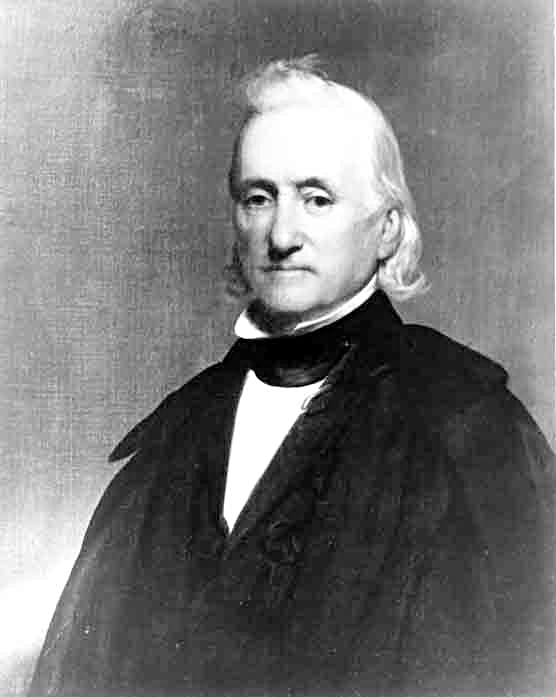
Historical · U.S. House · Virginia · District 18
Thomas Nelson
Former U.S. Representative · Virginia District 18 · 1815–1819 · Republican
Thomas Nelson represented Virginia's District 18 in the United States House of Representatives (1815–1819) for the Republican party. The page below collects sourced biographical facts, term history, committee roles, and provenance for Nelson.
Bioguide ID: N000043
Key facts
- Full name
- Thomas Nelson
- State
- Virginia
- District
- District 18
- Party
- Republican
- House service
- 1815–1819
- First House term
- 1815
- Status
- Left office
- Current term ends
- —
- Born
- 1782
- Bioguide ID
- N000043
- Committee assignments
- —
- Dataset version
- 1.20260606
Biographical narrative
804 words · sourced from the Wikipedia REST extract
Thomas Nelson was a 19th-century politician from Virginia who served as a U.S. Representative for Virginia's 18th congressional district. A member of the Republican Party, he held office during a significant period in American history, including the aftermath of the War of 1812. Nelson's political career was marked by his service in the House of Representatives, where he contributed to the legislative process during his two terms from 1815 to 1819.
Early life and career
Thomas Nelson was born on September 27, 1782, in Oak Hill, located in Mecklenburg County, Virginia. He hailed from a prominent family known as the First Families of Virginia. His father, Major John Nelson, was the founder of the Oak Hill plantation and served in various capacities, including military service. His mother, Ann Carter, was part of a well-established lineage as well. The couple married in the chapel of the College of William and Mary in 1781, a notable institution in Virginia's history.
Nelson's name is believed to have been derived from his grandfather, Thomas Nelson, who had a significant political career in Virginia, including roles in both houses of the Virginia General Assembly and as secretary of the Governor's Council. This familial connection to politics likely influenced Nelson's later career choices. His great-grandfather had emigrated from England and established a successful mercantile business in Yorktown, Virginia, further embedding the family in the region's history.
Growing up in an environment that valued education and public service, Nelson received an education that was typical for someone of his social standing during that era. His early life experiences and family background laid the foundation for his future endeavors in both military and political spheres.
During the War of 1812, Nelson was commissioned as a captain in the 10th Infantry Regiment. His military career progressed as he was later promoted to major in both the 13th and 18th Infantry Regiments. Following the conclusion of the war, he was reverted to the rank of captain and eventually resigned from military service on May 15, 1815. This military experience likely contributed to his leadership skills and understanding of national issues, which would be relevant in his subsequent political career.
House tenure
Nelson's entry into politics came after the death of Thomas Gholson, a previous representative from Virginia. In 1816, he was elected as a Democratic-Republican to the United States House of Representatives to fill the vacancy left by Gholson. Despite having no prior legislative experience, Nelson successfully navigated the political landscape and was able to secure a seat in Congress. His election was indicative of the trust placed in him by his constituents, as he was able to represent their interests in the federal government.
During his time in the House, Nelson served a total of two terms, beginning in 1815 and concluding his service on March 3, 1819. His tenure coincided with a period of significant change and development in the United States, as the nation was still recovering from the effects of the War of 1812 and moving towards a new era of expansion and growth. Nelson's contributions during this time would have been shaped by the pressing issues of the day, including national defense, economic development, and the evolving political landscape.
While specific details about his legislative actions and the bills he supported are not documented, his role as a representative would have involved engaging with various issues pertinent to his constituents and the nation. Nelson's ability to serve in this capacity for two terms suggests a level of effectiveness and acceptance among his peers and constituents.
Legislative focus and committees
As a member of the U.S. House of Representatives, Thomas Nelson's legislative focus would have been influenced by the political climate and the needs of his district. Although specific details regarding the committees he served on or the legislation he championed are not available, it is reasonable to infer that his military background may have informed his perspectives on national defense and veterans' affairs.
The early 19th century was a formative time for the United States, characterized by issues such as westward expansion, economic development, and the establishment of a more robust federal government. Nelson's contributions during this period would have been shaped by these broader national themes, as well as the specific interests of his constituents in Virginia's 18th district.
After completing his congressional service, Nelson moved to Georgia, where he lived until his death on November 10, 1853, at the age of 71. He was interred in Linwood Cemetery near Columbus, Georgia. His legacy as a politician from Virginia is marked by his brief but impactful service in the U.S. House of Representatives during a critical time in American history. Nelson's life and career reflect the complexities of early American politics and the evolving role of the federal government in the lives of its citizens.
Notable legislation
Sponsored and co-sponsored legislation for Thomas Nelson is pending operator curation. The biographical narrative above carries the same provenance trail until per-bill rows are written.
Sources
- [1]https://en.wikipedia.org/wiki/Thomas_M._NelsonWikipedia · retrieved 2026-06-06
Notable quotes
Sourced quotes for Thomas Nelson are pending operator curation. Narrative-scope provenance remains attached below.
Sources
- [1]https://en.wikipedia.org/wiki/Thomas_M._NelsonWikipedia · retrieved 2026-06-06
Key positions
Curated policy positions for Thomas Nelson are pending operator review. The biographical narrative above carries the same provenance trail until per-topic positions are written.
Sources
- [1]https://en.wikipedia.org/wiki/Thomas_M._NelsonWikipedia · retrieved 2026-06-06
Terms served
- 1815–1817U.S. House · Term 1 · Republican
- 1817–1819U.S. House · Term 2 · Republican
Sources & provenance
Every attributable claim above carries a per-section [N] marker that resolves to the corresponding URL below. Each entry records the upstream provider, the canonical URL, and the timestamp at which the source was retrieved by the ingest pipeline.
Key facts
- https://bioguide.congress.gov/search/bio/N000043bioguide · retrieved 2026-06-06
- https://www.govtrack.us/congress/members/408133govtrack · retrieved 2026-06-06
Biographical narrative
- https://en.wikipedia.org/wiki/Thomas_M._Nelsonwikipedia · retrieved 2026-06-06
Find your representative
Every U.S. state elects representatives by district. Browse Virginia’s delegation, the full former-representative roster, or explore the role and term length.
Related on The Candidate
- Preceded by John NicholasEarlier holder of the Virginia District 18 House seat · Republican.Open
- Succeeded by Isaac LefflerLater holder of the Virginia District 18 House seat · Adams.Open
- Alexander WhiteFormer U.S. Representative · Virginia District 1Open
- Archibald AtkinsonFormer U.S. Representative · Virginia District 1 · DemocraticOpen
- Beverly DouglasFormer U.S. Representative · Virginia District 1 · DemocraticOpen
- Daniel MorganFormer U.S. Representative · Virginia District 1 · FederalistOpen