
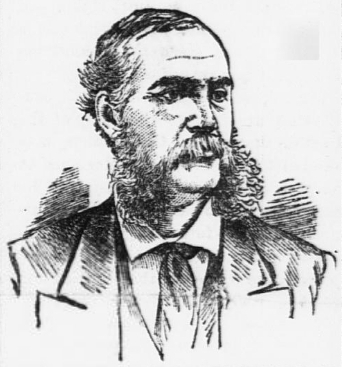
Historical · U.S. House · Virginia · District 2
John Dezendorf
Former U.S. Representative · Virginia District 2 · 1881–1883 · Republican
John Dezendorf represented Virginia's District 2 in the United States House of Representatives (1881–1883) for the Republican party. The page below collects sourced biographical facts, term history, committee roles, and provenance for Dezendorf.
Bioguide ID: D000297
Key facts
- Full name
- John Dezendorf
- State
- Virginia
- District
- District 2
- Party
- Republican
- House service
- 1881–1883
- First House term
- 1881
- Status
- Left office
- Current term ends
- —
- Born
- 1834
- Bioguide ID
- D000297
- Committee assignments
- —
- Dataset version
- 1.20260606
Biographical narrative
1,004 words · sourced from the Wikipedia REST extract
John Dezendorf was a U.S. Representative from Virginia who served in the Forty-seventh Congress as a member of the Republican Party. His political career was marked by a single term in the House of Representatives, which began in 1881 and concluded in 1883. Born in 1834 in New York, Dezendorf's early life and career were characterized by a diverse range of professional experiences, including work in construction, mercantile pursuits, and public service. His contributions to his community and the political landscape of Virginia reflect a commitment to public service and civic engagement.
Early life and career
John Dezendorf was born on August 10, 1834, in Lansingburgh, New York. His formative years were spent pursuing an academic education, which laid the groundwork for his future endeavors. In addition to his academic pursuits, Dezendorf learned the carpenter's trade, a skill that would later influence his career in construction and architecture. He furthered his education by studying architecture and civil engineering, equipping himself with the knowledge necessary for a career in building and infrastructure.
From 1850 to 1860, Dezendorf was engaged in various construction projects in Toledo and Cleveland, Ohio. This period marked the beginning of his professional journey, where he gained valuable experience in the railroad and building industries. Following this decade of work, he transitioned to mercantile pursuits from 1860 to 1862, which broadened his understanding of commerce and trade.
In 1863, Dezendorf relocated to Norfolk, Virginia, where he continued his professional endeavors in the shipping business until 1866. His move to Virginia coincided with a tumultuous period in American history, as the nation was embroiled in the Civil War. Despite the challenges of the time, Dezendorf's work in shipping contributed to the local economy and demonstrated his adaptability in various business environments.
After his time in the shipping industry, Dezendorf served as the surveyor of Norfolk City and County from 1866 to 1869. This role allowed him to engage more deeply with the community and contribute to the development of local infrastructure. His expertise in civil engineering and surveying was instrumental in shaping the urban landscape of Norfolk during this period.
Dezendorf's public service continued as he took on the role of assistant assessor of the United States internal revenue from September 9, 1870, to August 6, 1872. This position involved overseeing tax assessments, which was a critical function in the post-Civil War economy as the federal government sought to rebuild and stabilize the nation. Following this role, he served as the appraiser of merchandise at the Norfolk customhouse from August 7, 1872, until the position was abolished in 1877. His work in these capacities demonstrated his commitment to public service and his ability to navigate the complexities of government operations.
In 1876, Dezendorf was a delegate to the Republican National Convention, further solidifying his involvement in the political arena. This experience provided him with insights into national politics and the workings of the Republican Party, setting the stage for his future candidacy for the U.S. House of Representatives.
House tenure
Dezendorf's political career reached a significant milestone when he ran for a seat in the U.S. House of Representatives. His initial attempt to secure a congressional position came in 1878 when he was an unsuccessful Republican candidate for election to the Forty-sixth Congress. Despite this setback, Dezendorf remained committed to his political aspirations and continued to engage with the Republican Party and his constituents.
In 1880, Dezendorf successfully won election to the U.S. House of Representatives, representing Virginia's second congressional district. His victory was notable as he defeated incumbent Democrat John Goode Jr. and Readjuster candidate Benjamin W. Lacy, securing approximately 52.6% of the vote. This election marked the beginning of his term in the Forty-seventh Congress, which lasted from March 4, 1881, to March 3, 1883.
During his time in office, Dezendorf was involved in various legislative activities and discussions that shaped the political landscape of the time. Although specific details of his legislative initiatives are not documented, his tenure coincided with significant national issues, including post-Civil War reconstruction, economic development, and the expansion of railroads. As a member of the Republican Party, Dezendorf likely aligned with the party's platform, which emphasized economic growth, infrastructure development, and civil rights.
Dezendorf's congressional term was characterized by the challenges and opportunities of representing a southern state during a period of significant change in the United States. His background in construction and public service may have influenced his perspectives on infrastructure and economic policies, which were critical to the recovery and growth of the South following the Civil War.
Legislative focus and committees
While specific details regarding Dezendorf's legislative focus and committee assignments during his time in the House of Representatives are not available, it is reasonable to infer that his professional background in civil engineering, construction, and public service would have informed his legislative priorities. As a representative from Virginia, he would have been particularly attuned to the needs and interests of his constituents, especially in areas related to infrastructure, commerce, and economic development.
The period during which Dezendorf served was marked by significant national debates over issues such as railroad expansion, economic recovery, and civil rights for newly freed African Americans. Given his professional experience and the context of his election, it is likely that he participated in discussions and legislative efforts related to these pressing matters.
Dezendorf's involvement in the Republican National Convention as a delegate in 1876 suggests that he was engaged with the broader political landscape and the evolving priorities of the Republican Party. This engagement may have influenced his legislative approach and the issues he championed during his time in office.
After completing his term in the House of Representatives, Dezendorf returned to his professional pursuits and continued to contribute to his community. He passed away on June 22, 1894, in Norfolk, Virginia, and was interred in Elmwood Cemetery. His life and career reflect a commitment to public service and the complexities of navigating the political landscape of the late 19th century in the United States.
Notable legislation
Sponsored and co-sponsored legislation for John Dezendorf is pending operator curation. The biographical narrative above carries the same provenance trail until per-bill rows are written.
Sources
- [1]https://en.wikipedia.org/wiki/John_F._DezendorfWikipedia · retrieved 2026-06-06
Notable quotes
Sourced quotes for John Dezendorf are pending operator curation. Narrative-scope provenance remains attached below.
Sources
- [1]https://en.wikipedia.org/wiki/John_F._DezendorfWikipedia · retrieved 2026-06-06
Key positions
Curated policy positions for John Dezendorf are pending operator review. The biographical narrative above carries the same provenance trail until per-topic positions are written.
Sources
- [1]https://en.wikipedia.org/wiki/John_F._DezendorfWikipedia · retrieved 2026-06-06
Terms served
- 1881–1883U.S. House · Term 1 · Republican
Sources & provenance
Every attributable claim above carries a per-section [N] marker that resolves to the corresponding URL below. Each entry records the upstream provider, the canonical URL, and the timestamp at which the source was retrieved by the ingest pipeline.
Key facts
- https://bioguide.congress.gov/search/bio/D000297bioguide · retrieved 2026-06-06
- https://www.govtrack.us/congress/members/403420govtrack · retrieved 2026-06-06
Biographical narrative
- https://en.wikipedia.org/wiki/John_F._Dezendorfwikipedia · retrieved 2026-06-06
Find your representative
Every U.S. state elects representatives by district. Browse Virginia’s delegation, the full former-representative roster, or explore the role and term length.
Related on The Candidate
- Preceded by John Goode Jr.Earlier holder of the Virginia District 2 House seat · Democratic.Open
- Succeeded by Harry LibbeyLater holder of the Virginia District 2 House seat · Republican.Open
- Alexander WhiteFormer U.S. Representative · Virginia District 1Open
- Archibald AtkinsonFormer U.S. Representative · Virginia District 1 · DemocraticOpen
- Beverly DouglasFormer U.S. Representative · Virginia District 1 · DemocraticOpen
- Daniel MorganFormer U.S. Representative · Virginia District 1 · FederalistOpen