
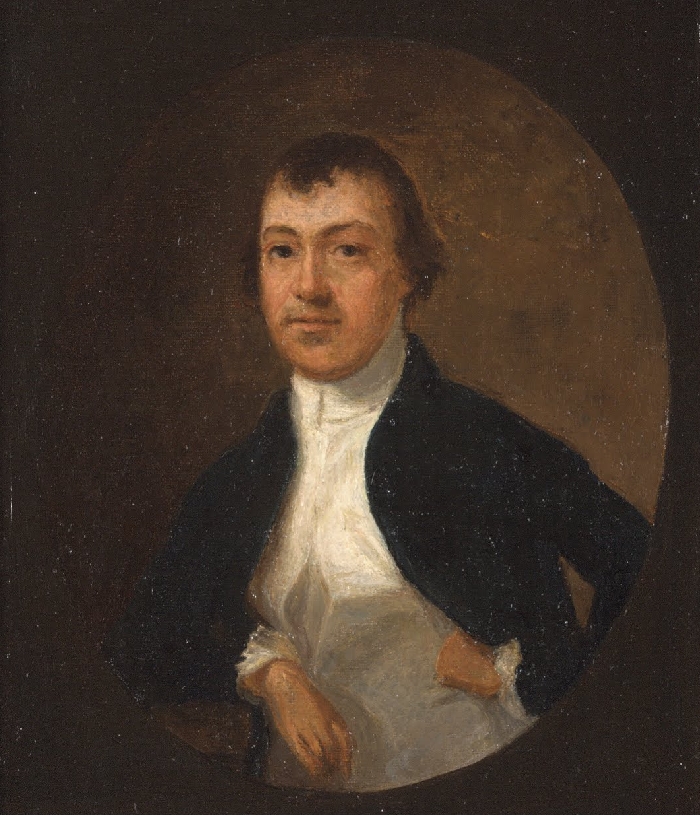
Historical · U.S. House · Virginia · District 21
Thomas Randolph
Former U.S. Representative · Virginia District 21 · 1803–1807 · Republican
Thomas Randolph represented Virginia's District 21 in the United States House of Representatives (1803–1807) for the Republican party. The page below collects sourced biographical facts, term history, committee roles, and provenance for Randolph.
Bioguide ID: R000051
Key facts
- Full name
- Thomas Randolph
- State
- Virginia
- District
- District 21
- Party
- Republican
- House service
- 1803–1807
- First House term
- 1803
- Status
- Left office
- Current term ends
- —
- Born
- 1768
- Bioguide ID
- R000051
- Committee assignments
- —
- Dataset version
- 1.20260606
Biographical narrative
903 words · sourced from the Wikipedia REST extract
Thomas Randolph was a prominent American planter, soldier, and politician from Virginia who served as a U.S. Representative for Virginia's 21st congressional district. A member of the Republican Party, he held office in the House of Representatives from 1803 until 1807. In addition to his congressional service, Randolph was involved in various political roles within Virginia, including serving in both houses of the Virginia General Assembly and later as the 21st governor of Virginia from 1819 to 1822. He was married to Martha Jefferson, the eldest daughter of Thomas Jefferson, the third President of the United States, and they had a large family together. Randolph's life was marked by both public service and personal challenges, including struggles with alcoholism.
Early life and career
Thomas Mann Randolph Jr. was born on October 1, 1768, at Tuckahoe, a plantation located in the Colony of Virginia. He was the first son of Thomas Mann Randolph Sr. and Anne Cary Randolph. His family was part of the distinguished Randolph lineage, known as one of the First Families of Virginia. Randolph's maternal ancestry included a notable connection to Pocahontas, which added to the family's prominence in Virginia society. He had several siblings, including older sisters who were notable figures in their own right, such as Mary Randolph, who authored "The Virginia House-Wife," and Virginia Randolph Cary, who wrote "Letters on Female Character."
Randolph's early education was conducted at home under the guidance of his mother and private tutors, a common practice among planter families of the time. He later attended the College of William & Mary in Williamsburg, Virginia, and the University of Edinburgh in Scotland from 1785 to 1788. Although he did not complete a formal degree, he continued to pursue knowledge independently and gained recognition as a botanist. His scholarly pursuits led to his election as a member of the American Philosophical Society in 1794, reflecting his intellectual contributions to the scientific community.
In terms of his professional life, Randolph's father acquired land at Varina, which Randolph transformed into a successful plantation. This venture into agriculture was typical for many men of his social standing, who often relied on plantation economies to sustain their wealth and status. The cultivation of tobacco, in particular, was a significant aspect of Virginia's economy during this period.
House tenure
Randolph's political career began in earnest when he was elected to the U.S. House of Representatives in 1803, representing Virginia's 21st congressional district. His tenure in the House lasted until 1807, during which he participated in the legislative processes of the early 19th century. The political landscape of this era was characterized by the growing influence of the Republican Party, which was advocating for agrarian interests and states' rights, contrasting with the Federalist Party's emphasis on a strong central government.
During his time in Congress, Randolph engaged in discussions and debates that shaped the early legislative framework of the United States. His background as a planter and his connections to prominent political figures, including his father-in-law Thomas Jefferson, likely influenced his perspectives and legislative priorities. However, specific details regarding the bills he sponsored or voted on during his congressional terms are not documented in the provided information.
After serving two terms in the House, Randolph's political career continued to evolve. He later held various positions within the Virginia General Assembly, demonstrating his ongoing commitment to public service at both the state and federal levels. His political affiliations and actions during this time were reflective of the broader trends in American politics, particularly the tensions between different factions and the evolving nature of governance in the young nation.
Legislative focus and committees
While specific details about Randolph's legislative focus and committee assignments during his time in the House of Representatives are not provided, it can be inferred that his background as a planter and his connections to influential political families likely shaped his interests in agricultural policies and issues pertinent to Virginia's economy. As a member of the Republican Party, he would have aligned with the party's emphasis on agrarian interests and the rights of states, which were central themes in the political discourse of the time.
Randolph's marriage to Martha Jefferson further positioned him within a network of political and social influence. The Jefferson family was deeply involved in the political landscape of the United States, and Randolph's relationship with Thomas Jefferson may have provided him with insights into the legislative priorities of the era. His role as a captain in the Virginia militia and as a local justice of the peace also indicates his engagement with community governance and local affairs, which were critical components of political life in early America.
Despite his contributions to public service, Randolph faced personal challenges that impacted his life and career. He struggled with alcoholism, which affected his relationships and responsibilities. His marriage to Martha Jefferson experienced periods of separation, reflecting the personal toll that his struggles took on his family life. The couple had a total of twelve children, and their family dynamics were influenced by both their social standing and the challenges they faced.
In summary, Thomas Randolph's career as a U.S. Representative and his broader contributions to Virginia's political landscape were shaped by his background, family connections, and the socio-political context of the early 19th century. His legacy is intertwined with the history of Virginia and the early United States, marked by both public service and personal trials.
Notable legislation
Sponsored and co-sponsored legislation for Thomas Randolph is pending operator curation. The biographical narrative above carries the same provenance trail until per-bill rows are written.
Sources
- [1]https://en.wikipedia.org/wiki/Thomas_Mann_Randolph_Jr.Wikipedia · retrieved 2026-06-06
Notable quotes
Sourced quotes for Thomas Randolph are pending operator curation. Narrative-scope provenance remains attached below.
Sources
- [1]https://en.wikipedia.org/wiki/Thomas_Mann_Randolph_Jr.Wikipedia · retrieved 2026-06-06
Key positions
Curated policy positions for Thomas Randolph are pending operator review. The biographical narrative above carries the same provenance trail until per-topic positions are written.
Sources
- [1]https://en.wikipedia.org/wiki/Thomas_Mann_Randolph_Jr.Wikipedia · retrieved 2026-06-06
Terms served
- 1803–1805U.S. House · Term 1 · Republican
- 1805–1807U.S. House · Term 2 · Republican
Sources & provenance
Every attributable claim above carries a per-section [N] marker that resolves to the corresponding URL below. Each entry records the upstream provider, the canonical URL, and the timestamp at which the source was retrieved by the ingest pipeline.
Key facts
- https://bioguide.congress.gov/search/bio/R000051bioguide · retrieved 2026-06-06
- https://www.govtrack.us/congress/members/409032govtrack · retrieved 2026-06-06
Biographical narrative
- https://en.wikipedia.org/wiki/Thomas_Mann_Randolph_Jr.wikipedia · retrieved 2026-06-06
Find your representative
Every U.S. state elects representatives by district. Browse Virginia’s delegation, the full former-representative roster, or explore the role and term length.
Related on The Candidate
- Succeeded by David GarlandLater holder of the Virginia District 21 House seat · Republican.Open
- Alexander WhiteFormer U.S. Representative · Virginia District 1Open
- Archibald AtkinsonFormer U.S. Representative · Virginia District 1 · DemocraticOpen
- Beverly DouglasFormer U.S. Representative · Virginia District 1 · DemocraticOpen
- Daniel MorganFormer U.S. Representative · Virginia District 1 · FederalistOpen
- Republican PartyFederal candidates and office holders on the Republican line.Open