
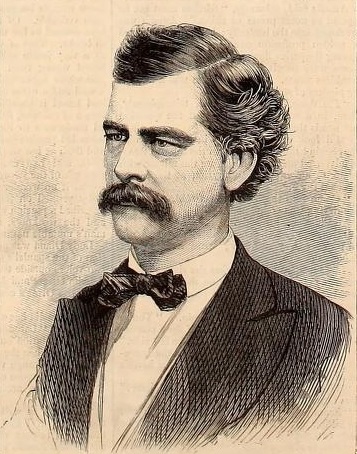
Historical · U.S. House · Virginia · District 3
Gilbert Walker
Former U.S. Representative · Virginia District 3 · 1875–1879 · Democratic
Gilbert Walker represented Virginia's District 3 in the United States House of Representatives (1875–1879) for the Democratic party. The page below collects sourced biographical facts, term history, committee roles, and provenance for Walker.
Bioguide ID: W000054
Key facts
- Full name
- Gilbert Walker
- State
- Virginia
- District
- District 3
- Party
- Democratic
- House service
- 1875–1879
- First House term
- 1875
- Status
- Left office
- Current term ends
- —
- Born
- 1833
- Bioguide ID
- W000054
- Committee assignments
- —
- Dataset version
- 1.20260606
Biographical narrative
890 words · sourced from the Wikipedia REST extract
Gilbert Walker was an American politician who served as a U.S. Representative for Virginia's 3rd congressional district and held the office of Governor of Virginia during a transformative period in the state's history. Born on August 1, 1833, in Binghamton, New York, Walker's career spanned law, finance, and politics, reflecting the complexities of the post-Civil War era. He was a member of the Democratic Party during his congressional tenure, which lasted from 1875 to 1879, and he played a significant role in the political landscape of Virginia during his time in office.
Early life and career
Gilbert Carlton Walker was born to Sabinus Walker and Matilda Galloway Walker. His early life was marked by familial changes, as his parents separated when he was young. Following this separation, his mother remarried Donald Grant, and the family relocated to Chenango, New York. Walker's education began in local academies in Delaware and Binghamton, New York, before he attended Williams College in Massachusetts from 1851 to 1852. He later transferred to Hamilton College in Clinton, New York, where he earned a Bachelor of Arts degree in 1854. During his time at Hamilton, Walker distinguished himself academically and socially, becoming a member of the Sigma Phi fraternity and winning the college's first prize for declamation in his junior year. He continued his studies and received a Master of Arts degree from Hamilton in 1857.
After completing his education, Walker pursued a career in law. He began practicing in Owego, New York, from 1855 to 1859 and then moved to Chicago, where he continued his legal career until 1864. In 1864, Walker relocated to Norfolk, Virginia, where he not only practiced law but also became involved in various business ventures. His legal expertise and business acumen led him to significant roles in the financial sector, including serving as president of Norfolk's Exchange National Bank. He was also an original incorporator of the Norfolk Insurance and Trust Company in 1866 and held positions on the boards of several other companies, including the Atlantic Iron Works and Dock Company, where he served as president from 1866 to 1869.
House tenure
Walker’s political career began to take shape in the aftermath of the Civil War. He served as the 36th Governor of Virginia, first as a Republican provisional governor from 1869 to 1870 and then as a Democrat from 1870 to 1874. His governorship was notable for its focus on reconstruction and the reintegration of Virginia into the Union. After completing his term as governor, Walker transitioned to the U.S. House of Representatives, where he served in the Forty-fourth and Forty-fifth Congresses from March 4, 1875, until March 3, 1879.
During his time in the House, Walker was involved in various legislative activities and served as the chair of the Committee on Education and Labor in the Forty-fourth Congress. His role in this committee allowed him to influence education policy and labor issues, which were critical topics during the post-war period as the nation sought to rebuild and address the needs of its citizens. Walker did not seek reelection in 1878, concluding his congressional career after two terms. His decision not to run again may have been influenced by the shifting political dynamics of the time, as well as his previous experiences in state governance.
Legislative focus and committees
Throughout his congressional tenure, Walker's legislative focus was primarily on education and labor, reflecting the broader societal changes occurring in the United States during the late 19th century. The post-Civil War era was a time of significant transformation, and issues related to education and labor were at the forefront of national discourse. As chair of the Committee on Education and Labor, Walker was positioned to address these critical issues, advocating for policies that would support the education system and improve labor conditions.
His involvement in the House of Representatives came during a period marked by economic challenges and social upheaval. The nation was grappling with the consequences of the Civil War, and there was a pressing need for policies that would promote social welfare and economic stability. Walker's work in the committee aimed to address these challenges, focusing on the importance of education as a means to empower individuals and improve the workforce.
After his congressional career, Walker returned to Binghamton, New York, in 1879, where he resumed his legal practice. He later moved to New York City in 1881, continuing his work in law while remaining active in various business ventures. His involvement in the New York Underground Railroad Company as president highlights his ongoing commitment to social issues, reflecting the values he held throughout his career.
Walker passed away on May 11, 1885, in New York City. His contributions to Virginia's political landscape, particularly during the Reconstruction era, and his subsequent work in the U.S. House of Representatives, mark him as a significant figure in American history. He was laid to rest at Spring Forest Cemetery in Binghamton, New York.
In summary, Gilbert Walker's life and career were characterized by a commitment to public service, law, and business. His tenure as both a governor and a U.S. Representative illustrates the complexities of American politics during a time of significant change. Walker's legacy continues to be recognized in the context of Virginia's history and the broader narrative of the United States during the late 19th century.
Notable legislation
Sponsored and co-sponsored legislation for Gilbert Walker is pending operator curation. The biographical narrative above carries the same provenance trail until per-bill rows are written.
Sources
- [1]https://en.wikipedia.org/wiki/Gilbert_C._WalkerWikipedia · retrieved 2026-06-06
Notable quotes
Sourced quotes for Gilbert Walker are pending operator curation. Narrative-scope provenance remains attached below.
Sources
- [1]https://en.wikipedia.org/wiki/Gilbert_C._WalkerWikipedia · retrieved 2026-06-06
Key positions
Curated policy positions for Gilbert Walker are pending operator review. The biographical narrative above carries the same provenance trail until per-topic positions are written.
Sources
- [1]https://en.wikipedia.org/wiki/Gilbert_C._WalkerWikipedia · retrieved 2026-06-06
Terms served
- 1875–1877U.S. House · Term 1 · Democratic
- 1877–1879U.S. House · Term 2 · Democratic
Sources & provenance
Every attributable claim above carries a per-section [N] marker that resolves to the corresponding URL below. Each entry records the upstream provider, the canonical URL, and the timestamp at which the source was retrieved by the ingest pipeline.
Key facts
- https://bioguide.congress.gov/search/bio/W000054bioguide · retrieved 2026-06-06
- https://www.govtrack.us/congress/members/411233govtrack · retrieved 2026-06-06
Biographical narrative
- https://en.wikipedia.org/wiki/Gilbert_C._Walkerwikipedia · retrieved 2026-06-06
Find your representative
Every U.S. state elects representatives by district. Browse Virginia’s delegation, the full former-representative roster, or explore the role and term length.
Related on The Candidate
- Preceded by John SmithEarlier holder of the Virginia District 3 House seat · Republican.Open
- Succeeded by Joseph JohnstonLater holder of the Virginia District 3 House seat · Democratic.Open
- Alexander WhiteFormer U.S. Representative · Virginia District 1Open
- Archibald AtkinsonFormer U.S. Representative · Virginia District 1 · DemocraticOpen
- Beverly DouglasFormer U.S. Representative · Virginia District 1 · DemocraticOpen
- Daniel MorganFormer U.S. Representative · Virginia District 1 · FederalistOpen