
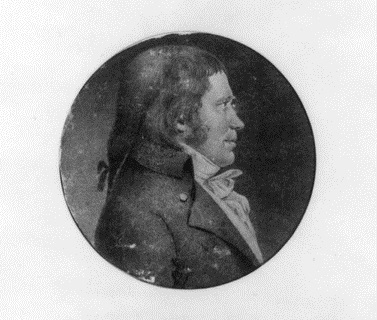
Historical · U.S. House · Virginia · District 3
James Machir
Former U.S. Representative · Virginia District 3 · 1797–1799 · Federalist
James Machir represented Virginia's District 3 in the United States House of Representatives (1797–1799) for the Federalist party. The page below collects sourced biographical facts, term history, committee roles, and provenance for Machir.
Bioguide ID: M000013
Key facts
- Full name
- James Machir
- State
- Virginia
- District
- District 3
- Party
- Federalist
- House service
- 1797–1799
- First House term
- 1797
- Status
- Left office
- Current term ends
- —
- Born
- —
- Bioguide ID
- M000013
- Committee assignments
- —
- Dataset version
- 1.20260606
Biographical narrative
1,083 words · sourced from the Wikipedia REST extract
James Machir was a notable political figure in early American history, serving as a U.S. Representative from Virginia during the late 18th century. A member of the Federalist Party, he played a role in the early legislative processes of the United States as a representative of Virginia's 3rd congressional district. His tenure in the U.S. House of Representatives spanned from 1797 to 1799, during which he contributed to the formation of the new nation’s governance structures. In addition to his congressional service, Machir was involved in state politics, serving multiple terms in the Virginia House of Delegates both before and after his time in Congress. His political career reflects the complexities and challenges of the early American republic.
Early life and career
James Machir was born in 1764, though specific details about his early life and upbringing are not extensively documented. His formative years occurred during a time of significant change in the American colonies, as they moved toward independence from British rule. The context of his early life likely influenced his later political beliefs and affiliations, particularly his alignment with the Federalist Party, which advocated for a strong central government and was supportive of the new Constitution.
Before entering the U.S. Congress, Machir began his political career in the Virginia House of Delegates, where he served from 1793 to 1796. This position allowed him to engage with local governance and understand the needs and concerns of his constituents. His experience in the Virginia House of Delegates provided him with a foundation in legislative processes and an understanding of the political landscape of Virginia, which was one of the most influential states in the early United States.
Machir’s election to the U.S. House of Representatives marked a significant step in his political career. He was elected as a Federalist to the Fifth Congress, which convened in 1797. His election was part of a broader Federalist strategy to consolidate power in the new government, and he was able to secure his position through a competitive electoral process. His victory over fellow Federalist Thomas Wilson and Democratic-Republicans John Mitchell and George Jackson indicates that he was able to appeal to a diverse electorate, despite the political divisions of the time.
House tenure
James Machir's term in the U.S. House of Representatives began on March 4, 1797, and concluded on March 3, 1799. During this period, he participated in the legislative activities of the Fifth Congress, which was a crucial time for the young nation as it sought to establish its identity and governance structures. The Federalist Party, to which Machir belonged, was influential during this era, advocating for policies that would strengthen the federal government and promote economic development.
Machir's congressional career, although brief, was set against the backdrop of significant national events, including the early challenges of foreign relations, domestic policy formation, and the ongoing debates between Federalists and Democratic-Republicans. The Fifth Congress dealt with various issues, including the establishment of a national bank, foreign policy concerning France and Britain, and the implications of the Alien and Sedition Acts, which were contentious pieces of legislation that reflected the political tensions of the time.
Despite serving only one term in the House, Machir's involvement in the legislative process contributed to the early development of American political institutions. His role as a representative from Virginia, a state with considerable political weight, placed him in a position to influence discussions on key issues facing the nation. The Federalist Party's focus on a strong central government and economic stability resonated with many constituents, and Machir's election reflected the party's strength in Virginia during this period.
After completing his term in Congress, Machir returned to state politics, indicating his continued engagement in public service and governance. His political career did not end with his congressional service; he returned to the Virginia House of Delegates, where he served again from 1811 to 1813 and later from 1818 to 1821. This continued involvement in state politics underscores his commitment to public service and his desire to influence the governance of Virginia.
Legislative focus and committees
While specific details regarding the committees on which James Machir served during his time in the U.S. House of Representatives are not documented, it is important to consider the broader legislative context of the Fifth Congress. The early Congresses were characterized by a focus on establishing the foundational laws and policies of the nation, and members like Machir were integral to these discussions.
As a Federalist, Machir likely supported initiatives that aligned with the party's goals of strengthening the federal government and promoting economic growth. The Federalists were known for advocating for a national bank, tariffs to protect American industry, and a strong military presence. These issues were critical in shaping the young nation's economic and political landscape, and Machir's contributions would have been part of the broader Federalist agenda.
In addition to economic policies, the Fifth Congress also grappled with foreign affairs, particularly the relationship with France, which was a significant concern during Machir's tenure. The political climate was tense, and the Federalists often took a more cautious approach to foreign relations, emphasizing the need for a strong national defense and careful diplomacy. Machir's legislative actions would have been influenced by these considerations, reflecting the Federalist perspective on maintaining stability and security in a rapidly changing world.
Machir's legislative focus would have also been shaped by the needs of his constituents in Virginia. As a representative, he would have been expected to advocate for the interests of his district, which included addressing local concerns and supporting initiatives that would benefit the people he represented. This dual focus on national issues and local needs is a hallmark of congressional service and would have characterized Machir's approach to his role as a U.S. Representative.
In summary, James Machir's political career, marked by his service in both the U.S. House of Representatives and the Virginia House of Delegates, reflects the complexities of early American governance. His alignment with the Federalist Party and his involvement in key legislative issues during a formative period in U.S. history underscore his contributions to the development of the nation. Machir's legacy is intertwined with the broader narrative of the early republic, as he navigated the challenges of representing his constituents while participating in the establishment of a new government. He passed away on June 25, 1827, leaving behind a record of public service that highlights the importance of local and national governance in the early years of the United States.
Notable legislation
Sponsored and co-sponsored legislation for James Machir is pending operator curation. The biographical narrative above carries the same provenance trail until per-bill rows are written.
Sources
- [1]https://en.wikipedia.org/wiki/James_MachirWikipedia · retrieved 2026-06-06
Notable quotes
Sourced quotes for James Machir are pending operator curation. Narrative-scope provenance remains attached below.
Sources
- [1]https://en.wikipedia.org/wiki/James_MachirWikipedia · retrieved 2026-06-06
Key positions
Curated policy positions for James Machir are pending operator review. The biographical narrative above carries the same provenance trail until per-topic positions are written.
Sources
- [1]https://en.wikipedia.org/wiki/James_MachirWikipedia · retrieved 2026-06-06
Terms served
- 1797–1799U.S. House · Term 1 · Federalist
Sources & provenance
Every attributable claim above carries a per-section [N] marker that resolves to the corresponding URL below. Each entry records the upstream provider, the canonical URL, and the timestamp at which the source was retrieved by the ingest pipeline.
Key facts
- https://bioguide.congress.gov/search/bio/M000013bioguide · retrieved 2026-06-06
- https://www.govtrack.us/congress/members/412066govtrack · retrieved 2026-06-06
Biographical narrative
- https://en.wikipedia.org/wiki/James_Machirwikipedia · retrieved 2026-06-06
Find your representative
Every U.S. state elects representatives by district. Browse Virginia’s delegation, the full former-representative roster, or explore the role and term length.
Related on The Candidate
- Preceded by Joseph NevilleEarlier holder of the Virginia District 3 House seat.Open
- Succeeded by John SmithLater holder of the Virginia District 3 House seat · Republican.Open
- Alexander WhiteFormer U.S. Representative · Virginia District 1Open
- Archibald AtkinsonFormer U.S. Representative · Virginia District 1 · DemocraticOpen
- Beverly DouglasFormer U.S. Representative · Virginia District 1 · DemocraticOpen
- Daniel MorganFormer U.S. Representative · Virginia District 1 · FederalistOpen