
Historical · U.S. House · Virginia · District 4
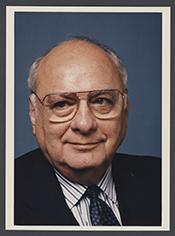
Norman Sisisky
Former U.S. Representative · Virginia District 4 · 1983–2001 · Democratic
Norman Sisisky represented Virginia's District 4 in the United States House of Representatives (1983–2001) for the Democratic party. The page below collects sourced biographical facts, term history, committee roles, and provenance for Sisisky.
Bioguide ID: S000453
Key facts
- Full name
- Norman Sisisky
- State
- Virginia
- District
- District 4
- Party
- Democratic
- House service
- 1983–2001
- First House term
- 1983
- Status
- Left office
- Current term ends
- —
- Born
- 1927
- Bioguide ID
- S000453
- Committee assignments
- —
- Dataset version
- 1.20260605
Biographical narrative
937 words · sourced from the Wikipedia REST extract
Norman Sisisky was a prominent American businessman and politician who served as a Democratic member of the United States House of Representatives from Virginia's 4th congressional district. His congressional career spanned from 1983 until his death in 2001, during which he became known for his fiscal conservatism and leadership within the Blue Dog Coalition, a group of moderate and conservative Democrats. Sisisky's tenure in Congress was marked by his commitment to fiscal discipline and his involvement in intelligence matters, particularly through his role on the House Intelligence Committee.
Early life and career
Norman Sisisky was born on June 9, 1927, in Baltimore, Maryland, but he spent much of his formative years in Richmond, Virginia. He was raised in a Jewish household, which influenced his values and perspectives throughout his life. After completing high school, Sisisky enlisted in the United States Navy, where he served for two years. This military experience contributed to his sense of discipline and public service.
Following his military service, Sisisky pursued higher education at the Richmond Professional Institute, which later became part of Virginia Commonwealth University. He earned a degree in business in 1949. Sisisky's professional career began in the business sector, where he established himself as a successful entrepreneur. He founded an independent bottling company in Petersburg, Virginia, which eventually became integrated into Pepsi's operations in the state. His business acumen and experience in the private sector laid the groundwork for his later political career, as he developed a strong understanding of economic issues and fiscal management.
In 1973, Sisisky transitioned into politics when he was elected to the Virginia House of Delegates. He served five terms in this capacity, gaining valuable experience in legislative processes and public policy. His time in the state legislature helped him build a network of political connections and understand the needs of his constituents, which would later benefit him during his congressional campaigns.
House tenure
In 1982, Norman Sisisky ran for the U.S. House of Representatives, seeking to represent Virginia's 4th congressional district. He successfully defeated the incumbent Republican representative, Robert Daniel, who had served five terms. Sisisky's victory marked the beginning of a long congressional career that would last until his death in 2001. He was first elected to the House in 1983 and subsequently won re-election multiple times, demonstrating a strong base of support within his district.
Throughout his ten terms in Congress, Sisisky was known for his moderate to conservative stance within the Democratic Party. He was a member of the Blue Dog Coalition, which consisted of fiscally conservative Democrats who sought to promote budgetary discipline and pragmatic governance. His alignment with this group positioned him as a key player in discussions surrounding fiscal policy and government spending.
Sisisky's congressional career was characterized by his commitment to various issues, including national security and intelligence. He served on the House Intelligence Committee, where he worked closely with the Central Intelligence Agency (CIA) and other intelligence agencies. His involvement in these matters underscored his dedication to ensuring the safety and security of the nation, as well as his belief in the importance of a well-informed legislative body regarding intelligence operations.
Over the years, Sisisky faced various electoral challenges but maintained a strong presence in his district. His electoral history reflects a consistent level of support from his constituents. In his initial election to Congress, he garnered a significant percentage of the vote, and in subsequent elections, he often faced little to no opposition. His ability to secure re-election unopposed in several instances highlighted his popularity and the trust placed in him by the voters of Virginia's 4th district.
Legislative focus and committees
During his time in the House of Representatives, Norman Sisisky focused on several key areas of legislation, reflecting both his personal interests and the needs of his constituents. As a member of the Blue Dog Coalition, he prioritized fiscal responsibility and sought to promote policies that would ensure economic stability. His background in business informed his approach to legislative issues, as he advocated for measures that would support economic growth and job creation.
In addition to his fiscal conservatism, Sisisky was particularly active in matters related to national security and intelligence. His role on the House Intelligence Committee allowed him to engage with critical issues concerning the nation's defense and intelligence operations. He worked to ensure that Congress was adequately informed about intelligence matters and that the government maintained a strong focus on national security.
Sisisky's legislative efforts were also shaped by his commitment to serving the interests of his constituents in Virginia. He sought to address local concerns and advocate for policies that would benefit the residents of his district. His work in Congress included efforts to secure funding for various projects and initiatives that would enhance the quality of life for his constituents.
Throughout his tenure, Sisisky maintained a reputation as a pragmatic legislator who sought to find common ground on contentious issues. His ability to navigate the complexities of Congress and work with members from both parties contributed to his effectiveness as a representative. He was known for his willingness to engage in bipartisan dialogue and seek solutions that would benefit the broader public.
Norman Sisisky's life and career were marked by a dedication to public service, fiscal responsibility, and national security. His contributions to the U.S. House of Representatives and his commitment to his constituents left a lasting impact on Virginia's 4th congressional district. Following his death from lung cancer on March 29, 2001, a special election was held to fill his seat, reflecting the significance of his role in Congress and the community he served.
Notable legislation
Sponsored and co-sponsored legislation for Norman Sisisky is pending operator curation. The biographical narrative above carries the same provenance trail until per-bill rows are written.
Sources
- [1]https://en.wikipedia.org/wiki/Norman_SisiskyWikipedia · retrieved 2026-06-05
Notable quotes
Sourced quotes for Norman Sisisky are pending operator curation. Narrative-scope provenance remains attached below.
Sources
- [1]https://en.wikipedia.org/wiki/Norman_SisiskyWikipedia · retrieved 2026-06-05
Key positions
Curated policy positions for Norman Sisisky are pending operator review. The biographical narrative above carries the same provenance trail until per-topic positions are written.
Sources
- [1]https://en.wikipedia.org/wiki/Norman_SisiskyWikipedia · retrieved 2026-06-05
Terms served
- 1983–1985U.S. House · Term 1 · Democratic
- 1985–1987U.S. House · Term 2 · Democratic
- 1987–1989U.S. House · Term 3 · Democratic
- 1989–1991U.S. House · Term 4 · Democratic
- 1991–1993U.S. House · Term 5 · Democratic
- 1993–1995U.S. House · Term 6 · Democratic
- 1995–1997U.S. House · Term 7 · Democratic
- 1997–1999U.S. House · Term 8 · Democratic
- 1999–2001U.S. House · Term 9 · Democratic
- 2001–2001U.S. House · Term 10 · Democratic
Sources & provenance
Every attributable claim above carries a per-section [N] marker that resolves to the corresponding URL below. Each entry records the upstream provider, the canonical URL, and the timestamp at which the source was retrieved by the ingest pipeline.
Key facts
- https://bioguide.congress.gov/search/bio/S000453bioguide · retrieved 2026-06-05
- https://www.govtrack.us/congress/members/400609govtrack · retrieved 2026-06-05
Biographical narrative
- https://en.wikipedia.org/wiki/Norman_Sisiskywikipedia · retrieved 2026-06-05
Find your representative
Every U.S. state elects representatives by district. Browse Virginia’s delegation, the full former-representative roster, or explore the role and term length.
Related on The Candidate
- Preceded by Robert Daniel Jr.Earlier holder of the Virginia District 4 House seat · Republican.Open
- Succeeded by J. ForbesLater holder of the Virginia District 4 House seat · Republican.Open
- Alexander WhiteFormer U.S. Representative · Virginia District 1Open
- Archibald AtkinsonFormer U.S. Representative · Virginia District 1 · DemocraticOpen
- Beverly DouglasFormer U.S. Representative · Virginia District 1 · DemocraticOpen
- Daniel MorganFormer U.S. Representative · Virginia District 1 · FederalistOpen