
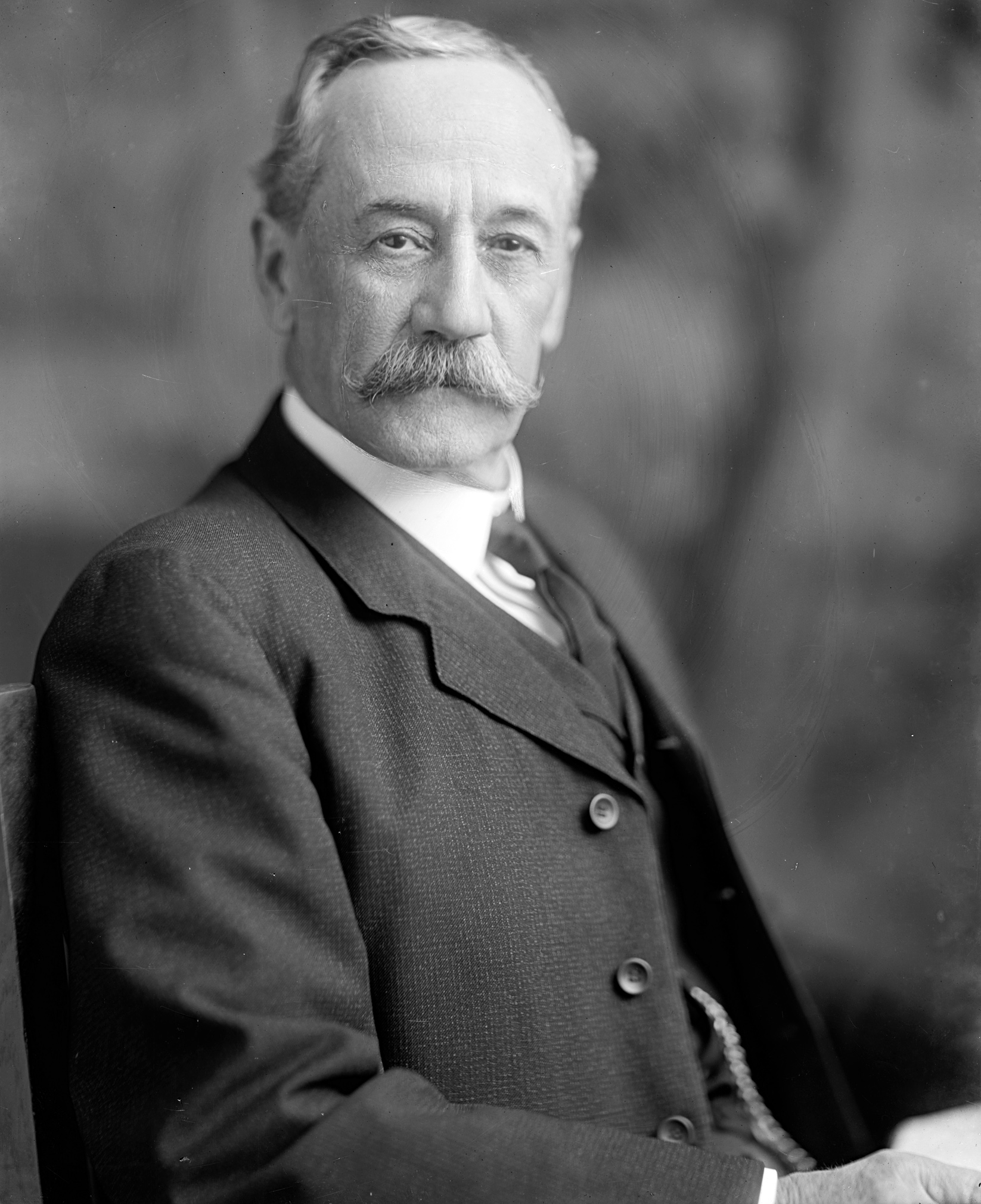
Historical · U.S. House · Virginia · District 4
Robert Turnbull
Former U.S. Representative · Virginia District 4 · 1909–1913 · Democratic
Robert Turnbull represented Virginia's District 4 in the United States House of Representatives (1909–1913) for the Democratic party. The page below collects sourced biographical facts, term history, committee roles, and provenance for Turnbull.
Bioguide ID: T000413
Key facts
- Full name
- Robert Turnbull
- State
- Virginia
- District
- District 4
- Party
- Democratic
- House service
- 1909–1913
- First House term
- 1909
- Status
- Left office
- Current term ends
- —
- Born
- 1850
- Bioguide ID
- T000413
- Committee assignments
- —
- Dataset version
- 1.20260606
Biographical narrative
854 words · sourced from the Wikipedia REST extract
Robert Turnbull was an American lawyer and politician affiliated with the Democratic Party who served as a U.S. Representative for Virginia's 4th congressional district. His political career spanned several decades, during which he held various significant positions, including serving as clerk of Brunswick County and as a state senator. Turnbull's congressional tenure lasted from 1910 to 1913, during which he was involved in the legislative processes of the Sixty-first and Sixty-second Congresses. After his time in Congress, he returned to his legal practice and continued to serve in local government until his death in 1920.
Early life and career
Robert Turnbull was born on January 11, 1850, in Lawrenceville, Virginia, which is located in Brunswick County. He was the son of Edward Randolph Turnbull, a lawyer, and Elizabeth Harrison. His family background included a significant number of enslaved individuals, as his father owned 15 enslaved people in 1850 and 20 by 1860. Turnbull grew up in a family that valued education and legal profession, which likely influenced his career path. He had a younger brother, Dr. Edward Randolph Turnbull, and at least four sisters, all of whom married and established their own families.
Turnbull received his education at Rock Spring Academy, a private institution that catered to students of his social class. He later pursued legal studies at the University of Virginia, graduating from its law department in 1871. After being admitted to the bar the same year, he began his legal practice in Lawrenceville and the surrounding areas. His legal career was marked by a commitment to public service, as evidenced by his election as clerk of Brunswick County, a position he held from 1891 until 1910. During this decade, he became well-known in the community for his administrative skills and dedication to local governance.
In addition to his role as clerk, Turnbull was elected to the Virginia Senate, representing Brunswick and adjacent counties from 1894 to 1898. His political involvement extended to the Virginia Constitutional Convention of 1902, where he served as a delegate. Turnbull was also active in national politics, attending the Democratic National Conventions in 1896 and 1904, which further solidified his standing within the Democratic Party.
House tenure
Robert Turnbull's congressional career began when he was elected to the Sixty-first Congress to fill a vacancy left by the death of Congressman Francis R. Lassiter. He won this special election as a Democrat and took office on March 8, 1910. His initial election was unopposed, reflecting a strong support base within his district. Turnbull's tenure in the House of Representatives was characterized by his participation in the legislative process during a period of significant national change.
Following his first term, Turnbull successfully secured re-election to the Sixty-second Congress, again unopposed in the general election. His time in Congress lasted until March 3, 1913. During his tenure, he engaged in various legislative discussions and contributed to the Democratic agenda of the time. However, his political career faced challenges, particularly in the 1912 Democratic primary, where he was defeated by Judge Walter A. Watson, who had a different stance on issues related to voting rights.
Turnbull's congressional service was marked by the complexities of early 20th-century American politics, a time when issues such as civil rights, economic reform, and social justice were becoming increasingly prominent. His alignment with the Democratic Party placed him in the midst of these evolving discussions, although specific details of his legislative contributions during this period are not extensively documented.
Legislative focus and committees
While specific details regarding the committees on which Robert Turnbull served during his congressional tenure are not provided, it can be inferred that, as a member of the Democratic Party during a transformative era in American politics, he likely engaged with issues pertinent to his constituents in Virginia. The early 1900s were marked by significant developments in labor rights, economic policy, and civil rights, and Turnbull's legislative focus would have been influenced by the needs and concerns of his district.
Turnbull's background as a lawyer may have informed his perspectives on legal and judicial matters, potentially leading him to advocate for legislation that aligned with his professional expertise. His experience as a state senator and clerk of the county would have also equipped him with insights into local governance and the challenges faced by his constituents.
After his congressional career, Turnbull returned to his legal practice in Lawrenceville, where he continued to serve the community. He was re-elected as clerk of the circuit court of Brunswick County in 1916, a role he maintained until his death on January 22, 1920. His continued involvement in local government reflects his commitment to public service and the legal profession throughout his life.
Robert Turnbull's legacy is marked by his contributions to both local and national politics during a pivotal time in American history. His life and career encapsulate the journey of a public servant dedicated to the governance and legal frameworks that shaped his community and the broader political landscape of Virginia. He was interred in Lawrenceville Cemetery, where he remains a part of the historical narrative of Brunswick County and its political heritage.
Notable legislation
Sponsored and co-sponsored legislation for Robert Turnbull is pending operator curation. The biographical narrative above carries the same provenance trail until per-bill rows are written.
Sources
- [1]https://en.wikipedia.org/wiki/Robert_Turnbull_(American_politician)Wikipedia · retrieved 2026-06-06
Notable quotes
Sourced quotes for Robert Turnbull are pending operator curation. Narrative-scope provenance remains attached below.
Sources
- [1]https://en.wikipedia.org/wiki/Robert_Turnbull_(American_politician)Wikipedia · retrieved 2026-06-06
Key positions
Curated policy positions for Robert Turnbull are pending operator review. The biographical narrative above carries the same provenance trail until per-topic positions are written.
Sources
- [1]https://en.wikipedia.org/wiki/Robert_Turnbull_(American_politician)Wikipedia · retrieved 2026-06-06
Terms served
- 1909–1911U.S. House · Term 1 · Democratic
- 1911–1913U.S. House · Term 2 · Democratic
Sources & provenance
Every attributable claim above carries a per-section [N] marker that resolves to the corresponding URL below. Each entry records the upstream provider, the canonical URL, and the timestamp at which the source was retrieved by the ingest pipeline.
Key facts
- https://bioguide.congress.gov/search/bio/T000413bioguide · retrieved 2026-06-06
- https://www.govtrack.us/congress/members/410982govtrack · retrieved 2026-06-06
Biographical narrative
- https://en.wikipedia.org/wiki/Robert_Turnbull_(American_politician)wikipedia · retrieved 2026-06-06
Find your representative
Every U.S. state elects representatives by district. Browse Virginia’s delegation, the full former-representative roster, or explore the role and term length.
Related on The Candidate
- Preceded by Robert SouthallEarlier holder of the Virginia District 4 House seat · Democratic.Open
- Succeeded by Walter WatsonLater holder of the Virginia District 4 House seat · Democratic.Open
- Alexander WhiteFormer U.S. Representative · Virginia District 1Open
- Archibald AtkinsonFormer U.S. Representative · Virginia District 1 · DemocraticOpen
- Beverly DouglasFormer U.S. Representative · Virginia District 1 · DemocraticOpen
- Daniel MorganFormer U.S. Representative · Virginia District 1 · FederalistOpen