
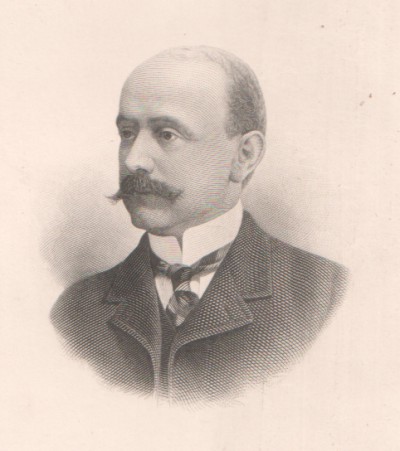
Historical · U.S. House · Virginia · District 4
Sydney Epes
Former U.S. Representative · Virginia District 4 · 1897–1901 · Democratic
Sydney Epes represented Virginia's District 4 in the United States House of Representatives (1897–1901) for the Democratic party. The page below collects sourced biographical facts, term history, committee roles, and provenance for Epes.
Bioguide ID: E000196
Key facts
- Full name
- Sydney Epes
- State
- Virginia
- District
- District 4
- Party
- Democratic
- House service
- 1897–1901
- First House term
- 1897
- Status
- Left office
- Current term ends
- —
- Born
- 1865
- Bioguide ID
- E000196
- Committee assignments
- —
- Dataset version
- 1.20260606
Biographical narrative
827 words · sourced from the Wikipedia REST extract
Sydney Epes was a U.S. Representative from Virginia who served in the House of Representatives during the late 19th century. A member of the Democratic Party, Epes's congressional career spanned parts of two terms, during which he represented Virginia's 4th congressional district. His political journey was marked by a brief but notable tenure in the U.S. Congress, where he engaged in the legislative processes of his time until his untimely death in 1900.
Early life and career
Sydney Parham Epes was born on August 20, 1865, near Nottoway Court House, Virginia. His early life was characterized by a series of relocations that would shape his future endeavors. When he was still a child, Epes and his family moved to Kentucky, where they settled near Franklin. It was in Kentucky that Epes received his education, attending public schools that laid the foundation for his future pursuits.
In 1884, Epes returned to Virginia, where he began to carve out a career in journalism. He took on the role of editor and publisher of a Democratic newspaper in Blackstone, Virginia. This position not only provided him with a platform to express his political views but also helped him establish connections within the Democratic Party, which would prove beneficial for his future political aspirations.
Epes's entry into politics began in earnest in the early 1890s. He was elected to the Virginia House of Delegates, where he served during the years 1891 and 1892. This experience in state politics allowed him to gain valuable insights into legislative processes and the needs of his constituents. Following his service in the House of Delegates, Epes was appointed as the register of the Virginia land office, a position he held from 1895 until 1897. His work in this role further solidified his reputation within the Democratic Party and prepared him for a larger role in national politics.
House tenure
Epes's congressional career began when he presented his credentials as a Member-elect to the Fifty-fifth Congress. He officially took office on March 4, 1897. His initial election to the U.S. House of Representatives was not without controversy. In the election held in 1896, Epes had secured a victory with 54.5% of the vote against his opponents, which included Republican Robert Taylor Thorp and Independent Republican J.L. Thorp. However, this election was later invalidated, and Thorp was seated instead. This setback did not deter Epes, as he ran again in 1898 and was elected to the Fifty-sixth Congress with 57.5% of the vote, defeating Thorp once more, along with other candidates.
Epes's time in Congress was marked by a commitment to his constituents and the Democratic Party's platform. He served in the House until his death on March 3, 1900, just one day before the conclusion of his term. His tenure, although brief, was significant in that it reflected the political dynamics of the time, including the challenges faced by Democratic representatives in a period of intense political competition.
Legislative focus and committees
During his time in the U.S. House of Representatives, Epes was involved in various legislative activities that aligned with the interests of his constituents and the broader Democratic agenda. While specific details regarding the bills he sponsored or the committees he served on are not extensively documented, it is known that he was an active participant in the legislative process. His background in journalism likely influenced his approach to governance, as he understood the importance of communication and public opinion in shaping policy.
Epes's legislative focus would have been informed by the issues prevalent during the late 19th century, including economic development, land use, and the rights of citizens. As a representative from Virginia, he would have been particularly attuned to the needs of his district, which included agricultural interests and the challenges faced by rural communities. His previous experience as the register of the Virginia land office would have provided him with insights into land-related issues, making him a knowledgeable advocate for policies that supported landowners and farmers.
Epes's untimely death from peritonitis in Washington, D.C., marked the end of his congressional career and left a gap in representation for Virginia's 4th congressional district. He was interred in Lake View Cemetery in Blackstone, Virginia, where he had previously established his career as a journalist and politician. His legacy, while not extensively documented, reflects the complexities of political life in the late 19th century and the challenges faced by those who sought to represent their constituents in the U.S. Congress.
In summary, Sydney Epes's life and career illustrate the journey of a local politician who rose to national prominence during a transformative period in American history. His experiences in journalism, state politics, and the U.S. House of Representatives underscore the interconnectedness of these realms and the impact of individual representatives on the legislative landscape. Epes's contributions, though brief, were part of a larger narrative of political engagement and representation in the United States, particularly within the context of Virginia's political history.
Notable legislation
Sponsored and co-sponsored legislation for Sydney Epes is pending operator curation. The biographical narrative above carries the same provenance trail until per-bill rows are written.
Sources
- [1]https://en.wikipedia.org/wiki/Sydney_Parham_EpesWikipedia · retrieved 2026-06-06
Notable quotes
Sourced quotes for Sydney Epes are pending operator curation. Narrative-scope provenance remains attached below.
Sources
- [1]https://en.wikipedia.org/wiki/Sydney_Parham_EpesWikipedia · retrieved 2026-06-06
Key positions
Curated policy positions for Sydney Epes are pending operator review. The biographical narrative above carries the same provenance trail until per-topic positions are written.
Sources
- [1]https://en.wikipedia.org/wiki/Sydney_Parham_EpesWikipedia · retrieved 2026-06-06
Terms served
- 1897–1899U.S. House · Term 1 · Democratic
- 1899–1901U.S. House · Term 2 · Democratic
Sources & provenance
Every attributable claim above carries a per-section [N] marker that resolves to the corresponding URL below. Each entry records the upstream provider, the canonical URL, and the timestamp at which the source was retrieved by the ingest pipeline.
Key facts
- https://bioguide.congress.gov/search/bio/E000196bioguide · retrieved 2026-06-06
- https://www.govtrack.us/congress/members/403883govtrack · retrieved 2026-06-06
Biographical narrative
- https://en.wikipedia.org/wiki/Sydney_Parham_Epeswikipedia · retrieved 2026-06-06
Find your representative
Every U.S. state elects representatives by district. Browse Virginia’s delegation, the full former-representative roster, or explore the role and term length.
Related on The Candidate
- Preceded by William McKenneyEarlier holder of the Virginia District 4 House seat · Democratic.Open
- Succeeded by Robert SouthallLater holder of the Virginia District 4 House seat · Democratic.Open
- Alexander WhiteFormer U.S. Representative · Virginia District 1Open
- Archibald AtkinsonFormer U.S. Representative · Virginia District 1 · DemocraticOpen
- Beverly DouglasFormer U.S. Representative · Virginia District 1 · DemocraticOpen
- Daniel MorganFormer U.S. Representative · Virginia District 1 · FederalistOpen