
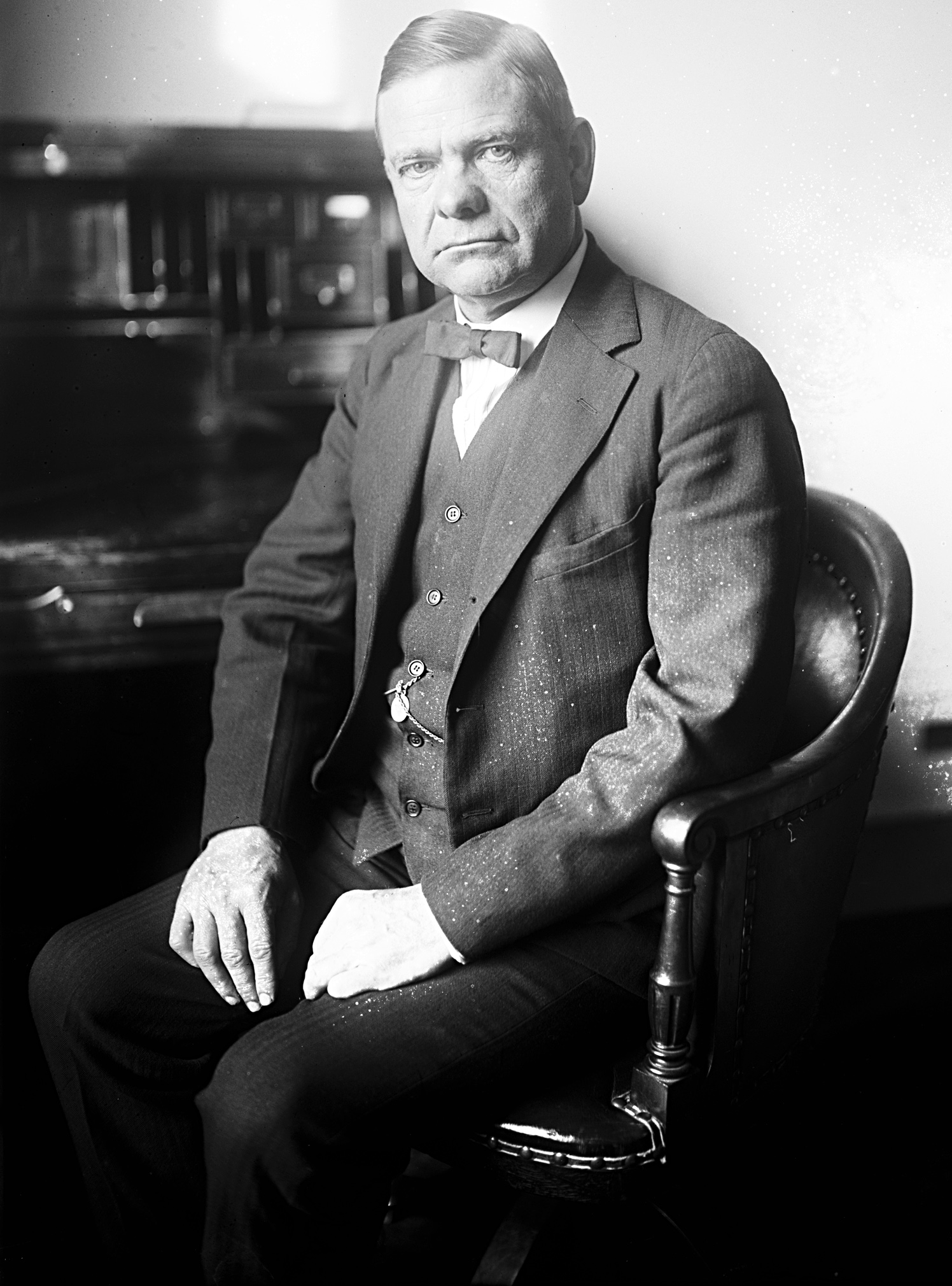
Historical · U.S. House · Virginia · District 5
James Hooker
Former U.S. Representative · Virginia District 5 · 1921–1925 · Democratic
James Hooker represented Virginia's District 5 in the United States House of Representatives (1921–1925) for the Democratic party. The page below collects sourced biographical facts, term history, committee roles, and provenance for Hooker.
Bioguide ID: H000759
Key facts
- Full name
- James Hooker
- State
- Virginia
- District
- District 5
- Party
- Democratic
- House service
- 1921–1925
- First House term
- 1921
- Status
- Left office
- Current term ends
- —
- Born
- 1873
- Bioguide ID
- H000759
- Committee assignments
- —
- Dataset version
- 1.20260606
Biographical narrative
971 words · sourced from the Wikipedia REST extract
James Hooker was a prominent lawyer and politician who served as a U.S. Representative from Virginia's 5th congressional district. A member of the Democratic Party, Hooker held office during the early 1920s, contributing to legislative discussions and decisions during a transformative period in American history. His tenure in the House of Representatives was marked by his commitment to public service and his involvement in various political and legal capacities prior to and following his congressional career.
Early life and career
James Hooker was born on October 29, 1873, in Buffalo Ridge, Virginia. He grew up in a region that would shape his understanding of the legal and political landscapes of the time. Hooker attended public schools in Virginia, where he laid the foundation for his future academic and professional pursuits. He furthered his education at the College of William and Mary, one of the oldest institutions of higher education in the United States, located in Williamsburg, Virginia. After completing his undergraduate studies, he continued his education at Washington and Lee University in Lexington, Virginia, where he graduated from the law department in 1896.
Upon his admission to the bar in the same year, Hooker began practicing law in Stuart, Virginia. His legal career was marked by a commitment to public service, as he took on the role of Commonwealth's attorney for Patrick County, Virginia. This position allowed him to engage directly with the legal system and serve the interests of his community. Hooker’s involvement in local governance extended beyond his legal practice; he was also a delegate to the Virginia constitutional convention from 1901 to 1902. This convention was significant as it addressed various issues related to the state's governance and legal framework.
In addition to his legal and political roles, Hooker was actively involved in educational and civic organizations. From 1901 to 1906, he served as a member of the board of visitors to the Virginia Military Institute in Lexington, a prestigious military college. His commitment to education and public service was further exemplified by his participation in the Virginia Fisheries Commission from 1908 to 1914, where he contributed to the management and preservation of Virginia's natural resources.
House tenure
James Hooker's entry into national politics came when he was elected as a Democrat to the Sixty-seventh Congress to fill a vacancy caused by the death of Representative Rorer A. James. His election marked the beginning of his congressional career, which commenced on November 8, 1921. Hooker was successful in his first election, securing a significant majority of the vote. He demonstrated his political viability by winning re-election to the Sixty-eighth Congress, where he continued to serve until March 3, 1925.
During his time in the House of Representatives, Hooker was involved in various legislative activities and discussions that were pertinent to the issues of the day. His tenure coincided with a period of significant change in the United States, encompassing the aftermath of World War I and the onset of the Roaring Twenties. This era was characterized by economic growth, social change, and a re-evaluation of American values and policies.
Despite his successful election and re-election, Hooker chose not to seek renomination in 1924. This decision marked the end of his congressional career, but it did not signify a retreat from public life. Following his time in the House, he continued to engage in political activities, including serving as a delegate to the Democratic National Convention in 1924. His involvement in the convention highlighted his ongoing commitment to the Democratic Party and its principles.
In 1925, Hooker took on the role of chairman of the Democratic State Committee, further solidifying his influence within the party at the state level. This position allowed him to shape the direction of the Democratic Party in Virginia during a time of political transition. After his active political career, Hooker returned to his legal practice in Stuart, Virginia, where he continued to serve his community until his death.
Legislative focus and committees
During his time in Congress, James Hooker was part of a legislative body that was grappling with a range of issues, including economic recovery, social reform, and the evolving role of government in American life. While specific details about his legislative initiatives and committee assignments are not extensively documented, it is clear that his background as a lawyer and his experience in local governance informed his approach to legislation.
Hooker's legal expertise likely influenced his perspectives on issues related to law and justice, as well as his understanding of the implications of federal policies on state and local jurisdictions. His role as Commonwealth's attorney would have provided him with insights into the legal challenges faced by his constituents, allowing him to advocate for policies that aligned with their needs and interests.
The early 1920s were a time of significant change in the United States, with the country transitioning from wartime to peacetime. This period saw the emergence of new social movements, economic challenges, and debates over civil rights and liberties. As a member of the Democratic Party, Hooker would have been part of discussions surrounding these critical issues, contributing to the broader dialogue on how the nation should address the challenges of the day.
Following his congressional tenure, Hooker remained active in public life, continuing to engage with political and civic matters in Virginia. His involvement in the Democratic Party and his role as chairman of the state committee reflect his enduring commitment to political engagement and public service.
James Hooker passed away on August 6, 1940, in Stuart, Virginia. He was interred in Stuart Cemetery, leaving behind a legacy of legal and political service that spanned several decades. His contributions to Virginia's legal and political landscape, as well as his time in the U.S. House of Representatives, underscore his dedication to the principles of democracy and public service.
Notable legislation
Sponsored and co-sponsored legislation for James Hooker is pending operator curation. The biographical narrative above carries the same provenance trail until per-bill rows are written.
Sources
- [1]https://en.wikipedia.org/wiki/J._Murray_HookerWikipedia · retrieved 2026-06-06
Notable quotes
Sourced quotes for James Hooker are pending operator curation. Narrative-scope provenance remains attached below.
Sources
- [1]https://en.wikipedia.org/wiki/J._Murray_HookerWikipedia · retrieved 2026-06-06
Key positions
Curated policy positions for James Hooker are pending operator review. The biographical narrative above carries the same provenance trail until per-topic positions are written.
Sources
- [1]https://en.wikipedia.org/wiki/J._Murray_HookerWikipedia · retrieved 2026-06-06
Terms served
- 1921–1923U.S. House · Term 1 · Democratic
- 1923–1925U.S. House · Term 2 · Democratic
Sources & provenance
Every attributable claim above carries a per-section [N] marker that resolves to the corresponding URL below. Each entry records the upstream provider, the canonical URL, and the timestamp at which the source was retrieved by the ingest pipeline.
Key facts
- https://bioguide.congress.gov/search/bio/H000759bioguide · retrieved 2026-06-06
- https://www.govtrack.us/congress/members/405610govtrack · retrieved 2026-06-06
Biographical narrative
- https://en.wikipedia.org/wiki/J._Murray_Hookerwikipedia · retrieved 2026-06-06
Find your representative
Every U.S. state elects representatives by district. Browse Virginia’s delegation, the full former-representative roster, or explore the role and term length.
Related on The Candidate
- Preceded by Edward SaundersEarlier holder of the Virginia District 5 House seat · Democratic.Open
- Succeeded by Joseph WhiteheadLater holder of the Virginia District 5 House seat · Democratic.Open
- Alexander WhiteFormer U.S. Representative · Virginia District 1Open
- Archibald AtkinsonFormer U.S. Representative · Virginia District 1 · DemocraticOpen
- Beverly DouglasFormer U.S. Representative · Virginia District 1 · DemocraticOpen
- Daniel MorganFormer U.S. Representative · Virginia District 1 · FederalistOpen