
Historical · U.S. House · Virginia · District 5
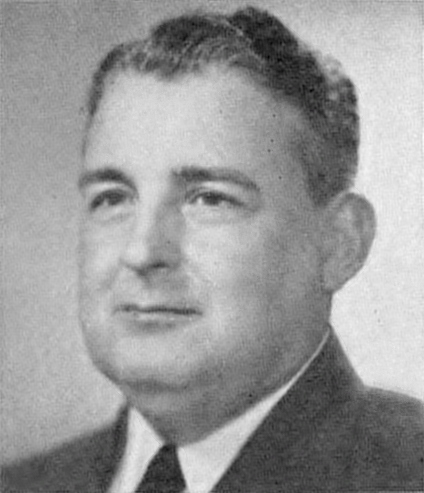
William Tuck
Former U.S. Representative · Virginia District 5 · 1953–1969 · Democratic
William Tuck represented Virginia's District 5 in the United States House of Representatives (1953–1969) for the Democratic party. The page below collects sourced biographical facts, term history, committee roles, and provenance for Tuck.
Bioguide ID: T000395
Key facts
- Full name
- William Tuck
- State
- Virginia
- District
- District 5
- Party
- Democratic
- House service
- 1953–1969
- First House term
- 1953
- Status
- Left office
- Current term ends
- —
- Born
- 1896
- Bioguide ID
- T000395
- Committee assignments
- —
- Dataset version
- 1.20260605
Biographical narrative
1,003 words · sourced from the Wikipedia REST extract
William Munford Tuck was an American politician and lawyer who served as a U.S. Representative for Virginia's 5th congressional district from 1953 until 1969. A member of the Democratic Party, Tuck had a long career in Virginia politics, which included serving as the 55th Governor of Virginia from 1946 to 1950. His political career spanned over four decades, during which he was known for his alignment with the Byrd Organization and his opposition to civil rights legislation. Tuck's legacy is marked by his fiscal conservatism and his controversial stances on issues of race and labor.
Early life and career
William Tuck was born on September 28, 1896, in Halifax County, Virginia, as the youngest of nine children. His father, Robert James Tuck, was a tobacco warehouseman, and his mother, Virginia Susan Fitts, passed away when he was just 13 years old. Tuck's early education took place in local county schools, and he attended Virgilina High School and Chatham Training School, which is now known as Hargrave Military Academy. He furthered his education at the College of William and Mary, where he spent two years earning a teacher's certificate. Following this, he worked as a teacher and principal in Northumberland County.
In 1917, Tuck enlisted in the U.S. Marine Corps, serving until 1919, including a deployment in the Caribbean. Upon his return, he pursued a legal education at the Washington and Lee University School of Law, graduating in 1921. Tuck began his legal career in Halifax, Virginia, where he established a private practice that he maintained for several decades. In 1929, he married Eva Lovelace Dillard, a widow and former schoolteacher, and they raised her son, Lester Layne Dillard Jr., together.
Tuck's political career began in 1923 when he was elected as a delegate to the Virginia General Assembly, a part-time position. After serving one term, he opted not to seek re-election in 1929 to focus on his legal practice. However, following the death of his successor, he was called back to serve the remainder of the term. In 1931, he was elected to the Virginia Senate, where he developed a close relationship with U.S. Senator Harry F. Byrd. During his time in the state Senate, Tuck was involved in various reforms, including efforts to repeal Prohibition and the introduction of child labor laws, unemployment compensation, and old age assistance.
In 1941, Tuck sought a higher office and was elected as the 25th Lieutenant Governor of Virginia, serving under Governor Colgate Darden from 1942 to 1946. His tenure as lieutenant governor helped to elevate his profile within the state, leading to his election as governor in 1945.
House tenure
Tuck's congressional career began in 1953 when he was elected to the U.S. House of Representatives, succeeding Thomas Bahnson Stanley, who had resigned to run for governor. Tuck was a member of the Democratic Party and aligned himself closely with the Byrd Organization, a powerful political faction in Virginia. Throughout his eight terms in Congress, Tuck was known for his staunch opposition to civil rights legislation. He was a vocal supporter of the "massive resistance" movement, which sought to defy the Supreme Court's rulings on desegregation, particularly the landmark decision in Brown v. Board of Education.
Tuck's legislative record reflects his commitment to maintaining segregation and opposing civil rights advancements. He was a signatory of the Southern Manifesto in 1956, which condemned the Supreme Court's desegregation rulings. He consistently voted against significant civil rights legislation, including the Civil Rights Acts of 1957, 1960, 1964, and 1968, as well as the Voting Rights Act of 1965. His opposition extended to the 24th Amendment to the U.S. Constitution, which prohibited poll taxes in federal elections.
In addition to his positions on civil rights, Tuck served on the House Committee on Un-American Activities (HUAC), which investigated alleged disloyalty and subversive activities. His tenure in Congress was characterized by a commitment to the principles of fiscal conservatism and a focus on local issues pertinent to his constituents in Virginia.
In 1967, Tuck announced that he would not seek re-election, citing health issues. His decision marked the end of an extensive political career that had begun over four decades earlier. After leaving Congress, he returned to his legal practice in South Boston, Virginia, although he faced health challenges that limited his ability to continue working.
Legislative focus and committees
During his time in the U.S. House of Representatives, Tuck's legislative focus was primarily on issues that aligned with his political ideology and the interests of his constituents. His alignment with the Byrd Organization influenced his positions on various matters, particularly those related to civil rights and labor. Tuck's opposition to civil rights legislation was a defining feature of his congressional career, as he consistently voted against measures aimed at advancing racial equality and desegregation.
Tuck's membership on the House Committee on Un-American Activities placed him at the center of investigations into alleged communist activities within the United States. This role reflected the broader political climate of the time, characterized by fears of communism and a strong anti-communist sentiment.
Throughout his tenure, Tuck maintained a focus on fiscal conservatism, advocating for policies that emphasized limited government intervention and economic prudence. His efforts in Congress were often aligned with the interests of his constituents in Virginia, particularly in matters related to labor and economic development.
After retiring from politics in 1969, Tuck continued to be involved in legal practice until health issues prompted him to retire completely in 1979. He passed away on June 9, 1983, at the age of 86. His legacy includes a complex history marked by both his contributions to Virginia politics and his controversial stances on civil rights. Virginia has honored his memory through various means, including naming a highway after him and designating a historical marker in his honor. His personal papers, which include documents from his time as both a congressman and governor, are preserved at the Special Collections Research Center at the College of William & Mary and the Library of Virginia.
Notable legislation
Sponsored and co-sponsored legislation for William Tuck is pending operator curation. The biographical narrative above carries the same provenance trail until per-bill rows are written.
Sources
- [1]https://en.wikipedia.org/wiki/William_M._TuckWikipedia · retrieved 2026-06-05
Notable quotes
Sourced quotes for William Tuck are pending operator curation. Narrative-scope provenance remains attached below.
Sources
- [1]https://en.wikipedia.org/wiki/William_M._TuckWikipedia · retrieved 2026-06-05
Key positions
Curated policy positions for William Tuck are pending operator review. The biographical narrative above carries the same provenance trail until per-topic positions are written.
Sources
- [1]https://en.wikipedia.org/wiki/William_M._TuckWikipedia · retrieved 2026-06-05
Terms served
- 1953–1955U.S. House · Term 1 · Democratic
- 1955–1957U.S. House · Term 2 · Democratic
- 1957–1959U.S. House · Term 3 · Democratic
- 1959–1961U.S. House · Term 4 · Democratic
- 1961–1963U.S. House · Term 5 · Democratic
- 1963–1965U.S. House · Term 6 · Democratic
- 1965–1967U.S. House · Term 7 · Democratic
- 1967–1969U.S. House · Term 8 · Democratic
Sources & provenance
Every attributable claim above carries a per-section [N] marker that resolves to the corresponding URL below. Each entry records the upstream provider, the canonical URL, and the timestamp at which the source was retrieved by the ingest pipeline.
Key facts
- https://bioguide.congress.gov/search/bio/T000395bioguide · retrieved 2026-06-05
- https://www.govtrack.us/congress/members/410964govtrack · retrieved 2026-06-05
Biographical narrative
- https://en.wikipedia.org/wiki/William_M._Tuckwikipedia · retrieved 2026-06-05
Find your representative
Every U.S. state elects representatives by district. Browse Virginia’s delegation, the full former-representative roster, or explore the role and term length.
Related on The Candidate
- Preceded by Joseph WhiteheadEarlier holder of the Virginia District 5 House seat · Democratic.Open
- Succeeded by Dan DanielLater holder of the Virginia District 5 House seat · Democratic.Open
- Alexander WhiteFormer U.S. Representative · Virginia District 1Open
- Archibald AtkinsonFormer U.S. Representative · Virginia District 1 · DemocraticOpen
- Beverly DouglasFormer U.S. Representative · Virginia District 1 · DemocraticOpen
- Daniel MorganFormer U.S. Representative · Virginia District 1 · FederalistOpen