
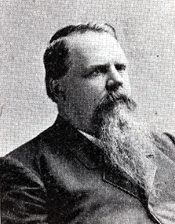
Historical · U.S. House · Virginia · District 6
Paul Edmunds
Former U.S. Representative · Virginia District 6 · 1889–1895 · Democratic
Paul Edmunds represented Virginia's District 6 in the United States House of Representatives (1889–1895) for the Democratic party. The page below collects sourced biographical facts, term history, committee roles, and provenance for Edmunds.
Bioguide ID: E000057
Key facts
- Full name
- Paul Edmunds
- State
- Virginia
- District
- District 6
- Party
- Democratic
- House service
- 1889–1895
- First House term
- 1889
- Status
- Left office
- Current term ends
- —
- Born
- 1836
- Bioguide ID
- E000057
- Committee assignments
- —
- Dataset version
- 1.20260606
Biographical narrative
904 words · sourced from the Wikipedia REST extract
Paul Edmunds was a prominent Virginia lawyer and politician who served as a U.S. Representative for Virginia's 6th congressional district from 1889 to 1895. A member of the Democratic Party, he had a multifaceted career that included military service during the Civil War and a tenure in the Virginia State Senate. His legislative work in Congress was marked by his role as chairman of the Committee on Expenditures in the Department of Agriculture. After serving three terms in the House, he chose not to seek re-election in 1894 and passed away in 1899.
Early life and career
Paul Edmunds was born on November 1, 1836, at "Springwood," a plantation located near Halifax Court House, Virginia. He was the son of Mildred Carrington Coles and John Richard Edmunds, and he belonged to a lineage that could trace its roots back to the First Families of Virginia. This heritage positioned him within a prominent social context in the state. He had two brothers, Henry and Edward Carrington Edmunds, who also played roles in the community.
Edmunds received his early education from a private tutor before attending the University of Virginia in Charlottesville, where he graduated in 1855. Following his undergraduate studies, he pursued a legal education at the College of William and Mary in Williamsburg, Virginia, completing his law degree in 1857. That same year, he was admitted to the bar and began his legal practice in Jefferson City, Missouri. However, he returned to Virginia in 1859, where he engaged in agricultural activities on his farm in Halifax County.
During the Civil War, Edmunds served as a first lieutenant in Company A of Montague's battalion in the Confederate States Army. His military service was a significant aspect of his life, reflecting the turbulent times in which he lived. After the war, he transitioned into politics, where he was elected to the Virginia State Senate. He served two terms from 1881 to 1888, during which he was involved in various legislative initiatives and community affairs. His political career also included participation as a delegate to the Democratic National Convention in 1884, further solidifying his standing within the Democratic Party.
In 1860, Edmunds married Phoebe Ann Easley, and together they had five sons: James Easley, John Richard, Paul Carrington, William Holt, and Henry Hurt Edmunds. His family life was intertwined with his professional pursuits, and he remained a figure of local significance in Halifax County.
House tenure
Edmunds's congressional career began when he was elected as a Democrat to the U.S. House of Representatives, representing Virginia's 6th congressional district. His first term commenced on March 4, 1889, and he was subsequently re-elected for two additional terms, serving in the Fifty-second and Fifty-third Congresses until March 3, 1895. His electoral success was notable; in the 1888 election, he secured approximately 55.6% of the vote against his opponents, Republican Patrick H. Caull and Independent Democrat Samuel T. Hopkins. His popularity continued in subsequent elections, where he achieved a remarkable 92.8% of the vote in 1890 against Republican William J. Shelburne, and in 1892, he garnered 58.42% of the vote, defeating Populist candidate Thomas E. Cobbs.
During his time in Congress, Edmunds was actively involved in various legislative matters and served as the chairman of the Committee on Expenditures in the Department of Agriculture during the Fifty-second and Fifty-third Congresses. This role placed him at the intersection of agricultural policy and federal expenditure oversight, allowing him to influence decisions that would affect farmers and agricultural practices in Virginia and beyond.
Despite his successful tenure, Edmunds chose not to seek re-nomination in 1894, marking the end of his congressional career. His decision to step away from politics was likely influenced by a combination of personal and political factors, although specific reasons are not detailed in the available records.
Legislative focus and committees
Throughout his congressional career, Paul Edmunds's legislative focus was primarily aligned with agricultural issues, reflecting the economic landscape of Virginia during the late 19th century. As chairman of the Committee on Expenditures in the Department of Agriculture, he was responsible for overseeing budgetary matters related to agricultural programs and initiatives. This position allowed him to advocate for policies that supported farmers and agricultural development, which were critical to the economy of his district and the state.
Edmunds's work on the committee involved scrutinizing expenditures and ensuring that federal funds were allocated effectively to support agricultural interests. His role was crucial during a period when agriculture was a dominant sector in the United States, and many rural communities relied heavily on the federal government for support in various forms, including subsidies and research funding.
In addition to his committee work, Edmunds's legislative contributions would have included participation in broader discussions and debates on national issues, although specific bills or legislative initiatives he championed are not detailed in the available records. His experience as a lawyer and his background in agriculture likely informed his perspectives on policy matters, enabling him to represent the interests of his constituents effectively.
After concluding his service in the House, Edmunds returned to Virginia, where he continued to be involved in community affairs until his death on March 12, 1899, in Houston, Virginia, near Halifax. He was interred in the family plot at St. John's Churchyard in Halifax, leaving behind a legacy as a lawyer, soldier, and public servant who contributed to the political landscape of Virginia during a transformative period in American history.
Notable legislation
Sponsored and co-sponsored legislation for Paul Edmunds is pending operator curation. The biographical narrative above carries the same provenance trail until per-bill rows are written.
Sources
- [1]https://en.wikipedia.org/wiki/Paul_C._EdmundsWikipedia · retrieved 2026-06-06
Notable quotes
Sourced quotes for Paul Edmunds are pending operator curation. Narrative-scope provenance remains attached below.
Sources
- [1]https://en.wikipedia.org/wiki/Paul_C._EdmundsWikipedia · retrieved 2026-06-06
Key positions
Curated policy positions for Paul Edmunds are pending operator review. The biographical narrative above carries the same provenance trail until per-topic positions are written.
Sources
- [1]https://en.wikipedia.org/wiki/Paul_C._EdmundsWikipedia · retrieved 2026-06-06
Terms served
- 1889–1891U.S. House · Term 1 · Democratic
- 1891–1893U.S. House · Term 2 · Democratic
- 1893–1895U.S. House · Term 3 · Democratic
Sources & provenance
Every attributable claim above carries a per-section [N] marker that resolves to the corresponding URL below. Each entry records the upstream provider, the canonical URL, and the timestamp at which the source was retrieved by the ingest pipeline.
Key facts
- https://bioguide.congress.gov/search/bio/E000057bioguide · retrieved 2026-06-06
- https://www.govtrack.us/congress/members/403752govtrack · retrieved 2026-06-06
Biographical narrative
- https://en.wikipedia.org/wiki/Paul_C._Edmundswikipedia · retrieved 2026-06-06
Find your representative
Every U.S. state elects representatives by district. Browse Virginia’s delegation, the full former-representative roster, or explore the role and term length.
Related on The Candidate
- Preceded by Samuel HopkinsEarlier holder of the Virginia District 6 House seat · Union.Open
- Succeeded by Peter OteyLater holder of the Virginia District 6 House seat · Democratic.Open
- Alexander WhiteFormer U.S. Representative · Virginia District 1Open
- Archibald AtkinsonFormer U.S. Representative · Virginia District 1 · DemocraticOpen
- Beverly DouglasFormer U.S. Representative · Virginia District 1 · DemocraticOpen
- Daniel MorganFormer U.S. Representative · Virginia District 1 · FederalistOpen