
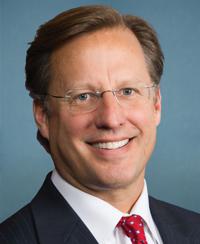
Historical · U.S. House · Virginia · District 7
Dave Brat
Former U.S. Representative · Virginia District 7 · 2014–2019 · Republican
Dave Brat represented Virginia's District 7 in the United States House of Representatives (2014–2019) for the Republican party. The page below collects sourced biographical facts, term history, committee roles, and provenance for Brat.
Bioguide ID: B001290
Key facts
- Full name
- Dave Brat
- State
- Virginia
- District
- District 7
- Party
- Republican
- House service
- 2014–2019
- First House term
- 2014
- Status
- Left office
- Current term ends
- —
- Born
- 1964
- Bioguide ID
- B001290
- Committee assignments
- —
- Dataset version
- 1.20260605
Biographical narrative
905 words · sourced from the Wikipedia REST extract
David Alan Brat is an American politician and academic who served as the U.S. Representative for Virginia's 7th congressional district from 2014 until 2019. A member of the Republican Party, Brat gained national attention when he defeated then-House Majority Leader Eric Cantor in a primary election, marking a significant political upset. His tenure in Congress was characterized by his alignment with conservative principles and his involvement in the Freedom Caucus. Following his congressional career, Brat transitioned into academia, taking on leadership roles at Liberty University.
Early life and career
David Alan Brat was born on July 27, 1964, in Detroit, Michigan. He was raised in Alma, Michigan, where his father, Paul Brat, worked as a doctor of internal medicine, and his mother, Nancy Brat, was a social worker. As the eldest of three boys, Brat's family moved to Minnesota during his junior high school years. He completed his secondary education at Park Center Senior High School in Brooklyn Park, Minnesota.
Brat pursued higher education, earning a Bachelor of Arts degree in business administration from Hope College in 1986. He continued his studies at Princeton Theological Seminary, where he received a Master of Divinity in 1990. Brat later obtained a Ph.D. in economics from American University in 1995. His academic background laid the foundation for his career in both education and politics.
Brat began his professional journey in the business sector, working for Arthur Andersen and serving as a consultant for the World Bank. In 1996, he joined the faculty of Randolph-Macon College as a professor of economics. Over the years, he held various academic positions, including chairing the college's department of ethics and business for six years. At Randolph-Macon, Brat taught courses that covered topics such as international economic development and business ethics. He also led the BB&T Moral Foundations of Capitalism program from 2010 to 2012, which focused on the intersection of capitalism and moral philosophy.
In addition to his teaching responsibilities, Brat was appointed by Virginia Governor Tim Kaine to serve on the Governor's Advisory Board of Economists. He also contributed to the Richmond Metropolitan Authority's board of directors and was involved with the Virginia Public Access Project's advisory board. His academic and professional experiences equipped him with a diverse skill set that would later influence his political career.
House tenure
Brat's political career took a significant turn in 2014 when he entered the race for the U.S. House of Representatives, representing Virginia's 7th congressional district. He gained national prominence by defeating incumbent House Majority Leader Eric Cantor in the Republican primary, a victory that was notable for its unexpected nature and the support Brat received from the Tea Party movement. This primary win was historic, as it marked the first time a sitting House Majority Leader was ousted by a primary challenger since the position's establishment in 1899.
Following his primary victory, Brat successfully won the general election in November 2014. He was re-elected in 2016, continuing to serve in the House of Representatives until January 3, 2019. During his time in Congress, Brat was known for his conservative stance on various issues and was an active member of the Freedom Caucus, a group of conservative Republican members of the House.
Brat's tenure in the House was marked by his commitment to conservative economic policies and his advocacy for limited government intervention. He often emphasized the importance of free-market principles and the role of cultural factors in economic performance. His academic background in economics informed his legislative priorities, and he frequently engaged in discussions surrounding fiscal responsibility and economic growth.
In the 2018 election, Brat faced a challenging re-election campaign and ultimately lost to Democrat Abigail Spanberger. This defeat marked the end of his congressional career, concluding his three terms in the House of Representatives.
Legislative focus and committees
Throughout his congressional tenure, Brat focused on a range of legislative issues that aligned with his conservative ideology. He was particularly vocal about the importance of free-market capitalism and the ethical implications of economic policies. Brat's academic research often intersected with his legislative priorities, as he argued for the significance of cultural and religious influences on economic systems.
As a member of the House, Brat participated in various committees that allowed him to influence policy in areas such as economics, education, and business. His involvement in these committees provided him with a platform to advocate for his views on fiscal policy and government regulation.
Brat's scholarship and public statements reflected his belief in the connection between faith and economics. He argued that a Protestant cultural background contributed to economic success and that ethical behavior, rooted in Christian principles, could enhance market efficiency. His writings and speeches often highlighted the necessity of moral considerations in economic decision-making.
After leaving Congress, Brat transitioned to an academic role, being named dean of the Liberty University School of Business in January 2019. His appointment marked a return to the educational sector, where he continued to engage with topics related to economics and ethics. In May 2023, he further advanced his career by becoming Vice Provost for Engagement and Public Relations at Liberty University.
Brat's political and academic journeys reflect a commitment to the principles of free-market economics and the belief that cultural factors play a crucial role in shaping economic outcomes. His experiences in both the legislative and educational arenas have allowed him to influence discussions on the intersection of faith, ethics, and economics.
Notable legislation
Sponsored and co-sponsored legislation for Dave Brat is pending operator curation. The biographical narrative above carries the same provenance trail until per-bill rows are written.
Sources
- [1]https://en.wikipedia.org/wiki/Dave_BratWikipedia · retrieved 2026-06-05
Notable quotes
Sourced quotes for Dave Brat are pending operator curation. Narrative-scope provenance remains attached below.
Sources
- [1]https://en.wikipedia.org/wiki/Dave_BratWikipedia · retrieved 2026-06-05
Key positions
Curated policy positions for Dave Brat are pending operator review. The biographical narrative above carries the same provenance trail until per-topic positions are written.
Sources
- [1]https://en.wikipedia.org/wiki/Dave_BratWikipedia · retrieved 2026-06-05
Terms served
- 2014–2015U.S. House · Term 1 · Republican
- 2015–2017U.S. House · Term 2 · Republican
- 2017–2019U.S. House · Term 3 · Republican
Sources & provenance
Every attributable claim above carries a per-section [N] marker that resolves to the corresponding URL below. Each entry records the upstream provider, the canonical URL, and the timestamp at which the source was retrieved by the ingest pipeline.
Key facts
- https://bioguide.congress.gov/search/bio/B001290bioguide · retrieved 2026-06-05
- https://brat.house.govhouse.gov · retrieved 2026-06-05
Biographical narrative
- https://en.wikipedia.org/wiki/Dave_Bratwikipedia · retrieved 2026-06-05
Find your representative
Every U.S. state elects representatives by district. Browse Virginia’s delegation, the full former-representative roster, or explore the role and term length.
Related on The Candidate
- Preceded by Eric CantorEarlier holder of the Virginia District 7 House seat · Republican.Open
- Succeeded by Abigail SpanbergerLater holder of the Virginia District 7 House seat · Democratic.Open
- Alexander WhiteFormer U.S. Representative · Virginia District 1Open
- Archibald AtkinsonFormer U.S. Representative · Virginia District 1 · DemocraticOpen
- Beverly DouglasFormer U.S. Representative · Virginia District 1 · DemocraticOpen
- Daniel MorganFormer U.S. Representative · Virginia District 1 · FederalistOpen