
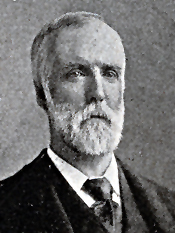
Historical · U.S. House · Virginia · District 7
Smith Turner
Former U.S. Representative · Virginia District 7 · 1893–1897 · Democratic
Smith Turner represented Virginia's District 7 in the United States House of Representatives (1893–1897) for the Democratic party. The page below collects sourced biographical facts, term history, committee roles, and provenance for Turner.
Bioguide ID: T000427
Key facts
- Full name
- Smith Turner
- State
- Virginia
- District
- District 7
- Party
- Democratic
- House service
- 1893–1897
- First House term
- 1893
- Status
- Left office
- Current term ends
- —
- Born
- 1842
- Bioguide ID
- T000427
- Committee assignments
- —
- Dataset version
- 1.20260606
Biographical narrative
941 words · sourced from the Wikipedia REST extract
Smith Turner was an American lawyer and politician who served as a U.S. Representative for Virginia's 7th congressional district. A member of the Democratic Party, Turner held office during the 53rd and 54th Congresses from 1894 until 1897. His career was marked by his background as a Confederate veteran and his involvement in various capacities within Virginia's legal and political systems. Turner was born on November 21, 1842, in Warren County, Virginia, and his life spanned significant historical events, including the Civil War and the post-war reconstruction era.
Early life and career
Smith Turner was born in Warren County, Virginia, where he spent his formative years. His early education laid the groundwork for a career that would encompass both military service and law. He attended the Virginia Military Institute in Lexington, Virginia, where he was a cadet at the onset of the Civil War. His military training and education at the institute would later influence his leadership abilities during the war. When the conflict began in 1861, Turner enlisted in the Confederate States Army, where he served under notable generals such as Stonewall Jackson and George Pickett. His military service included the role of drill officer, which underscored his commitment to the Confederate cause.
Following the conclusion of the Civil War, Turner returned to civilian life and transitioned into education. He taught mathematics at a female seminary in Winchester, Virginia, from 1865 to 1867, contributing to the education of young women during a time when opportunities for female education were limited. His teaching career was a reflection of his dedication to knowledge and learning, which he later applied to his legal pursuits.
Turner began studying law and was admitted to the bar in 1869, marking the beginning of his legal career. He established his practice in Front Royal, Virginia, where he became an active member of the community. His legal expertise and involvement in local governance led him to serve in the Virginia House of Delegates from 1869 to 1872. During this time, he was involved in legislative processes and contributed to the shaping of state laws.
In addition to his legislative work, Turner held the position of prosecuting attorney for Warren County from 1874 to 1879. This role allowed him to further develop his legal acumen and establish a reputation as a competent attorney. His commitment to education continued as he served on the State Board of Visitors of the Virginia Military Institute for eight years, reflecting his ongoing connection to the institution that had played a significant role in his own education.
House tenure
Turner's political career took a significant turn when he was elected as a Democrat to the U.S. House of Representatives. He filled a vacancy in the 53rd Congress that was created by the resignation of Charles T. O'Ferrall. Turner's election marked the beginning of his congressional service, which commenced on January 30, 1894. His election was characterized by a competitive political landscape, and he was later re-elected in the general election, securing approximately 52.12% of the vote. In this election, he faced opposition from Republican Robert J. Walker, Populist Jacob S. Hopkins, and Independent G.T. Barbee.
During his time in Congress, Turner served two full terms, concluding his service on March 3, 1897. His tenure in the House was marked by the challenges and responsibilities of representing his constituents in Virginia's 7th district. Although specific details of his legislative activities during this period are not extensively documented, it is known that he did not seek renomination in 1896, indicating a strategic decision regarding his political future.
Turner's congressional career was part of a broader historical context, as the late 19th century was a period of significant change in American politics. The nation was grappling with issues related to industrialization, economic disparity, and social reform. As a member of the Democratic Party, Turner would have been involved in discussions and decisions that reflected the party's platform and the interests of his constituents.
Legislative focus and committees
While specific legislative initiatives and committee assignments during Turner's time in Congress are not detailed in the available records, it can be inferred that his background as a lawyer and his experience in state politics would have informed his legislative focus. As a representative from Virginia, he likely addressed issues pertinent to his district, which included agricultural interests, economic development, and the aftermath of the Civil War.
Turner's legal background would have provided him with a unique perspective on legislative matters, particularly those related to law and governance. His experience as a prosecuting attorney and a member of the Virginia House of Delegates would have equipped him with the skills necessary to navigate the complexities of federal legislation and advocate for the needs of his constituents.
The late 19th century was a time when Congress was increasingly involved in regulating commerce, addressing labor issues, and responding to the needs of a rapidly changing society. As a member of the Democratic Party, Turner would have participated in debates and discussions that sought to balance the interests of various stakeholders, including farmers, industrialists, and laborers.
Turner's service in Congress concluded in 1897, and he returned to Virginia, where he continued to engage with his community until his death on April 8, 1898. He was interred in Prospect Hill Cemetery in Front Royal, Virginia. His life and career reflect the complexities of American history during a transformative period, marked by the legacies of the Civil War and the ongoing evolution of the United States as a nation. Through his roles in education, law, and politics, Turner contributed to the fabric of his community and the broader narrative of American governance.
Notable legislation
Sponsored and co-sponsored legislation for Smith Turner is pending operator curation. The biographical narrative above carries the same provenance trail until per-bill rows are written.
Sources
- [1]https://en.wikipedia.org/wiki/Smith_S._TurnerWikipedia · retrieved 2026-06-06
Notable quotes
Sourced quotes for Smith Turner are pending operator curation. Narrative-scope provenance remains attached below.
Sources
- [1]https://en.wikipedia.org/wiki/Smith_S._TurnerWikipedia · retrieved 2026-06-06
Key positions
Curated policy positions for Smith Turner are pending operator review. The biographical narrative above carries the same provenance trail until per-topic positions are written.
Sources
- [1]https://en.wikipedia.org/wiki/Smith_S._TurnerWikipedia · retrieved 2026-06-06
Terms served
- 1893–1895U.S. House · Term 1 · Democratic
- 1895–1897U.S. House · Term 2 · Democratic
Sources & provenance
Every attributable claim above carries a per-section [N] marker that resolves to the corresponding URL below. Each entry records the upstream provider, the canonical URL, and the timestamp at which the source was retrieved by the ingest pipeline.
Key facts
- https://bioguide.congress.gov/search/bio/T000427bioguide · retrieved 2026-06-06
- https://www.govtrack.us/congress/members/410995govtrack · retrieved 2026-06-06
Biographical narrative
- https://en.wikipedia.org/wiki/Smith_S._Turnerwikipedia · retrieved 2026-06-06
Find your representative
Every U.S. state elects representatives by district. Browse Virginia’s delegation, the full former-representative roster, or explore the role and term length.
Related on The Candidate
- Preceded by John PaulEarlier holder of the Virginia District 7 House seat · Readjuster.Open
- Succeeded by James HayLater holder of the Virginia District 7 House seat · Democratic.Open
- Alexander WhiteFormer U.S. Representative · Virginia District 1Open
- Archibald AtkinsonFormer U.S. Representative · Virginia District 1 · DemocraticOpen
- Beverly DouglasFormer U.S. Representative · Virginia District 1 · DemocraticOpen
- Daniel MorganFormer U.S. Representative · Virginia District 1 · FederalistOpen