
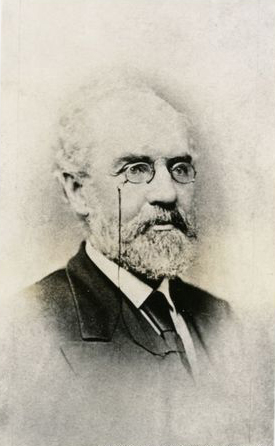
Historical · U.S. House · Virginia · District 8
Alexander Boteler
Former U.S. Representative · Virginia District 8 · 1859–1861 · Ind. Republican-Democrat
Alexander Boteler represented Virginia's District 8 in the United States House of Representatives (1859–1861) for the Ind. Republican-Democrat party. The page below collects sourced biographical facts, term history, committee roles, and provenance for Boteler.
Bioguide ID: B000653
Key facts
- Full name
- Alexander Boteler
- State
- Virginia
- District
- District 8
- Party
- Ind. Republican-Democrat
- House service
- 1859–1861
- First House term
- 1859
- Status
- Left office
- Current term ends
- —
- Born
- 1815
- Bioguide ID
- B000653
- Committee assignments
- —
- Dataset version
- 1.20260606
Biographical narrative
837 words · sourced from the Wikipedia REST extract
Alexander Boteler was a prominent figure in 19th-century American politics, serving as a U.S. Representative for Virginia's 8th congressional district from 1859 until his resignation in 1861. A member of the Independent Republican-Democrat party, Boteler's career spanned various roles, including planter, businessman, artist, writer, lawyer, and Confederate officer. His life was marked by significant events in American history, particularly during the tumultuous period leading up to and during the American Civil War.
Early life and career
Born on May 16, 1815, in Shepherdstown, Virginia, Alexander Boteler was the son of Dr. Henry Boteler and Helen Robinson. His early life was shaped by personal tragedy, as his mother passed away when he was only five years old. Following her death, Boteler was sent to live with his grandfather, Alexander Robinson, a merchant in Baltimore, where he received a private education. This education was reflective of his family's social standing, and he had the opportunity to meet notable figures, including General Lafayette during his tour of the United States.
Boteler graduated from Princeton College in 1835, after which he returned to Virginia. In 1836, he married Helen Macomb Stockton in New Jersey, and together they had several children, including a son, Alexander Boteler Jr., and multiple daughters. His family connections extended to his younger brother, Henry Boteler, who also engaged in military service during the Civil War.
Upon the death of his father in 1836, Boteler inherited a plantation known as "Fountain Rock," along with substantial debts. He managed to pay off these debts with the help of his wife's inheritance and his grandfather's support. Throughout his life, Boteler was an advocate for agricultural innovation, particularly in the use of steamboat technology and progressive farming techniques. He became known for his advancements in crop harvesting and livestock management, and he played a significant role in the establishment of the Jefferson County Agricultural Society, serving as its president in 1850.
Boteler's entrepreneurial spirit led him to acquire a cement mill in 1846, which he operated until it was destroyed by Union forces in 1861. His commitment to agriculture and innovation was further demonstrated through his participation in various agricultural fairs, where he lectured on farming practices. By 1860, Boteler owned a small number of enslaved individuals, which reflected the complex social and economic dynamics of the time.
House tenure
Boteler's political career began in earnest as he engaged with several political parties throughout the 1850s. He was involved with the Know Nothing Party and the Whigs, and he served as a delegate to the Richmond convention in 1852. His political ambitions included unsuccessful runs for Congress against incumbent Charles J. Faulkner in 1853 and 1855. However, in 1858, Boteler successfully defeated Faulkner to represent Virginia's 8th congressional district in the U.S. House of Representatives.
His tenure in Congress began in 1859, during a period of increasing national tension over issues such as slavery and states' rights. Boteler's political stance was complex; he expressed support for the Union while simultaneously criticizing abolitionism and the actions of figures like John Brown, whose raid on Harpers Ferry had significant implications for the region. In January 1860, he delivered a notable speech in the House, where he articulated his views on the need for unity and condemned the violence associated with abolitionist movements.
As the Civil War approached, Boteler's political alignment shifted in response to Virginia's decision to secede from the Union in April 1861. His resignation from Congress followed shortly thereafter, as he chose to align himself with the Confederate cause, reflecting the prevailing sentiments of many in his region.
Legislative focus and committees
During his time in the House of Representatives, Boteler's legislative focus was shaped by the pressing issues of his era, particularly the sectional conflicts that characterized the lead-up to the Civil War. His speeches and actions in Congress often centered around the themes of Unionism and the defense of Southern interests. He was known for his vocal opposition to abolitionist sentiments, which he believed threatened the social order and stability of the South.
Boteler's committee assignments during his congressional tenure are not extensively documented, but his engagement in debates and discussions on the House floor indicated his active participation in legislative matters. His efforts to lobby President Abraham Lincoln against the use of force in response to the secession crisis further illustrated his attempts to navigate the complex political landscape of the time.
Following his resignation, Boteler enlisted in the Confederate Army, receiving a commission as a colonel. His military service was characterized by a recognition of his own physical limitations, which led him to take on a less active role compared to other soldiers, including his son, who served more directly in the conflict.
In summary, Alexander Boteler's life and career were marked by a blend of agricultural innovation, political engagement, and military service during a pivotal period in American history. His legacy reflects the complexities of 19th-century American society, particularly in the context of the Civil War and its lasting impact on the nation.
Notable legislation
Sponsored and co-sponsored legislation for Alexander Boteler is pending operator curation. The biographical narrative above carries the same provenance trail until per-bill rows are written.
Sources
- [1]https://en.wikipedia.org/wiki/Alexander_BotelerWikipedia · retrieved 2026-06-06
Notable quotes
Sourced quotes for Alexander Boteler are pending operator curation. Narrative-scope provenance remains attached below.
Sources
- [1]https://en.wikipedia.org/wiki/Alexander_BotelerWikipedia · retrieved 2026-06-06
Key positions
Curated policy positions for Alexander Boteler are pending operator review. The biographical narrative above carries the same provenance trail until per-topic positions are written.
Sources
- [1]https://en.wikipedia.org/wiki/Alexander_BotelerWikipedia · retrieved 2026-06-06
Terms served
- 1859–1861U.S. House · Term 1 · Ind. Republican-Democrat
Sources & provenance
Every attributable claim above carries a per-section [N] marker that resolves to the corresponding URL below. Each entry records the upstream provider, the canonical URL, and the timestamp at which the source was retrieved by the ingest pipeline.
Key facts
- https://bioguide.congress.gov/search/bio/B000653bioguide · retrieved 2026-06-06
- https://www.govtrack.us/congress/members/401616govtrack · retrieved 2026-06-06
Biographical narrative
- https://en.wikipedia.org/wiki/Alexander_Botelerwikipedia · retrieved 2026-06-06
Find your representative
Every U.S. state elects representatives by district. Browse Virginia’s delegation, the full former-representative roster, or explore the role and term length.
Related on The Candidate
- Preceded by Alexander HolladayEarlier holder of the Virginia District 8 House seat · Democratic.Open
- Succeeded by James GibsonLater holder of the Virginia District 8 House seat · Conservative.Open
- Alexander WhiteFormer U.S. Representative · Virginia District 1Open
- Archibald AtkinsonFormer U.S. Representative · Virginia District 1 · DemocraticOpen
- Beverly DouglasFormer U.S. Representative · Virginia District 1 · DemocraticOpen
- Daniel MorganFormer U.S. Representative · Virginia District 1 · FederalistOpen