
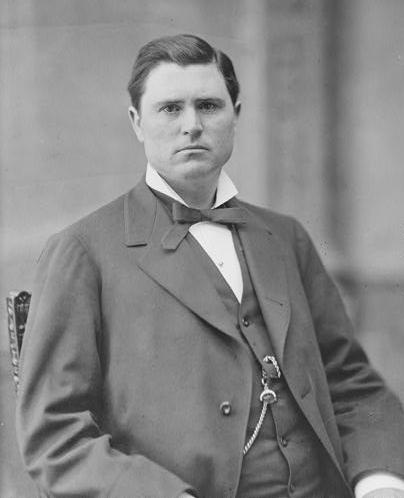
Historical · U.S. House · Virginia · District 9
James Richmond
Former U.S. Representative · Virginia District 9 · 1879–1881 · Democratic
James Richmond represented Virginia's District 9 in the United States House of Representatives (1879–1881) for the Democratic party. The page below collects sourced biographical facts, term history, committee roles, and provenance for Richmond.
Bioguide ID: R000234
Key facts
- Full name
- James Richmond
- State
- Virginia
- District
- District 9
- Party
- Democratic
- House service
- 1879–1881
- First House term
- 1879
- Status
- Left office
- Current term ends
- —
- Born
- 1842
- Bioguide ID
- R000234
- Committee assignments
- —
- Dataset version
- 1.20260606
Biographical narrative
992 words · sourced from the Wikipedia REST extract
James Richmond was a prominent figure in Virginia's political landscape during the late 19th century. He served as a U.S. Representative for Virginia's 9th congressional district, representing the Democratic Party. His political career was marked by a commitment to his constituents and a background shaped by his experiences as a lawyer, soldier, and public servant. Richmond's tenure in the U.S. House of Representatives lasted from 1879 to 1881, and he continued to influence Virginia's legal and political spheres long after his congressional service ended.
Early life and career
James Richmond was born on February 27, 1842, in Turkey Cove, Virginia, to Jonathan Richmond and Mary Dickenson Richmond. He grew up in a large family, having several siblings. His early education took place at Emory and Henry College, where he developed a foundation in legal studies. Following his education, Richmond pursued a career in law, reading extensively to prepare for his legal practice.
In 1864, Richmond married Sarah Elizabeth Duncan, known as Lizzie, with whom he had two children: a son, Henry C. L. Richmond, and a daughter, Mary Elizabeth Richmond Cox Deisher. Tragically, Lizzie passed away, leaving Richmond to raise their children alone. The following year, he married Catherine Morison, also known as Kate, who hailed from Scott County, Virginia. This second marriage further established Richmond's roots in the region.
Richmond began his legal career practicing in the circuit and county courts of Lee County, as well as in neighboring Scott and Wise Counties. His legal expertise allowed him to navigate complex cases and build a reputation as a skilled attorney. His career in law was temporarily interrupted by the outbreak of the American Civil War, during which he enlisted in the Confederate Army. He served with distinction, rising through the ranks from orderly sergeant to lieutenant colonel, ultimately commanding Company A of the 15th Virginia Infantry. Richmond's military service was a significant aspect of his life, shaping his character and future political ambitions.
House tenure
After the Civil War, Richmond returned to his legal practice and reentered public life. In 1873, he was elected to the Virginia House of Delegates, where he served part-time from 1874 to 1875. His political career continued to evolve, and in 1878, he ran for a seat in the United States House of Representatives. Richmond's campaign focused on advocating for sound monetary policies, which resonated with voters in his district. He successfully defeated incumbent Congressman Auburn Pridemore in the Democratic primary, a notable achievement given their shared military background.
Richmond was elected to the U.S. House of Representatives as a Democrat, serving from 1879 until 1881. His time in Congress was characterized by his commitment to the Democratic Party and his constituents in Virginia's 9th district. However, his congressional career was relatively brief; he lost his bid for re-election in the Democratic primary to Abram Fulkerson, a fellow Confederate veteran who had helped establish the Readjuster Party. This defeat marked the end of Richmond's time in the House, but it did not signify the end of his public service.
Following his congressional tenure, Richmond continued to be active in Virginia's political and legal arenas. In 1886, he was appointed as a judge for Scott County, a position he held for six years until 1892. This role allowed him to influence the judicial landscape of the region, applying his legal knowledge and experience to the bench. After his time as a judge, he transitioned into the private sector, serving as chief counsel for the South Atlantic & Ohio Railroad Company. His involvement in banking further diversified his professional portfolio, showcasing his adaptability and expertise in various fields.
Legislative focus and committees
During his time in the U.S. House of Representatives, Richmond's legislative focus was primarily shaped by the economic and social issues facing Virginia and the broader Southern United States in the post-Civil War era. His advocacy for sound money reflected the concerns of many constituents who were grappling with the economic challenges of the time. Richmond's background as a lawyer and his experiences during the war informed his perspectives on fiscal policy and governance.
Although specific details regarding the committees he served on during his congressional term are not documented, it is likely that his legal background and focus on economic issues positioned him to contribute meaningfully to discussions on legislation related to finance, infrastructure, and regional development. Richmond's commitment to his constituents was evident in his efforts to address the pressing needs of the 9th district, which included advocating for policies that would promote economic stability and growth.
In addition to his legislative work, Richmond's participation in the Virginia Constitutional Convention of 1902 highlighted his ongoing engagement with the state's political landscape. This convention was significant for its role in reshaping voting rights and electoral processes in Virginia, particularly concerning the disenfranchisement of black and poor white voters. Richmond's involvement in this convention reflects the complexities of his political career, as he sought to modernize corporate treatment while navigating the contentious issues of race and representation.
Richmond's legacy extends beyond his single term in Congress. His contributions to Virginia's legal and political systems continued to resonate long after his death on April 30, 1910, at Johns Hopkins Hospital in Baltimore, Maryland. His son, Henry C. L. Richmond, followed in his father's footsteps, becoming a lawyer and later serving as Commonwealth Attorney of Scott County and mayor of Gate City. The familial connection to public service underscores the lasting impact of James Richmond's career and the values he instilled in his children.
In summary, James Richmond's life and career reflect the complexities of a post-Civil War Virginia, marked by his military service, legal expertise, and political engagement. His tenure in the U.S. House of Representatives, though brief, was part of a broader commitment to public service that continued throughout his life. Richmond's contributions to Virginia's legal and political landscape remain a testament to his dedication to his constituents and the principles he championed.
Notable legislation
Sponsored and co-sponsored legislation for James Richmond is pending operator curation. The biographical narrative above carries the same provenance trail until per-bill rows are written.
Sources
- [1]https://en.wikipedia.org/wiki/James_Buchanan_RichmondWikipedia · retrieved 2026-06-06
Notable quotes
Sourced quotes for James Richmond are pending operator curation. Narrative-scope provenance remains attached below.
Sources
- [1]https://en.wikipedia.org/wiki/James_Buchanan_RichmondWikipedia · retrieved 2026-06-06
Key positions
Curated policy positions for James Richmond are pending operator review. The biographical narrative above carries the same provenance trail until per-topic positions are written.
Sources
- [1]https://en.wikipedia.org/wiki/James_Buchanan_RichmondWikipedia · retrieved 2026-06-06
Terms served
- 1879–1881U.S. House · Term 1 · Democratic
Sources & provenance
Every attributable claim above carries a per-section [N] marker that resolves to the corresponding URL below. Each entry records the upstream provider, the canonical URL, and the timestamp at which the source was retrieved by the ingest pipeline.
Key facts
- https://bioguide.congress.gov/search/bio/R000234bioguide · retrieved 2026-06-06
- https://www.govtrack.us/congress/members/409210govtrack · retrieved 2026-06-06
Biographical narrative
- https://en.wikipedia.org/wiki/James_Buchanan_Richmondwikipedia · retrieved 2026-06-06
Find your representative
Every U.S. state elects representatives by district. Browse Virginia’s delegation, the full former-representative roster, or explore the role and term length.
Related on The Candidate
- Preceded by Auburn PridemoreEarlier holder of the Virginia District 9 House seat · Democratic.Open
- Succeeded by Abram FulkersonLater holder of the Virginia District 9 House seat · Readjuster Democrat.Open
- Alexander WhiteFormer U.S. Representative · Virginia District 1Open
- Archibald AtkinsonFormer U.S. Representative · Virginia District 1 · DemocraticOpen
- Beverly DouglasFormer U.S. Representative · Virginia District 1 · DemocraticOpen
- Daniel MorganFormer U.S. Representative · Virginia District 1 · FederalistOpen