
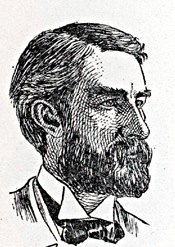
Historical · U.S. House · Virginia · At-Large
John Rixey
Former U.S. Representative · Virginia At-Large · 1897–1909 · Democratic
John Rixey represented Virginia's At-Large in the United States House of Representatives (1897–1909) for the Democratic party. The page below collects sourced biographical facts, term history, committee roles, and provenance for Rixey.
Bioguide ID: R000287
Key facts
- Full name
- John Rixey
- State
- Virginia
- District
- At-Large
- Party
- Democratic
- House service
- 1897–1909
- First House term
- 1897
- Status
- Left office
- Current term ends
- —
- Born
- 1854
- Bioguide ID
- R000287
- Committee assignments
- —
- Dataset version
- 1.20260606
Biographical narrative
832 words · sourced from the Wikipedia REST extract
John Rixey was a Democratic U.S. Representative who served Virginia's at-large congressional district from 1897 until his death in 1907. Known for his commitment to his constituents and his advocacy for veterans, Rixey's legislative career spanned six terms in the House of Representatives. His tenure was marked by efforts to honor Civil War veterans and initiatives aimed at preserving historical sites in Virginia.
Early life and career
John Franklin Rixey was born on August 1, 1854, in the Catalpa district of Culpeper County, Virginia. He was the son of Presley Morehead Rixey, a farmer, and Mary Frances Jones. Rixey grew up in a family that valued education and public service; his older brothers included Charles J. Rixey and Presley Marion Rixey, while his younger brother, Eppa Rixey, would later gain fame as a major league baseball player.
Rixey received his early education in local schools before attending Bethel Academy. He furthered his studies in law at the University of Virginia, where he developed a foundation for his future legal career. After being admitted to the Virginia bar in 1875, Rixey established a private legal practice in Culpeper. His legal career began to take shape when he was elected as the county's Commonwealth Attorney in 1879, a position he held until 1891. This role allowed him to gain significant experience in the legal system and establish a reputation within the community.
In 1896, Rixey transitioned from local legal affairs to national politics when he was elected to the U.S. House of Representatives. He succeeded Congressman Elisha E. Meredith, who had retired from public service. Rixey's election to the 55th Congress marked the beginning of a long and impactful career in the House.
House tenure
Rixey's congressional career began on March 4, 1897, and he served a total of six terms in the House of Representatives. His tenure lasted until his death on February 8, 1907, in Washington, D.C. Throughout his time in office, Rixey was re-elected five times, reflecting the support he garnered from his constituents in Virginia's 8th congressional district.
During his time in Congress, Rixey was known for his dedication to veterans, particularly Civil War veterans. He proposed legislation aimed at ensuring that all Civil War veterans were treated equally concerning federal and state soldiers' homes. This initiative demonstrated his commitment to honoring those who had served in the military and his desire to provide them with the support they deserved.
Rixey's influence extended beyond legislative proposals. He was involved in significant events during his tenure, including hosting President Theodore Roosevelt during the president's visit to Culpeper County in 1902. This visit highlighted Rixey's position within the political landscape and his ability to engage with prominent national figures.
Despite his active role in Congress, Rixey's life was cut short when he passed away before the conclusion of the 59th Congress. He had been re-elected to the 60th Congress but did not live to serve in that term. Following his death, Charles Creighton Carlin succeeded him after a contested Democratic primary.
Legislative focus and committees
Rixey's legislative focus during his time in Congress was characterized by a strong commitment to veterans' issues and historical preservation. His advocacy for Civil War veterans was a prominent aspect of his work, as he sought to ensure that they received equitable treatment in federal and state soldiers' homes. This focus on veterans reflected a broader concern for the welfare of those who had served the nation during a tumultuous period in American history.
In addition to his work on veterans' issues, Rixey was also involved in efforts to preserve historical sites in Virginia. He introduced bills aimed at creating Manassas Battlefield Park, responding to the advocacy of local constituents who recognized the importance of preserving the site of a significant Civil War battle. Although these bills did not pass during his lifetime, they laid the groundwork for future efforts to protect and honor the history of the region.
Rixey's legislative initiatives were indicative of his broader commitment to serving the interests of his constituents. He was attentive to the needs and concerns of the people in his district, and his proposals often reflected their priorities. His ability to engage with local issues while navigating the complexities of national politics was a hallmark of his congressional career.
Rixey's legacy continued after his death, as his portrait was placed in the courthouse in 1917, serving as a reminder of his contributions to Virginia and the nation. His commitment to public service and advocacy for veterans left a lasting impact on the community he represented.
In summary, John Rixey's life and career were marked by a dedication to the legal profession, public service, and the welfare of veterans. His six terms in the U.S. House of Representatives were characterized by a focus on issues that resonated with his constituents, and his efforts to preserve historical sites reflected a commitment to honoring the past. Rixey's contributions to Virginia's political landscape remain a part of the state's history.
Notable legislation
Sponsored and co-sponsored legislation for John Rixey is pending operator curation. The biographical narrative above carries the same provenance trail until per-bill rows are written.
Sources
- [1]https://en.wikipedia.org/wiki/John_Franklin_RixeyWikipedia · retrieved 2026-06-06
Notable quotes
Sourced quotes for John Rixey are pending operator curation. Narrative-scope provenance remains attached below.
Sources
- [1]https://en.wikipedia.org/wiki/John_Franklin_RixeyWikipedia · retrieved 2026-06-06
Key positions
Curated policy positions for John Rixey are pending operator review. The biographical narrative above carries the same provenance trail until per-topic positions are written.
Sources
- [1]https://en.wikipedia.org/wiki/John_Franklin_RixeyWikipedia · retrieved 2026-06-06
Terms served
- 1897–1899U.S. House · Term 1 · Democratic
- 1899–1901U.S. House · Term 2 · Democratic
- 1901–1903U.S. House · Term 3 · Democratic
- 1903–1905U.S. House · Term 4 · Democratic
- 1905–1907U.S. House · Term 5 · Democratic
- 1907–1909U.S. House · Term 6 · Democratic
Sources & provenance
Every attributable claim above carries a per-section [N] marker that resolves to the corresponding URL below. Each entry records the upstream provider, the canonical URL, and the timestamp at which the source was retrieved by the ingest pipeline.
Key facts
- https://bioguide.congress.gov/search/bio/R000287bioguide · retrieved 2026-06-06
- https://www.govtrack.us/congress/members/409260govtrack · retrieved 2026-06-06
Biographical narrative
- https://en.wikipedia.org/wiki/John_Franklin_Rixeywikipedia · retrieved 2026-06-06
Find your representative
Every U.S. state elects representatives by district. Browse Virginia’s delegation, the full former-representative roster, or explore the role and term length.
Related on The Candidate
- Preceded by John WiseEarlier holder of the Virginia At-Large House seat · Readjuster.Open
- Alexander WhiteFormer U.S. Representative · Virginia District 1Open
- Archibald AtkinsonFormer U.S. Representative · Virginia District 1 · DemocraticOpen
- Beverly DouglasFormer U.S. Representative · Virginia District 1 · DemocraticOpen
- Daniel MorganFormer U.S. Representative · Virginia District 1 · FederalistOpen
- Democratic PartyFederal candidates and office holders on the Democratic line.Open